How a Big Way open-canopy world record is made.
Behind the scenes of the Canopy Formation community.
This entry will be very long. There’s simply no way to describe two weeks of such intense preparation in just a few sentences — even if I wanted to, it just can’t be done.
In these times of fast and bite-sized content, I feel obliged to inform you that you won’t find that kind of material HERE.
There will be a lot of information — but it’s worth taking a few moments to read what happened there.
They spent 18 years preparing to break the record set in 2007, so a few minutes of your focused attention is the least all participants of this extraordinary event deserve. I promise it will be an engaging, emotional read. Dear reader, you will not regret the time.
To make things easier, there is a TABLE OF CONTENTS.
If you want to take a break (sometimes necessary, sic!), you’ll know exactly where to return.
Enjoy the read. Feel, even just a little, the emotions that filled everyone gathered at Jump Florida Skydive.

Introduction
Late again. And again for the same reasons: fighting until the very last seconds before departure, suitcase still open, those final voices in my ears: “We’re going for 111, this is the moment!” Then the flight — hours and hours of travel, drifting somewhere between half-sleep and half-thoughts.
Only now, after returning, after taking the first deeper breath, can I finally sit down and put everything in order.
Because a lot happened. A lot! Exactly the kind of thing Tiggers like best.
I owe you an update. The last report I wrote was at the moment when a 107-way was building above our heads.
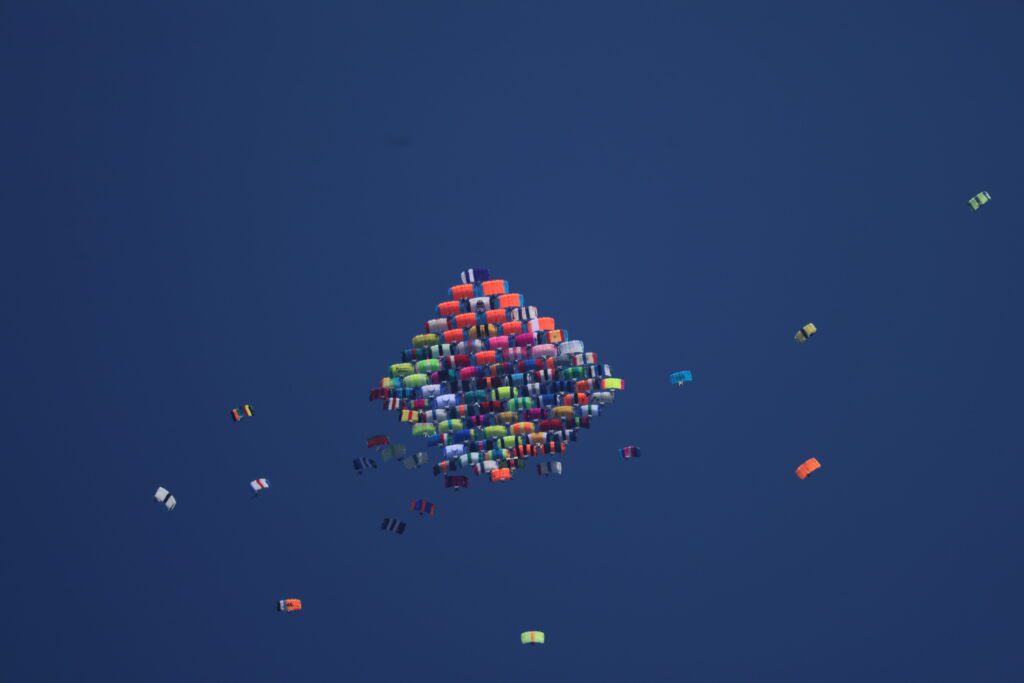
Yes — right then, in that very second when the formation began to take shape and I was glancing up at the sky and at the screen at the same time. The attempt was close, truly close. So close that you could almost feel the weight of that number on your shoulders.
And then… a twitch.
Centimeters.
Meters.
That moment when everyone at the bottom looks up and all think, at the exact same time: “Not now. Not like this.” And then that classic sound — the same everywhere in the world. A sigh of disappointment and regret that it’s still not the time.
The fact is — my main motto has always been: everything happens at the right time, exactly as it should. Not earlier, not later, but in that moment, here and now. This was neither the attempt nor the day. The universe chose a different date for the RECORD.
A birthday gift for Brian, the lead pilot, perhaps?
fot. Kasia Walczak
A week earlier — foundations (training, groundwork, atmosphere)
Let’s start from the beginning. Or rather, from a week earlier.
From the moment the Polish team set off on a journey that was more than just a flight across the ocean. It was a trip toward hope and the fulfillment of dreams — dreams that for some had been maturing for years, finally coming of age.
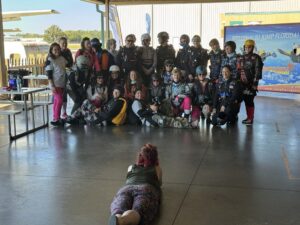
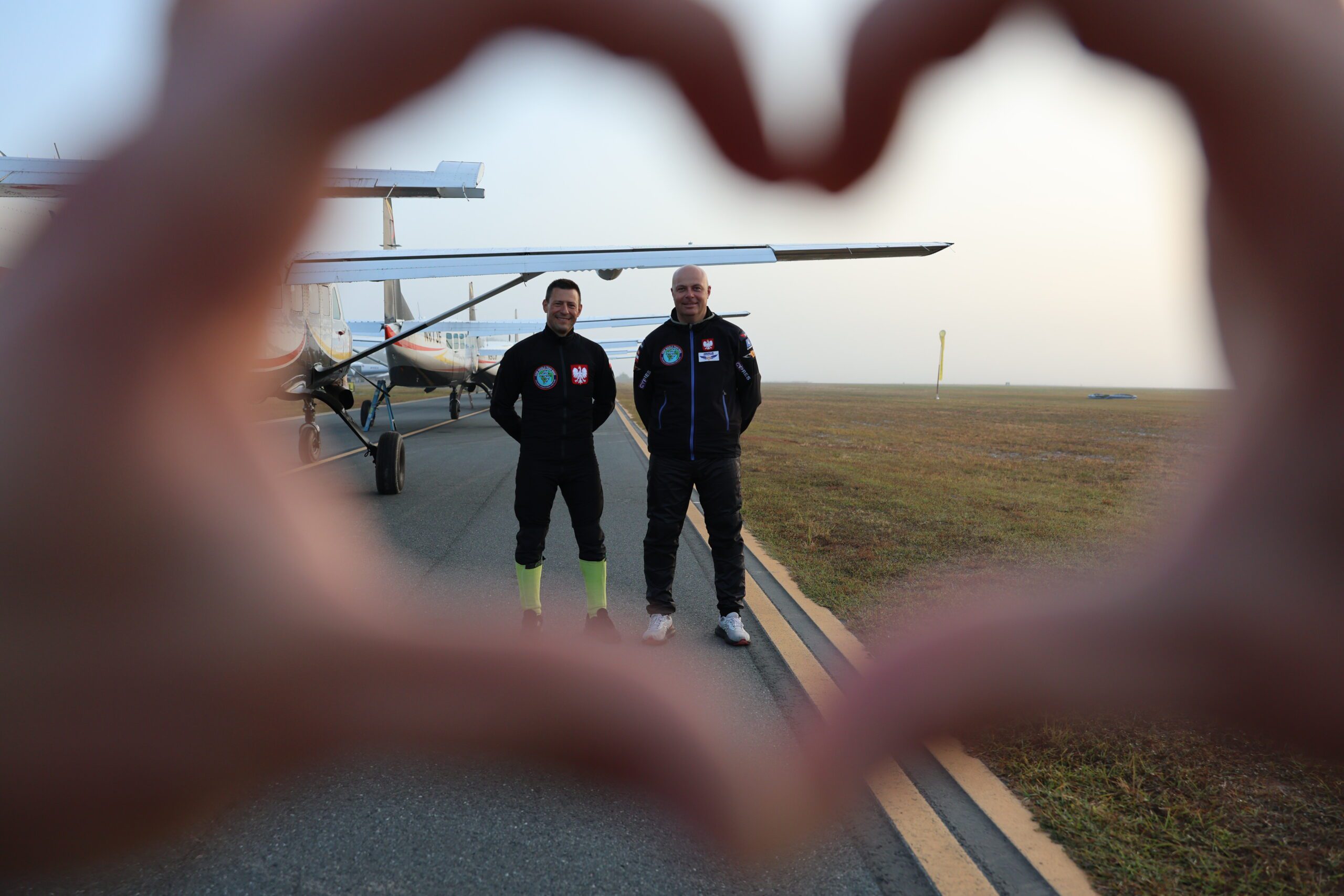
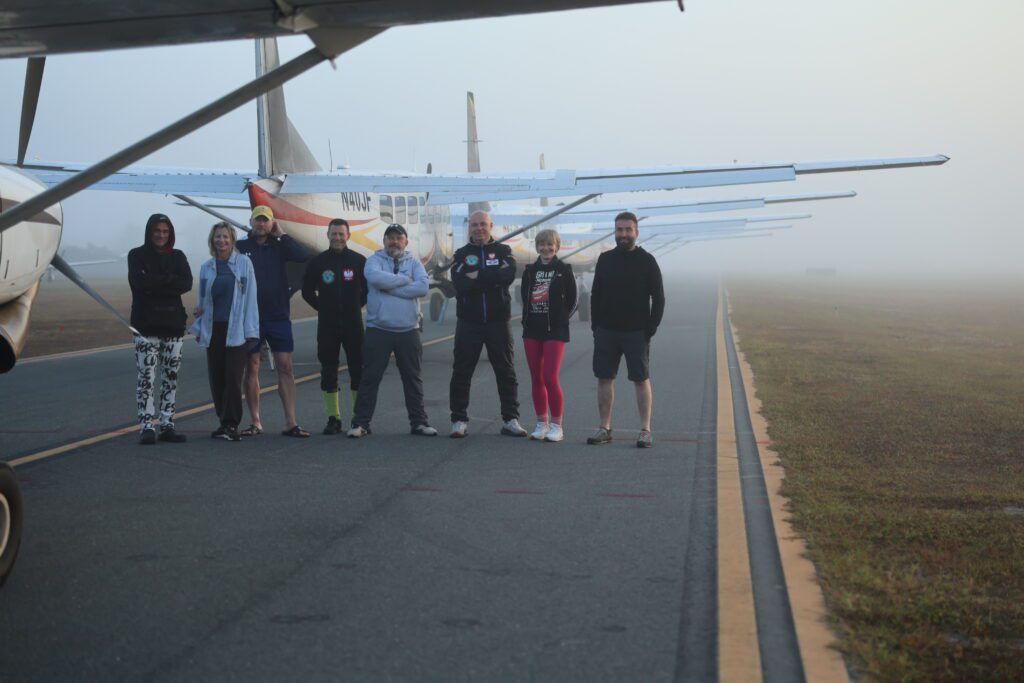
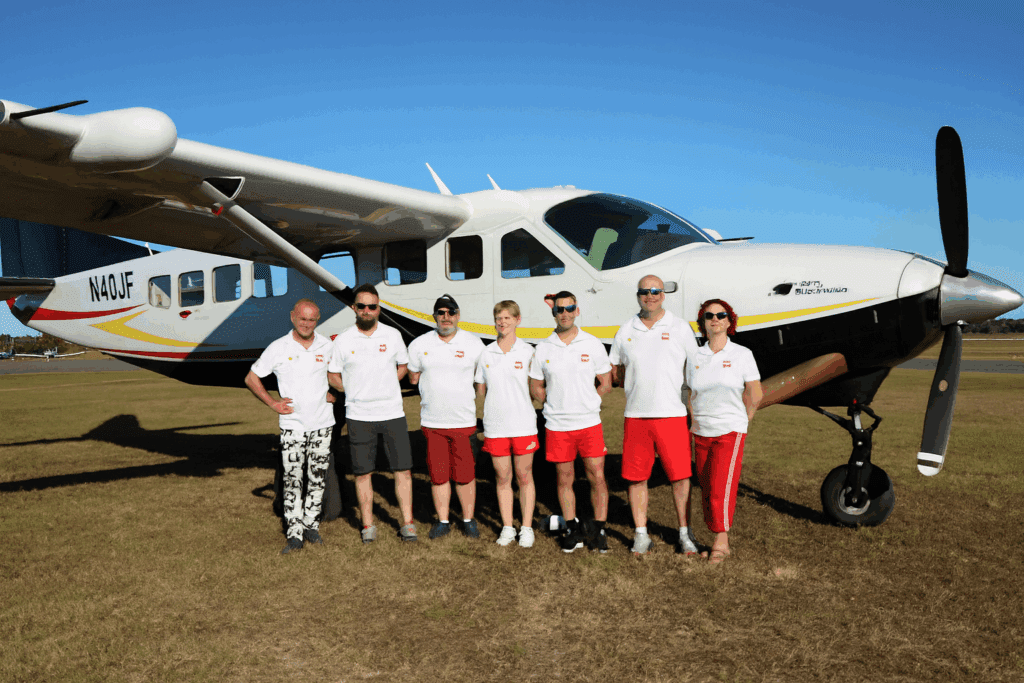
And here they are — the Polish team, without whom this story wouldn’t exist.
Each person brought something of their own into this event. Everyone has a different life, a different story, a different price they had paid to be here.
They were all traveling exactly where they wanted to be — to a place where a tremendous amount of work could turn into a tremendous amount of satisfaction and a dream fulfilled.
All different, and yet somehow the same.
The trip wasn’t cheap. Two weeks of vacation spent on the Record instead of holidays with family — that’s a decision that hurts.
They were supposed to be “a bit of a vacation too,” with some sightseeing and a moment to breathe… but it quickly became clear there was no room for any of that. Every day, every hour, every jump, every briefing mattered more than sleep, the beach, or normal life.
Two weeks of hard work with forced breaks that — although necessary — came at exactly the right moment.
But more on that later.
To build a formation this big, you must first build the foundation.
And the foundation is the people — their stories, their sacrifice, and the one feeling everyone carried with them: the hope that this would be THE record.
Here THEY are — which means us.
Szymon “Simon” Chełmicki
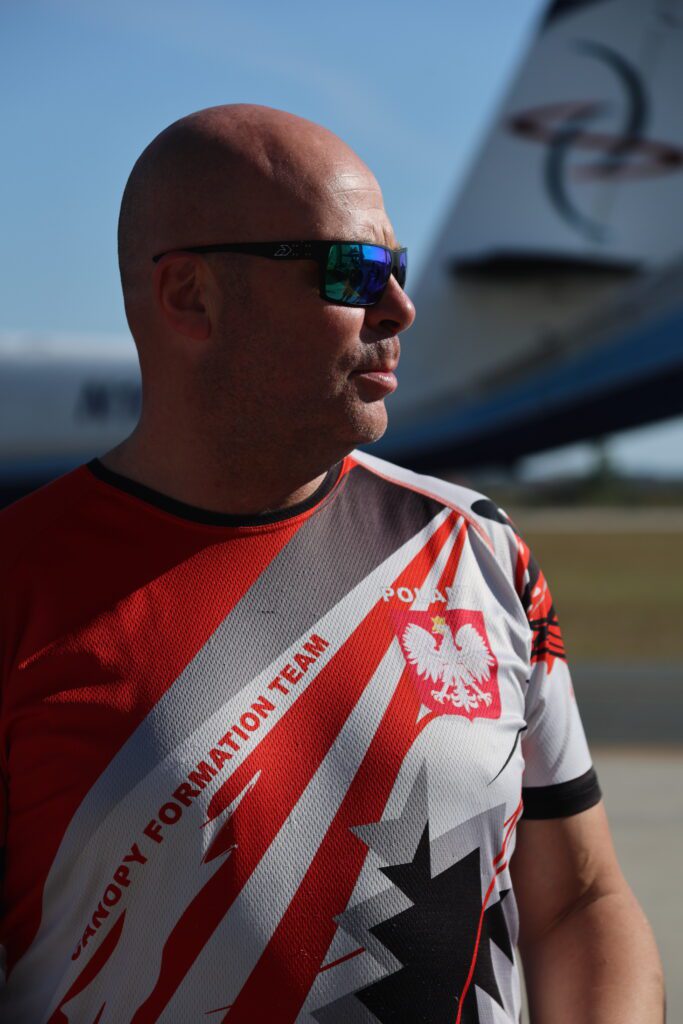
fot. Kasia Walczak
A Pole in the base of the entire formation.
The foundation.
A guy who combines athletic discipline with pure passion. Eighteen years ago, he was a hair’s breadth away from joining the record-setting formation. Fate decided otherwise. But that was the moment when the seed was planted — the spark that kept glowing inside him all those years with the quiet words: “this is only the beginning.” Now the moment has finally come. The grande finale.
An event that, for a decade and a half, had been his hidden but fiercely guarded promise to himself.
Michał “Balon” Balonis
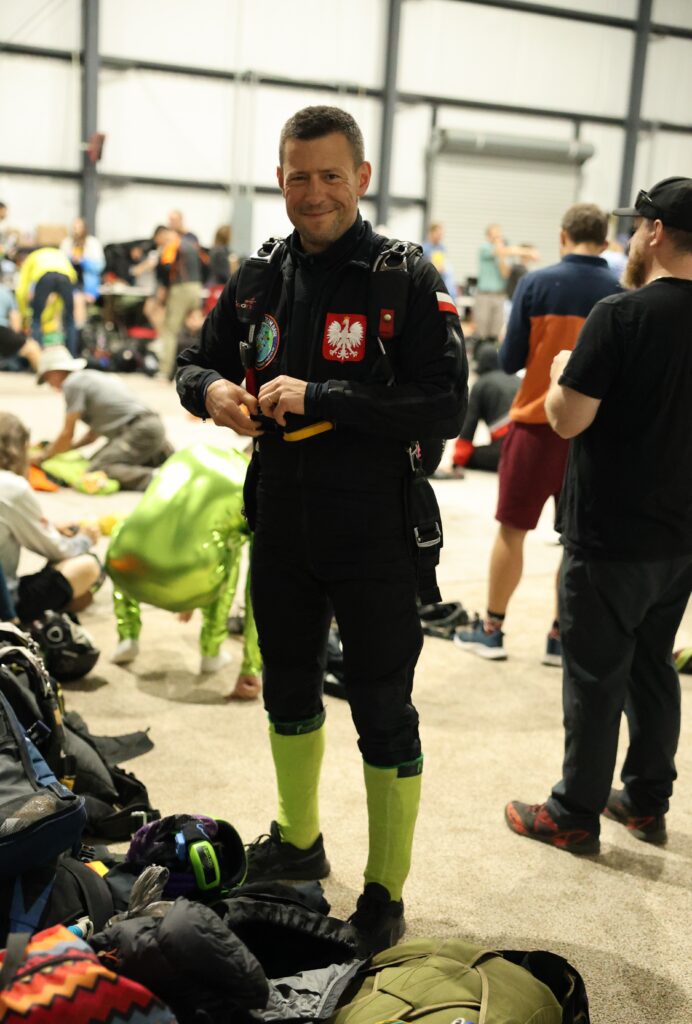
fot. Kasia Walczak
Passion like Simon’s. A lovable madman in the purest form.
Discipline in its most distilled state. Calm and controlled in every motion. Precision, consistency, not a single accidental gesture. Excellence.
An enormous amount of sacrifice, an enormous amount of work — all focused on one goal: the record.
Balon doesn’t talk much — he does a lot.
Justyna “Dżastin” Sinica
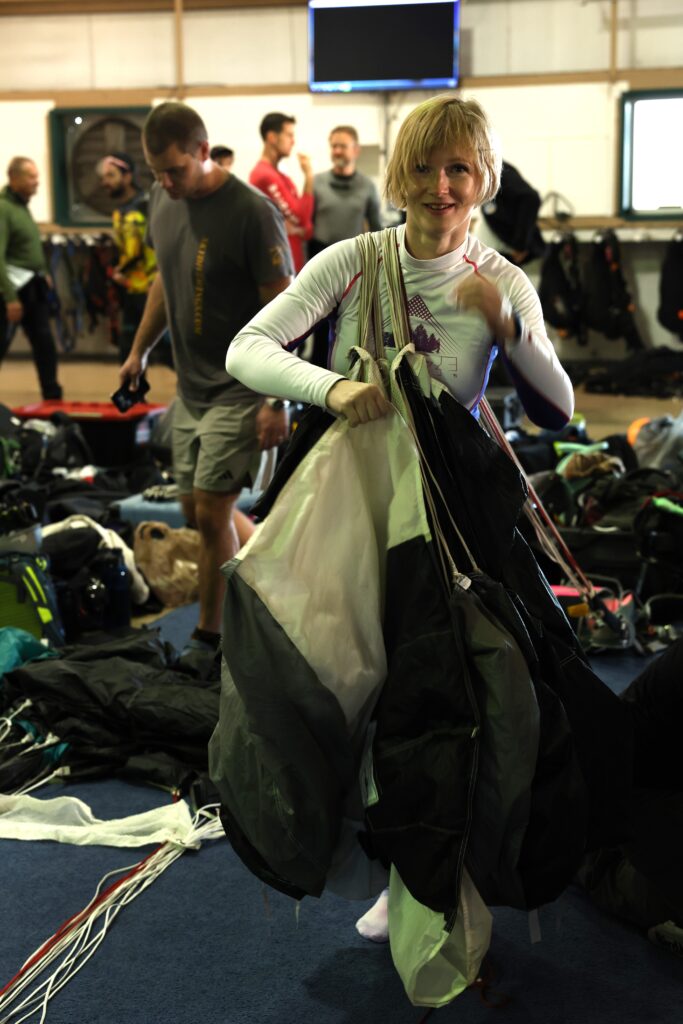
fot. Kasia Walczak
The only woman from Poland on the big record list. And, in fact, the only Polish skydiver present at the event at all.
A triple success: women’s records, massive progress, and unshakeable perseverance that deserves to be called by its name — IMPRESSIVE.
In the big formation, she was marked as “to be used,” as the system so crudely and brutally puts it.
But that means one thing: the skills are there.
The potential is there.
They were counting on her.
Jarek “Zwierzu” Zwierzyński
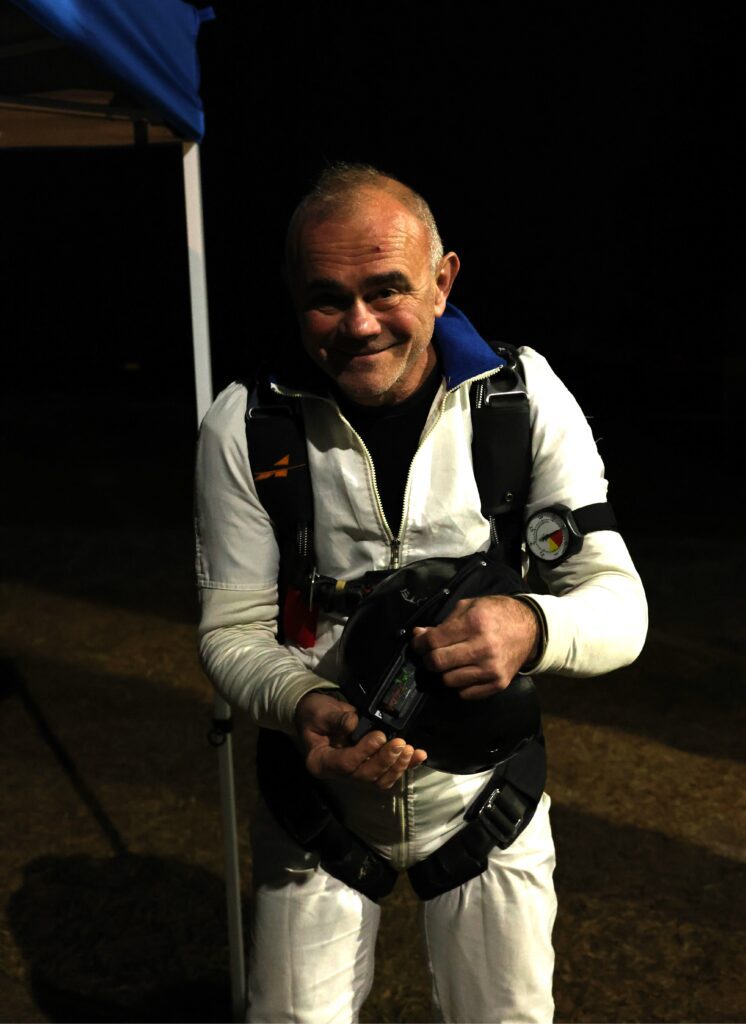
fot. Kasia Walczak
The best Skydiver among punks and the best Punk among skydivers.
A quintessential panczur in body, blood, and worldview.
The oldest member of the entire Polish team.
He jumped during the record attempts, even though he wasn’t part of the final closing.
But that in no way diminishes the fact that the record was a beautiful summary of his many years of airborne mischief, tinkering, improvisation, and experience — the kind you simply can’t buy.
Michał “Teddy” Markowicz
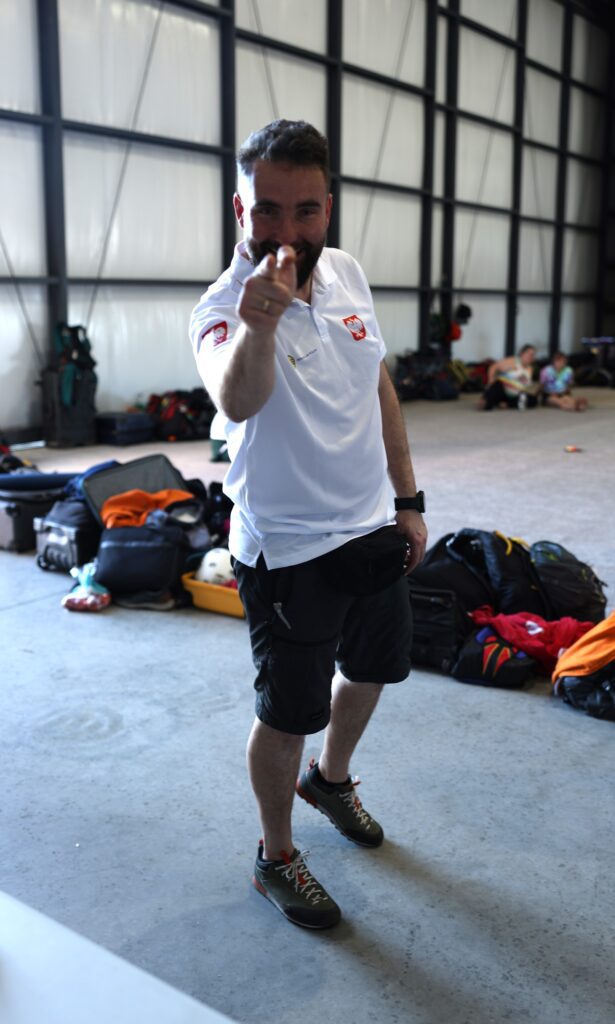
fot. Kasia Walczak
A young CRW sail. Fired up to the limit, lit like a candle in a draft. Classic ADHD, measured at fifteen out of ten.
Mentally hypnotized by the canopies, in the best possible sense.
A stroke of luck that he was added to the list at the last moment.
A dose of humility — knowing the skills aren’t yet enough to join the very opening of the record.
Though hope, as always, keeps glowing inside a person.
Robert “Robcio” Dąbrowski
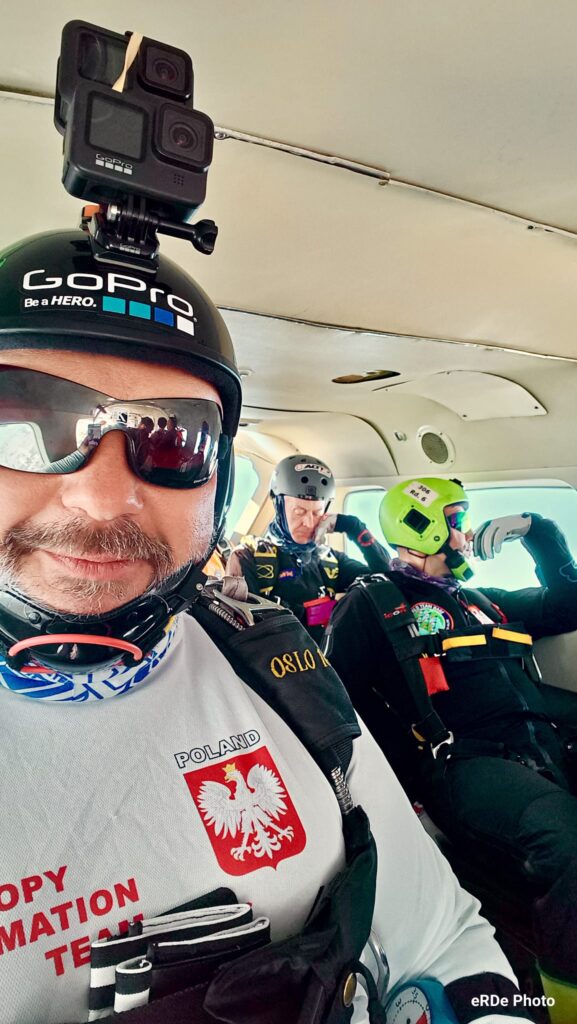
fot. Robert Dąbrowski
The all-around man of the skydiving world.
Poland’s best packer, formation cameraman, grand support, psychological anchor, and the person who always managed to be exactly where he was needed.
As the saying goes: no job scares him — none. A working man, plain and simple.
Robert Kowalski – Bertus
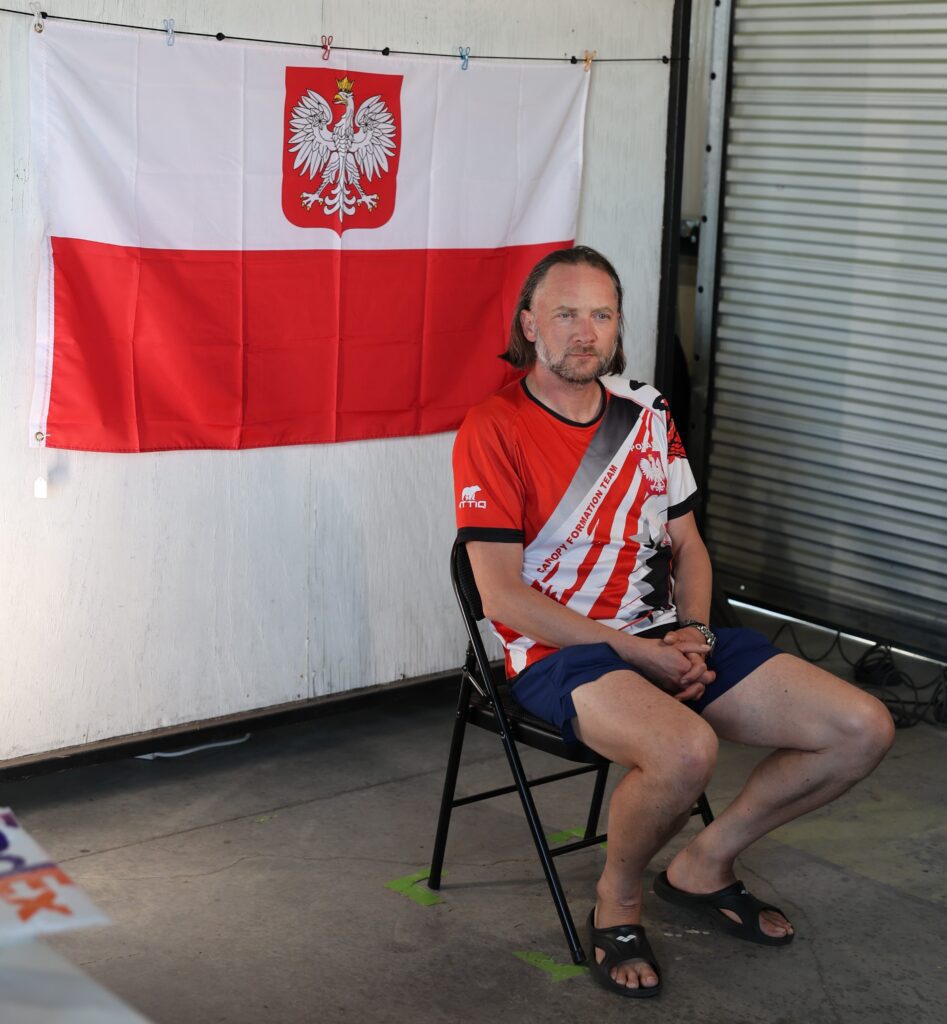
fot. Kasia Walczak
The organizer and handler of social media and sponsorship. Irreplaceable!
He jumps canopies, trains intensely, but still has too little experience to be on the list.
The youngest of the entire crew (in terms of CRW experience and practice), but he came precisely to spend even a moment learning from the best and with the best. And, of course, to feel that sense of community.
And then there’s me.
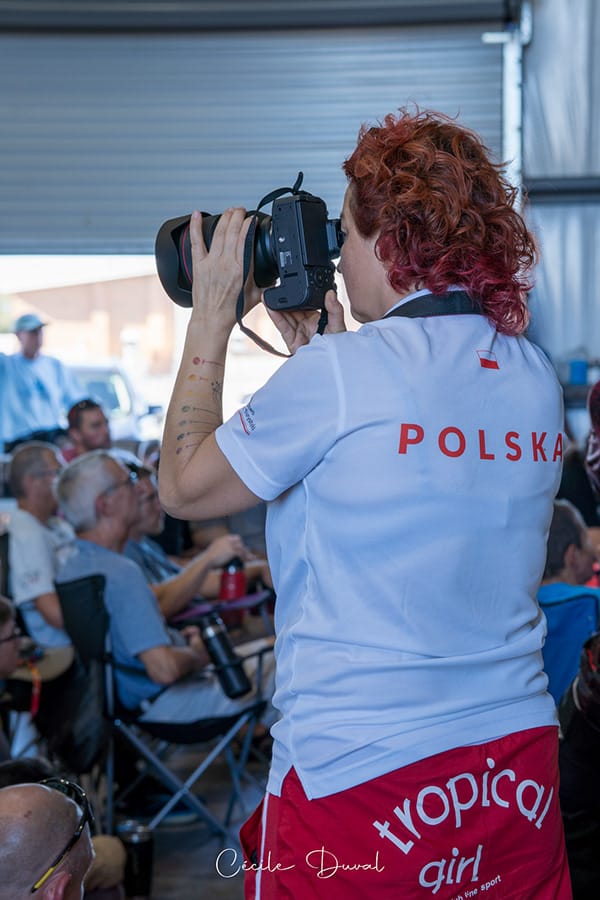
fot. Cécile Duval
I caught the bug from Szymon. On vacation, of all places.
The first time I watched record preparations from the ground — in silence, watching the formation grow and spread — I fell head over heels.
In love with the people, the atmosphere, the beauty of what happens in the sky, but also on the ground, after training, in the shared world of canopy formation.
So of course I couldn’t miss the final chapter. That much is obvious.
Week One.
Parallel rhythm — the women vs. the base.
The first week had its own pulse.
Two parallel worlds, parallel tempos, parallel pressures — and one shared heartbeat.
On one side the base.
First nine. Then sixteen.
The guys — because the base was entirely male — honed themselves day after day like a precision mechanism.
They practiced their entry tempo, reactions, habits. They built what was meant to be the foundation of the entire gigantic formation.
The skeleton that had to withstand every movement, every turbulence, every delay, every swirl.
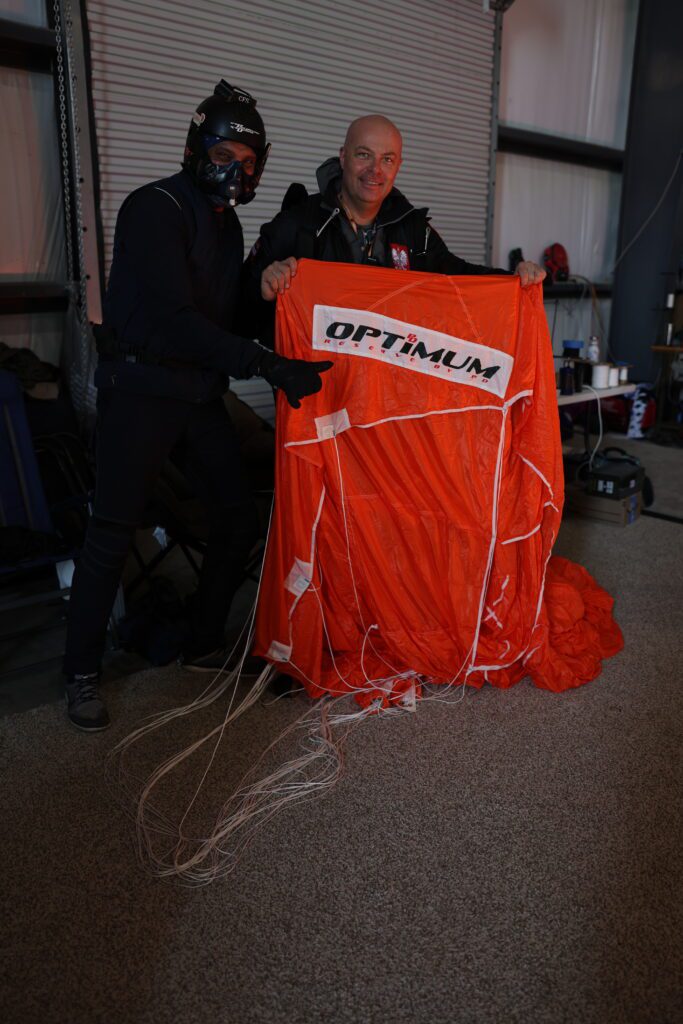
This group of nine, lovingly nicknamed the “Elephants Squadron” — partly because the oxygen masks made their faces look a bit… well, elephant-like, and partly because of the massive canopies they carried on their backs, the largest in the entire formation — became the heart and backbone of the record.
The orange-colored base.
Everything depended on their stability and speed.
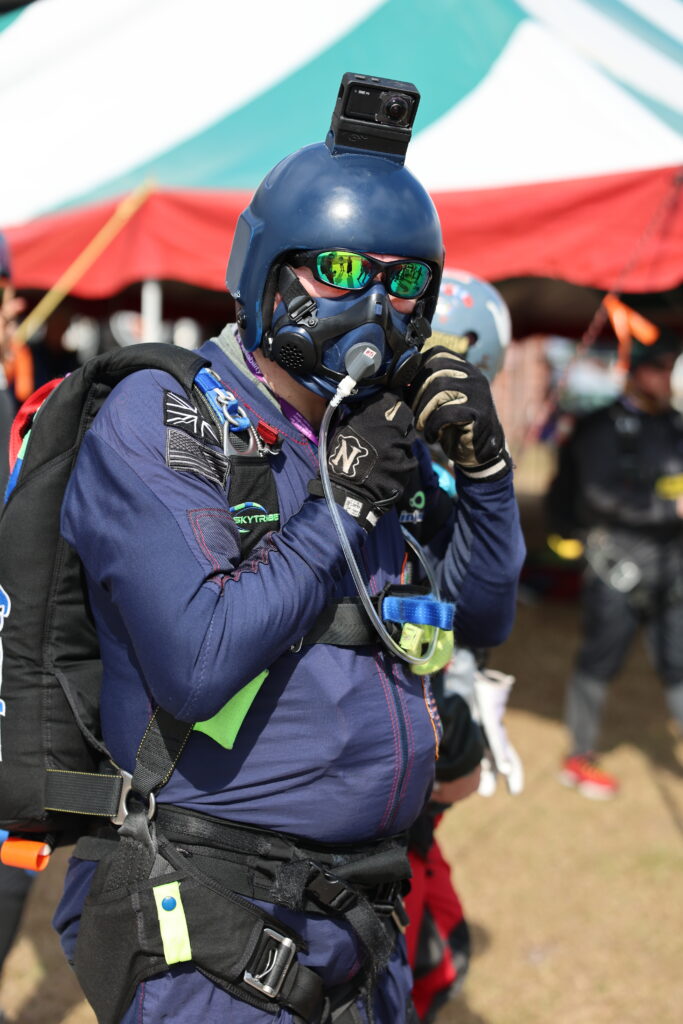
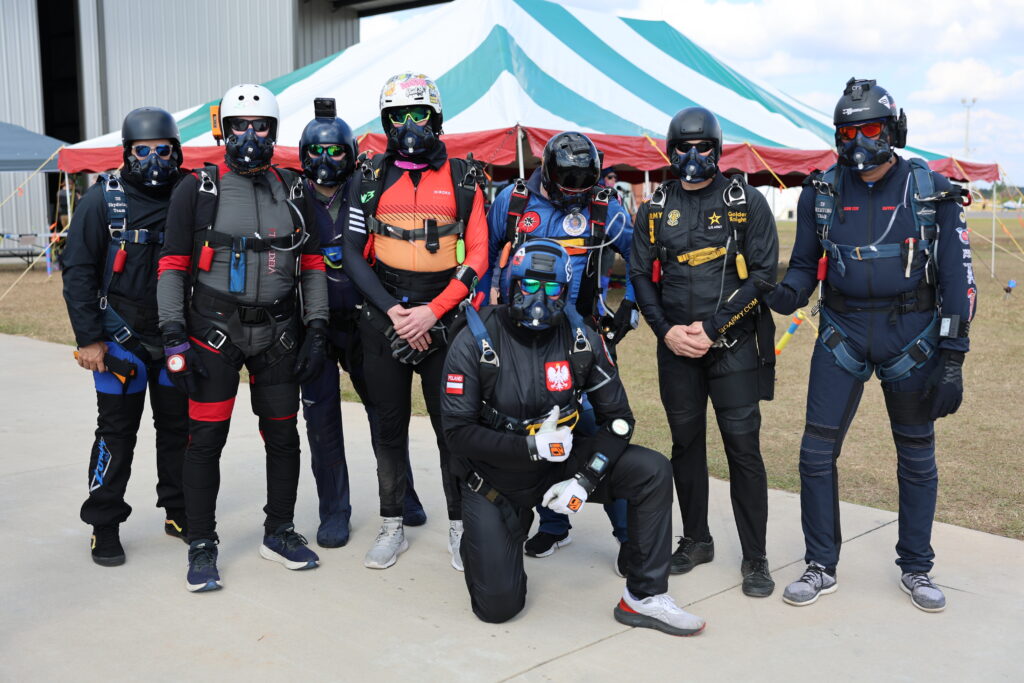
fot. Kasia Walczak
Every day looked similar: briefing, entries, reviews, entries, corrections, entries.
Repetition that, from the outside, seems like boredom — but from the inside feels like precisely calibrating an atomic clock.
Still too long, speed up, slower means faster, more precise, “delivery between the slider and the arm…”
Stop.
Inhale.
Exhale.
Go in.
45 seconds for the 4-way, 90 seconds for the 9-way, you’re close but tomorrow please be 10% better.
Now go home and rest.
Inhale. Exhale.
And on the other side: the women.
Their own lane, their own goal, their own pressure — and their own beautiful tasks…
I won’t go into details here, because that’s a separate story, a separate kind of energy.
But one thing must be said clearly:
Their success worked like a booster for the entire big-record team.
Watching them fight, achieve, and close their goals made the big formation base grow stronger.
Just like the motivation and the pressure — the good kind, of course — the kind that reminds you: “this is really happening.”
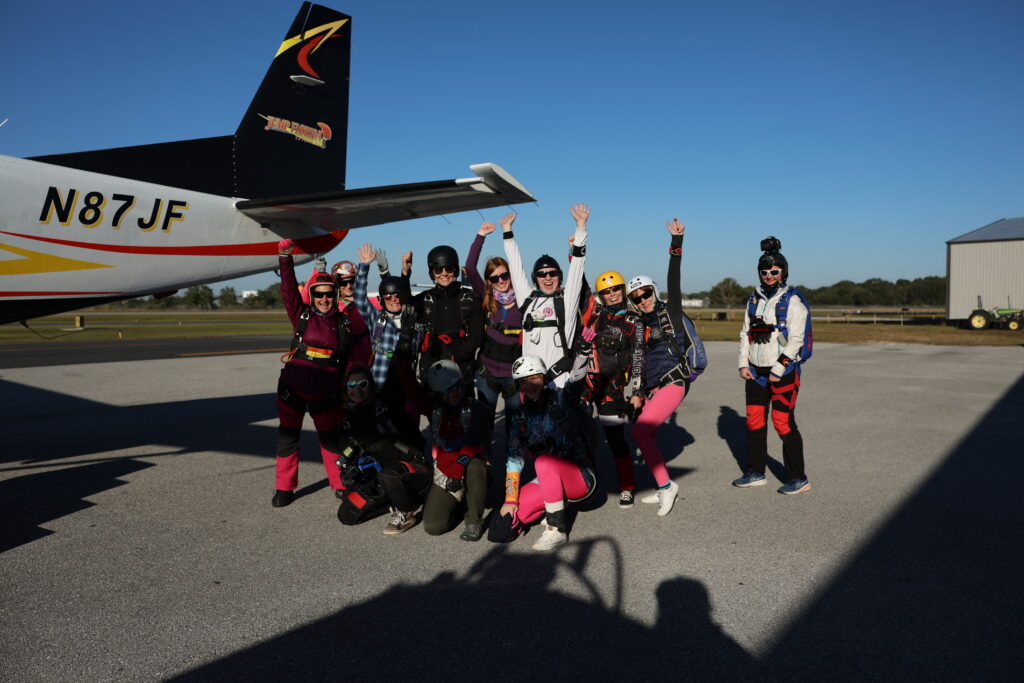
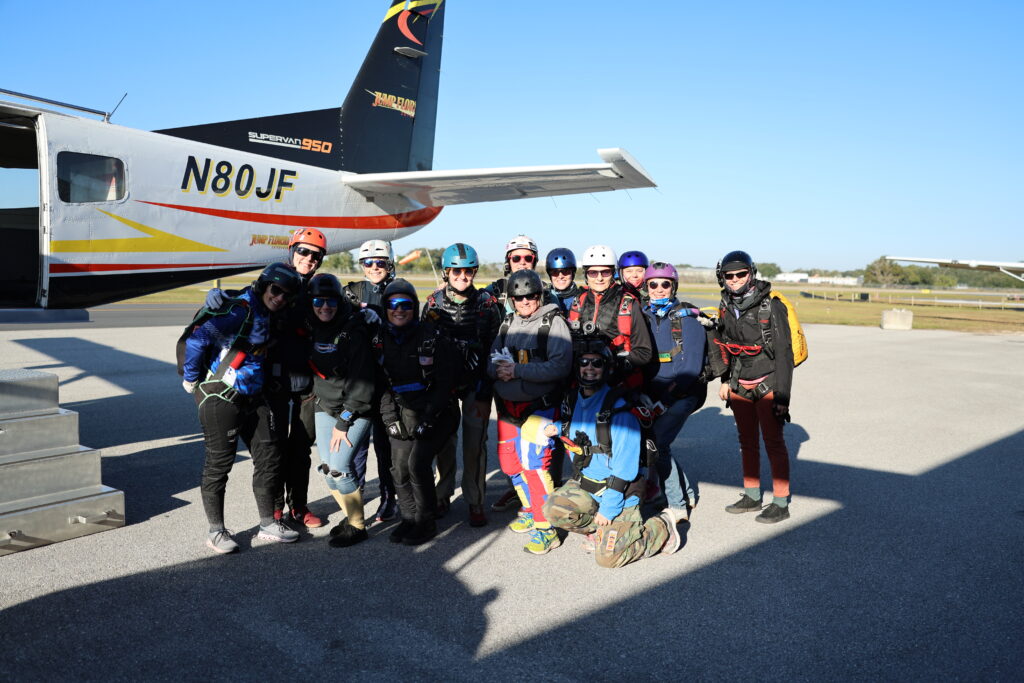
fot. Kasia Walczak
Preparatory procedures.
Meanwhile, smaller groups (9- and 16-way teams) practiced docking, approach routes in echelon, synchronization, and timing.
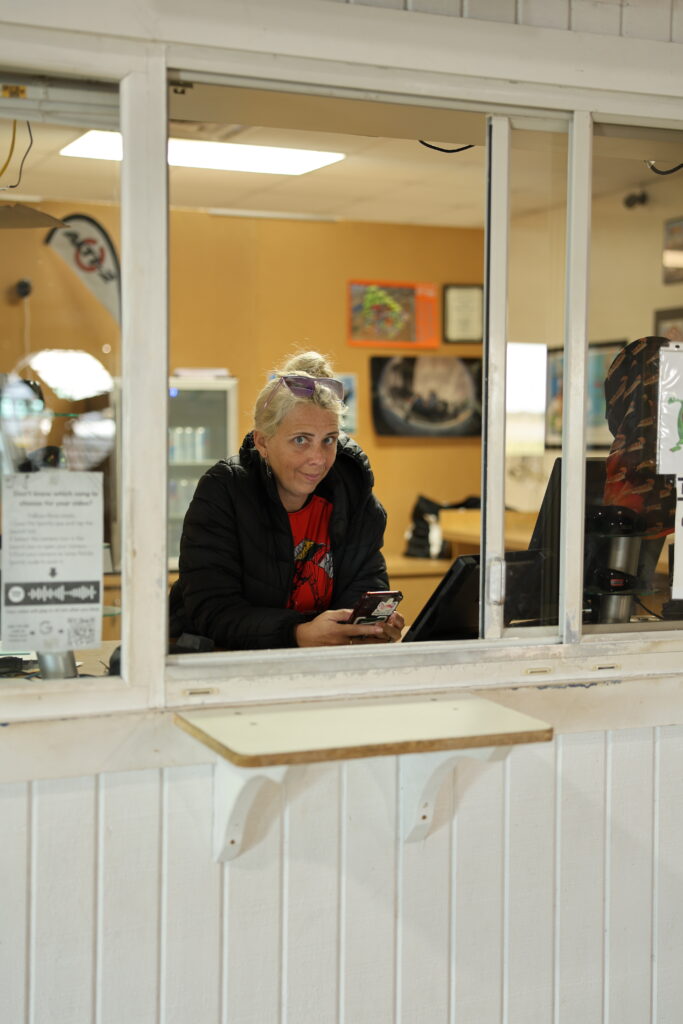
Some people arrived earlier to have time for acclimatization, paperwork, and tying up all the technical details — and there are many in an undertaking like this.
Checking canopies, line lengths, risers, sliders, handles.
Weight checks — yes, everyone must be weighed precisely to fit their position in the formation, the lift and size of their canopy, their assigned role and tasks. Everything down to the exact pound.
Money transferred — yes, without that, nobody boards the plane.
This too is part of the work.
Not very glamorous, but without it nothing happens.

fot. Kasia Walczak
In the few spare moments — and there weren’t many — there were greetings.
The first jokes, the first wave of excitement.
All the emotions tied to the realization that the work of many, many years and many, many people was finally beginning to unfold.
On Friday, November 14th, 2025,
he base training came to an end.
The last jump, the last adjustments, the final warm-up before the real challenge.
The moment to breathe had come.
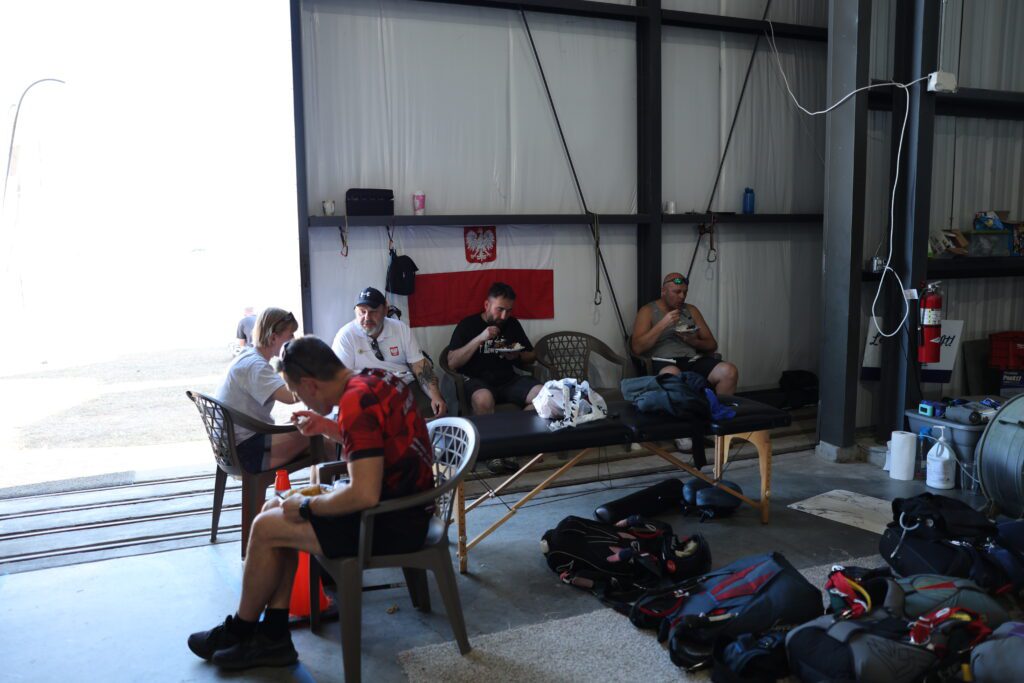
Time to move to a larger hangar — the place where, for the next week, we would live, breathe, and function as one organism.
This was where the next chapters of the story would unfold.
fot. Kasia Walczak
The foundation was ready.
Time to build further.
Week Two. Start of preparations for the big record.
It began with a change you could feel the moment you walked into the new hangar.
Warm morning greetings, wishes for a wonderful day, and a mandatory hug from Chandra.
fot. Kasia Walczak
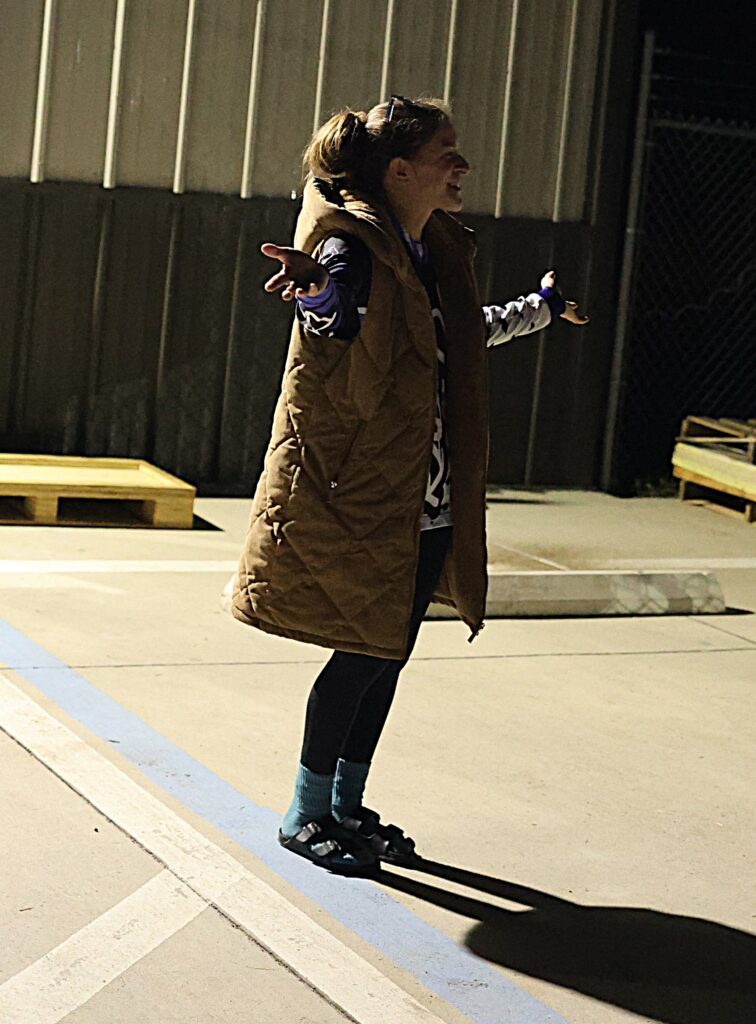
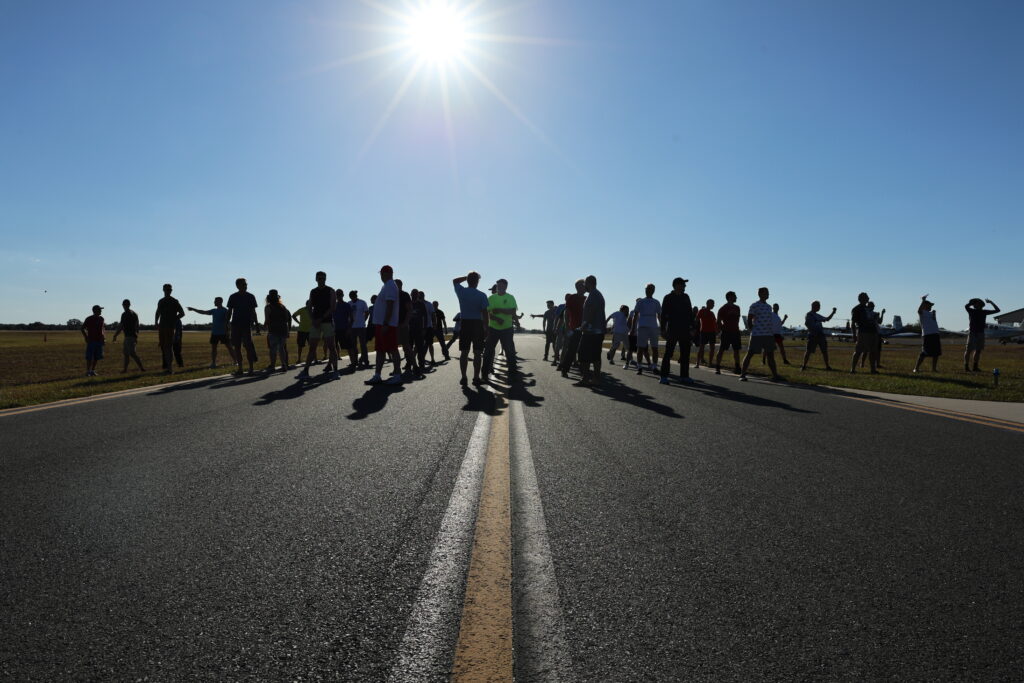
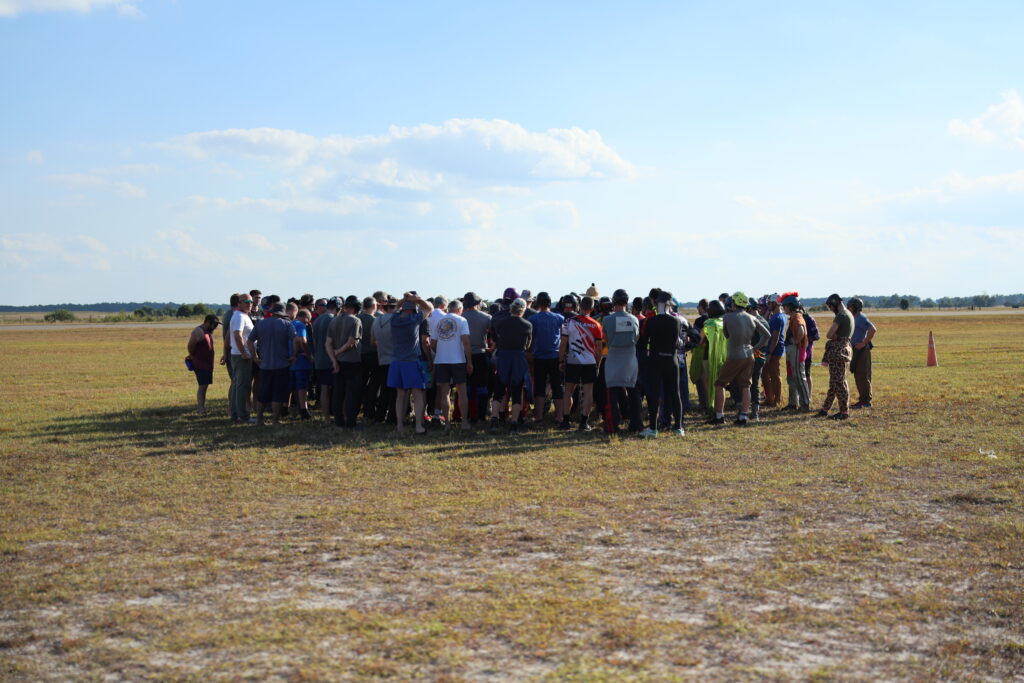
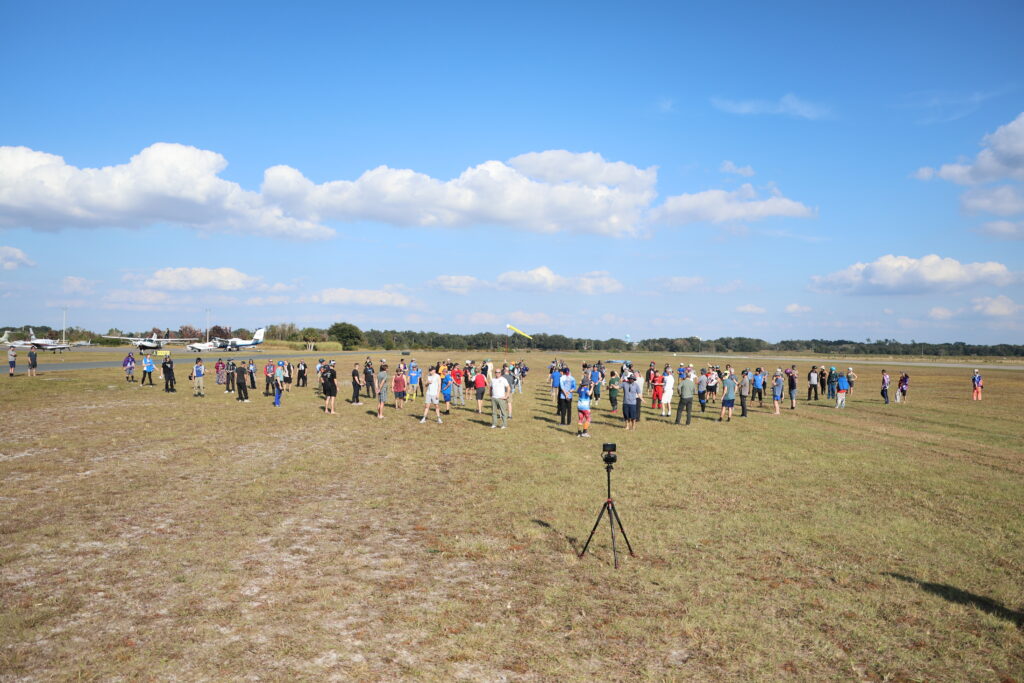
Anyone seeing this for the first time might think:
a bunch of lunatics… or dancers?
Or maybe a gathering of wizards and witches?
But every such movement is an extra training session for muscle memory — for remembering who goes after whom, who docks to whom.
In the air, there is no time to look for your teammate.
You exit, you fly, you dock.
Time, time, time.
And precision.
fot. Kasia Walczak
Oxygen, altitude, and a new reality
The first week in the air was “comfortable.”
Base jumps from 4,000 meters, no masks, no extra complications.
Week two? A completely different story.
A new level of the game began.
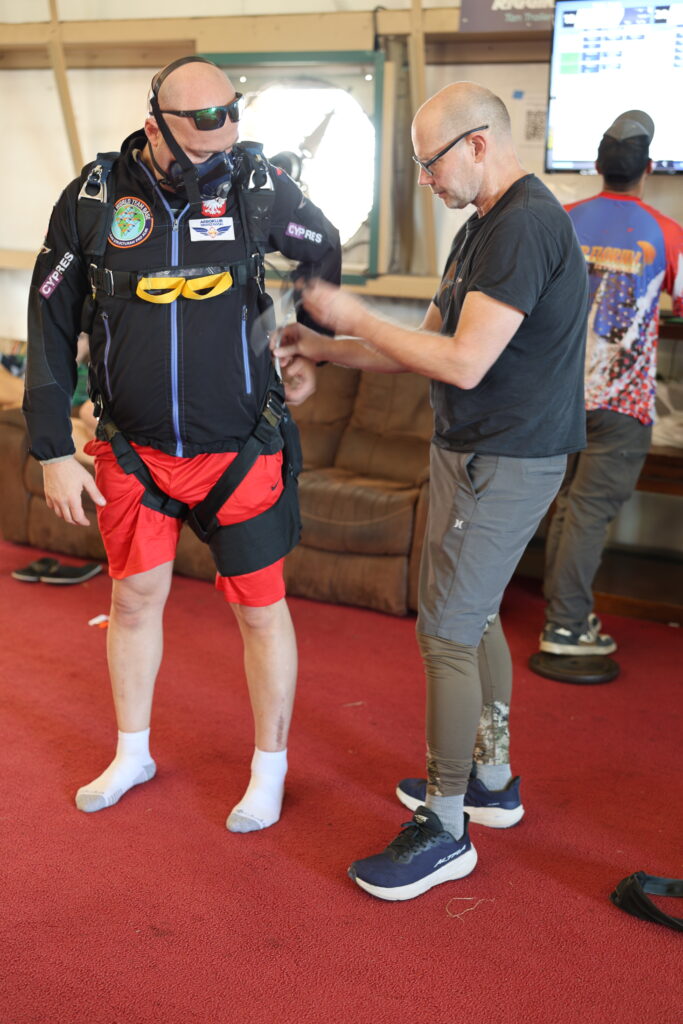
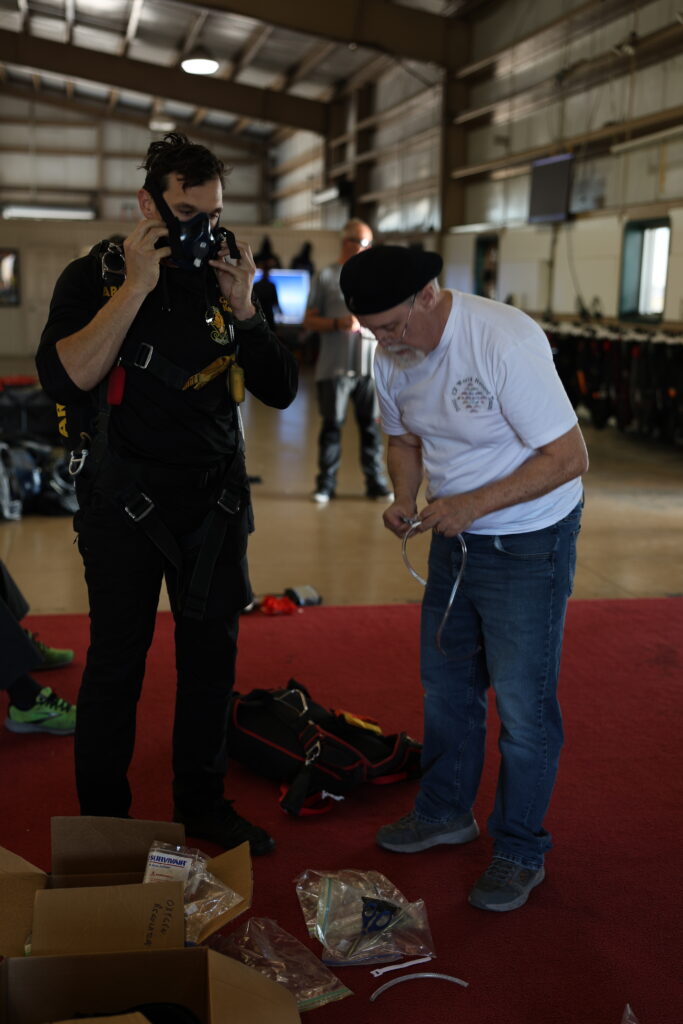
It started with a lecture on hypoxia, oxygen-breathing training — and although it may sound trivial, it is anything but.
You don’t just put on a mask and go. You need to learn how your breathing changes with every thousand meters, how your body reacts, how to maintain focus when your equipment suddenly includes an extra two kilograms of tanks, hoses, and procedures. How to recognize the moment something starts to feel wrong.
And then comes the moment when you must test it all in practice:
a jump and formation-building at over 6,000 meters.
Six kilometers above the ground!!!
Up there, the air has a different density.
The body works differently.
fot. Kasia Walczak
The orchestra of aircraft
Until then, they’d been jumping from two planes.
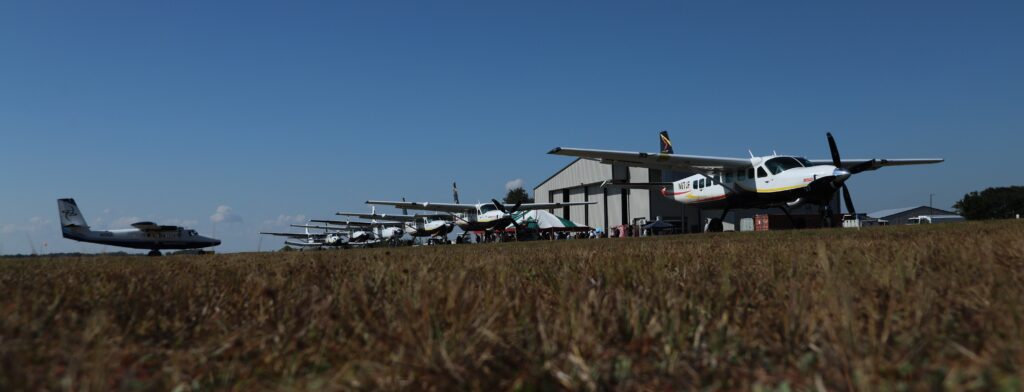
In the second week, it became four — because very soon the goal was eight aircraft flying in parallel through the airspace, at the perfect angle, in perfect timing, releasing successive groups of skydivers. And here, pilot cooperation and coordination became yet another synchronization factor on the road to success.
This is not “okay, everybody go!”
This is mathematics and physics in action.
Everyone climbs together, but each group exits at a different altitude.
It may sound simple, but the point is: to avoid exhausting anyone.
To ensure that everyone has enough time to reach the formation and dock precisely in their assigned place.
The next “floor” comes down from above, then the next one, and the next.
And the formation must close at a specific altitude so that the later break-off remains as safe as possible.
fot. Kasia Walczak
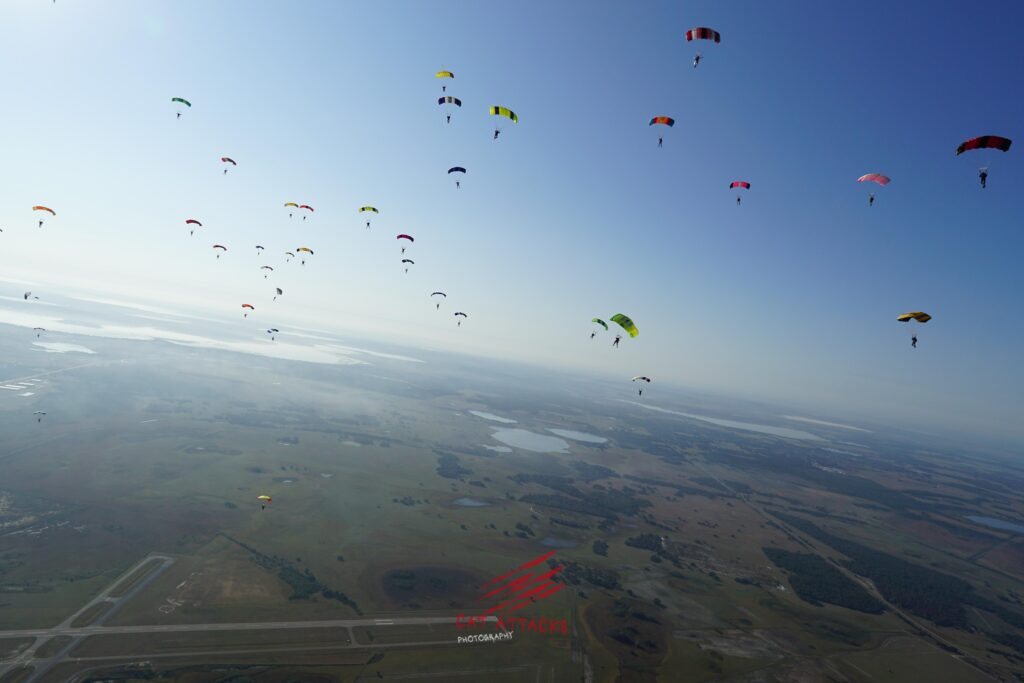
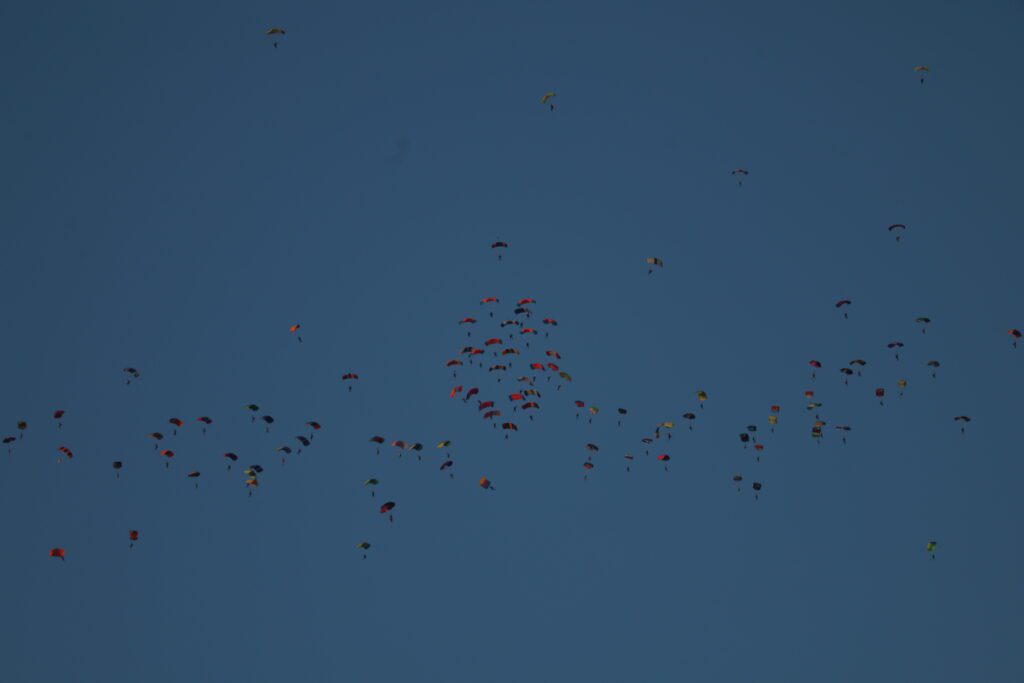
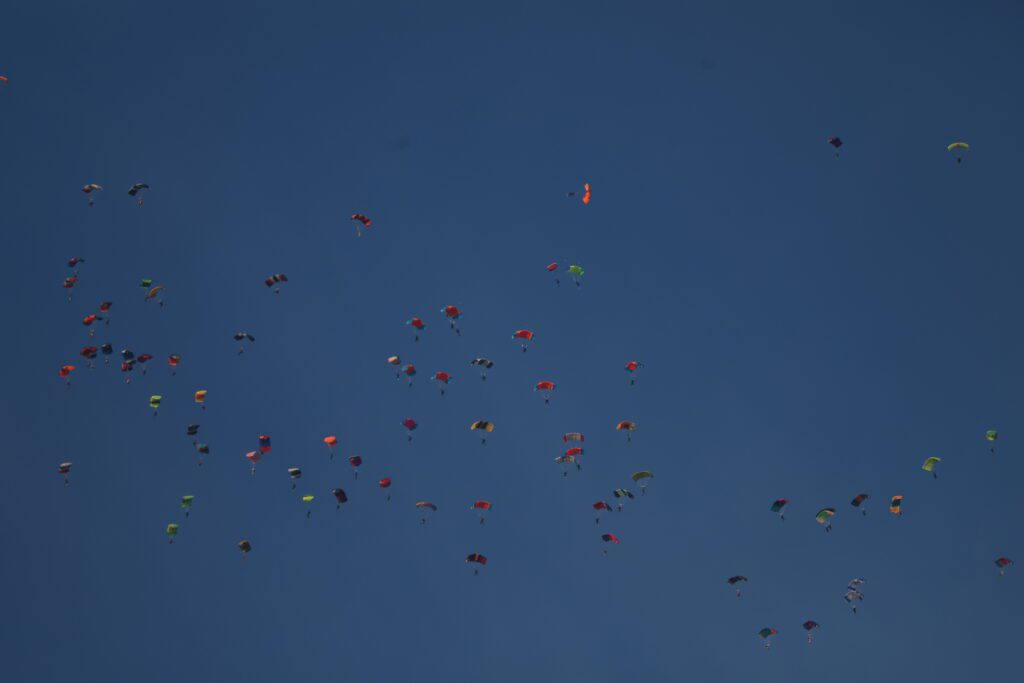
The break-off — my favorite moment.
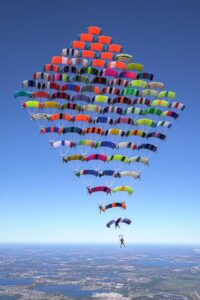
The one in which the entire sky, in a single second, turns into a field of colorful parachutes, scattering like dandelion seeds carried by the wind. And here the metaphor becomes almost too perfect:
– the seed planted — a dream, a plan, a decision,
– the growing plant — the next rows of people docking into the formation,
– the flower — a complete structure, closed, stable, beautiful,
– the dandelion — the break-off, an explosion of colors in the sky.
This story really did look exactly like that.
fot. Cat Isgrigg
fot. Kasia Walczak
fot. Kasia Walczak
film Bruno Brokken
A 64-way jump at the snap of a finger.
A 100-way? A different Universe.
Up to 64 people, the world is still familiar. Formations are fast, logical. Repetition works like a machine.
But then you add more people… up to 85, then more and more, more rows… 100 and beyond, with people in the air linked by their legs around parachute lines — and that changes everything:
– pace,
– air density,
– fall rate,
– drag,
– dynamics,
– line tension,
– safety margins,
– the math and physics of flight.
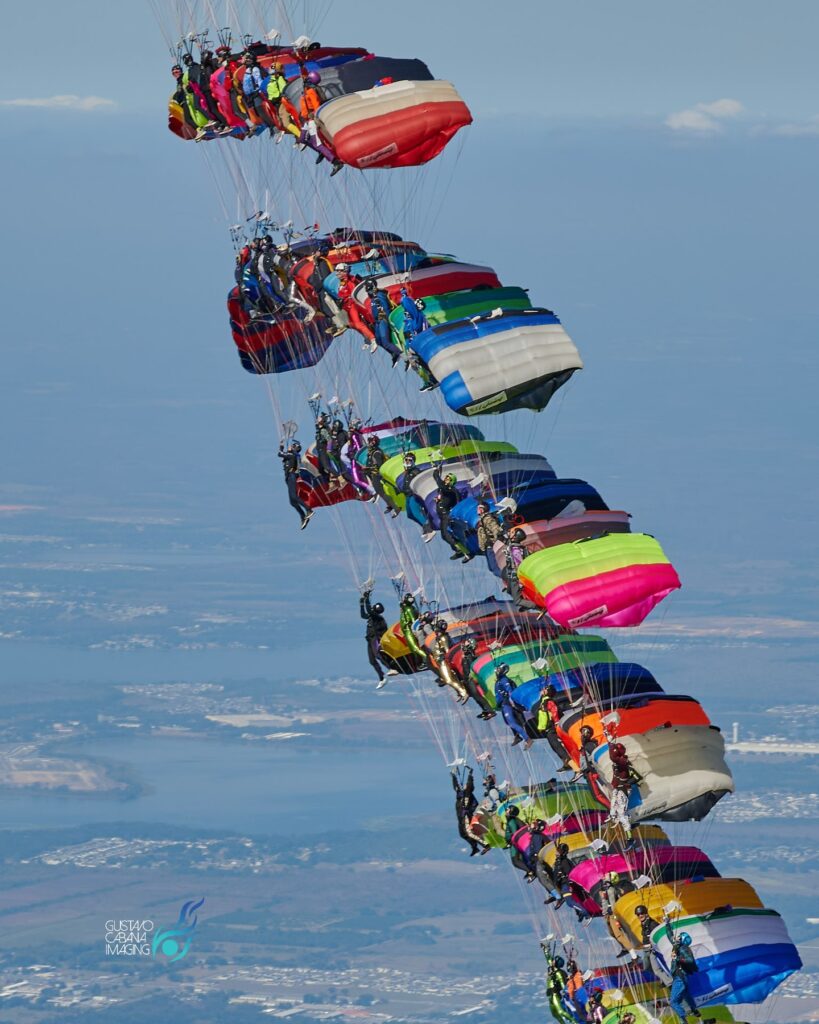
fot. Gustavo Cabana
No one in the world has a ready-made recipe for how the air behaves with that many people.
Because no one in the world has ever built anything like this!!!!
You have to train it.
Read it.
Feel it.
And correct it — once, twice, ten times.
After every jump there were changes.
Sometimes minimal.
Sometimes bigger.
But none of them could be ignored.

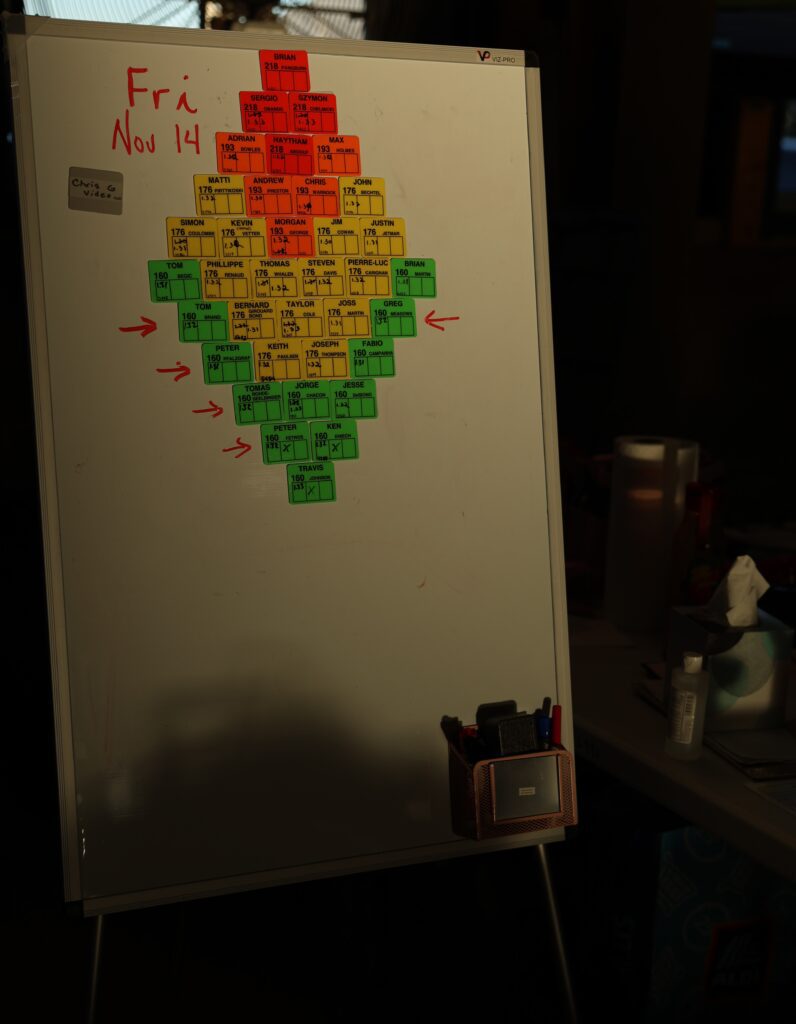
fot. Kasia Walczak
At this level, names disappear. Only dry numbers remain.
This is the moment when it becomes… a little sad.
Because although we are humans, friends, a team — at this scale there is no room for personalization.
There is no “this one prefers it like that, and that one has this kind of style,” and there is no ego.
No exceptions.
Only numbers.
Parameters.
Standards.
A stopwatch.
Results.
Physics and mathematics make the decisions.
Sometimes against emotions, against sympathies, against that little wish to be irreplaceable.
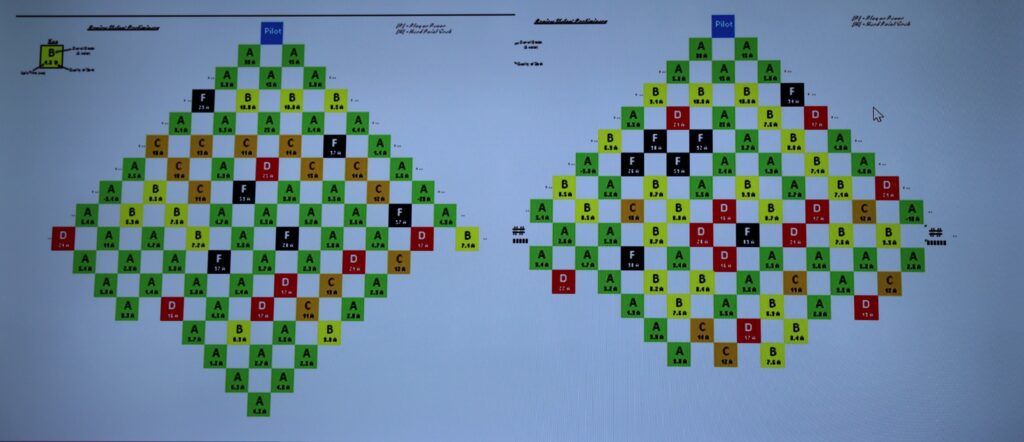
That’s what this game is.
The final success is the success of everyone.
Not only of those flying in the formation.
But those who count, analyze, adjust, swap, arrange, brief, support, film, correct, and keep the energy alive.
A record is the effort of hundreds of people.
Those physically flying, those sitting on the “reserve bench,” those preparing and training because they might be needed at any moment.
The second week was the moment when everyone felt they were stepping onto territory bigger than themselves.
How is a record evaluated? (Briefly about FAI regulations)
Largest Formation Team — this is the full group that is legally allowed to take part in the attempt. It includes:
- the jumpers docking into the formation,
- the mandatory camera flyers,
- the reserves (who may enter only if they were officially registered).
The total number of people in this group may not exceed 120% of the planned formation size.
So, for a 107-canopy attempt, the entire team (including reserves and camera) cannot exceed 128 people.
The plan is sacred! Everything must match perfectly on paper.
Everything must match perfectly on paper.
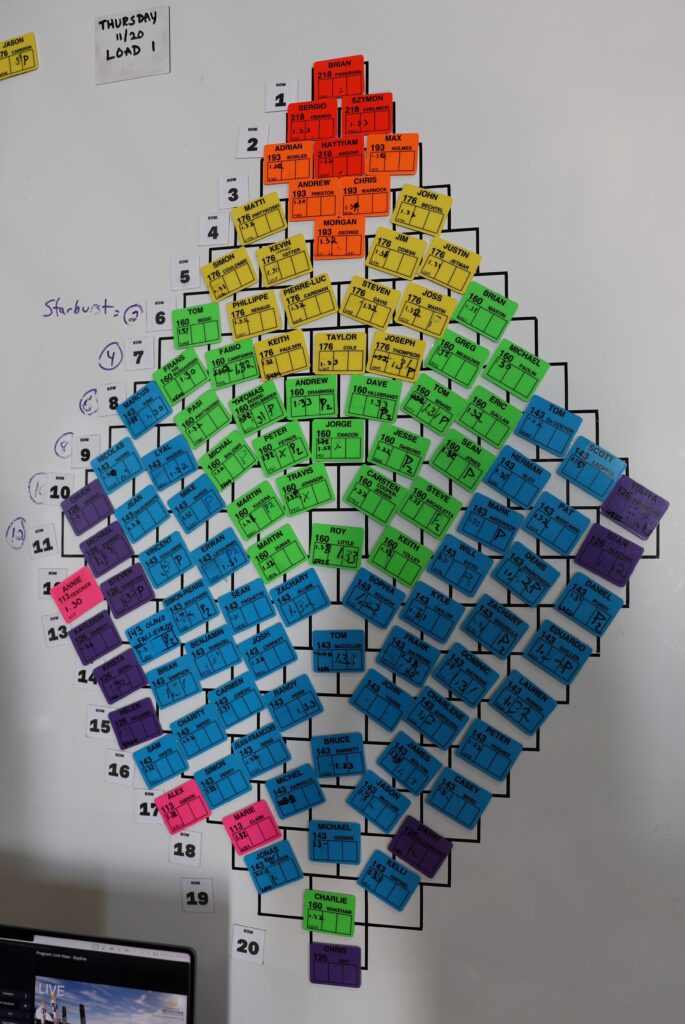
Before the jump, the organizer must provide a written formation plan:
- the formation diagram / sequence diagrams (for sequential formations),
- the list of participants,
- the description of transitions between formations (if it’s a sequential attempt).
The judges compare exactly what happens in the air with what is written in the plan.
If anything does not match — there is no record.
What is a “valid grip”?
Large canopy formations rely on specific, judgeable grips (on open parachutes; other types exist, but not relevant here):
- a leg grip on the rear jumper — meaning a foot or lower leg hooked around the A-line.
Every participant must have a solid, secure grip — only then they are considered part of the completed formation.
For the curious!
How are transitions judged in large sequential formations, such as the ones performed by the Women’s team?
In big-way sequential CF (e.g., Formation → transition → second formation) it is NOT required that everyone releases at the same time. Two key rules apply:
A. Minimum 35% must truly “release”
During the transition, at least 35% of participants must:
- release their grips, and
- be released by others (meaning no one is still holding onto them).
B. Everyone must “move to a new slot”
Every jumper who released must dock on a different point from the previous formation.
You cannot release and dock back exactly where you were.
How does the final evaluation look?
After the jump:
- all camera footage is analyzed,
- the judges verify, step by step:
- whether everyone docked exactly according to the plan,
- whether every grip was valid,
- whether the transitions were performed correctly (35%, subgroups, full breaks).
If all conditions are met — the formation or sequence may be officially recognized as a record.
What is NOT evaluated?
Unlike the “scored” competition disciplines — 4-way sequential, 2-way sequential, 4-way rotation — here:
- there is no time limit,
- no scoring system,
- speed does not matter,
- only clean execution and precision in following the plan count.
Summary: What is the magic of big-way CF?
In large canopy formations, the most important thing is that dozens of skydivers under open parachutes can:
- enter a precise, pre-planned structure,
- hold it stable for at least 2 seconds,
- and, in sequential jumps — perform transitions correctly and clearly,
- all in accordance with FAI rules, which ensure safety and purity of execution.
It’s the only discipline where the goal is not “more and faster,” but cleaner, more stable, and done together.
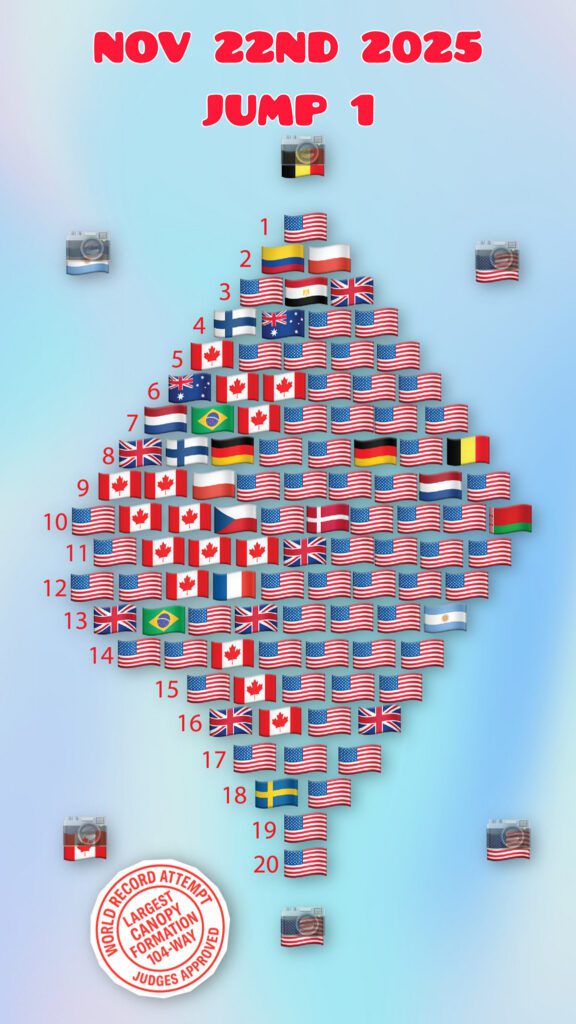
- There is no requirement for the record team to consist of a certain number of nationalities.
- Participants may come from different countries (different NACs), which gives flexibility to international record teams. They must simply hold a valid FAI license.
FAI Judging Panel
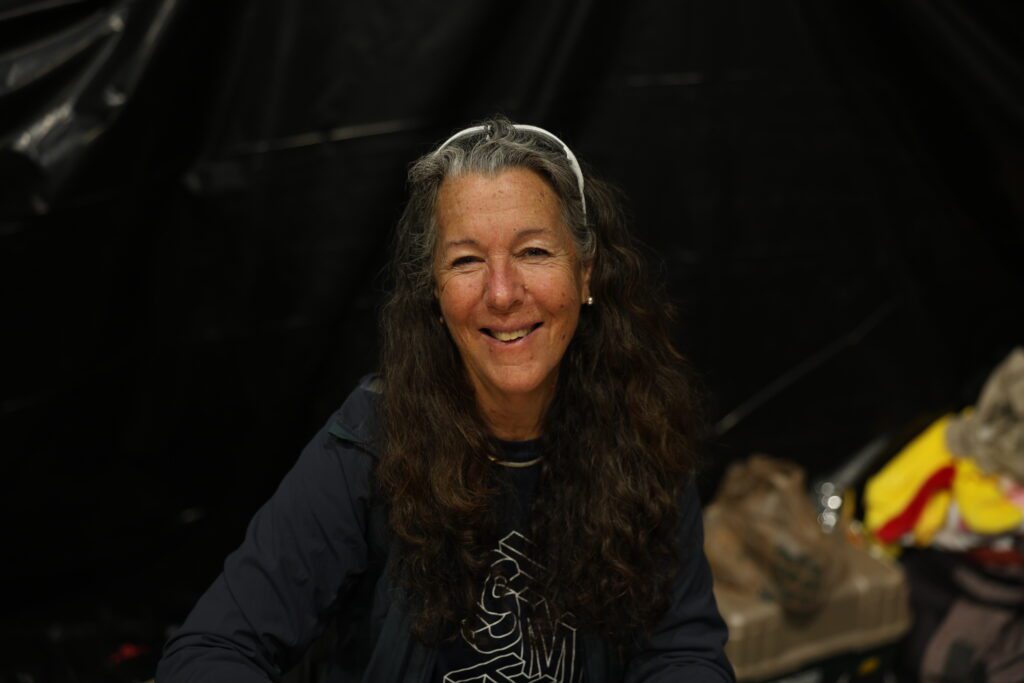
MaryLou Laughlin USA
fot.Kasia Walczak
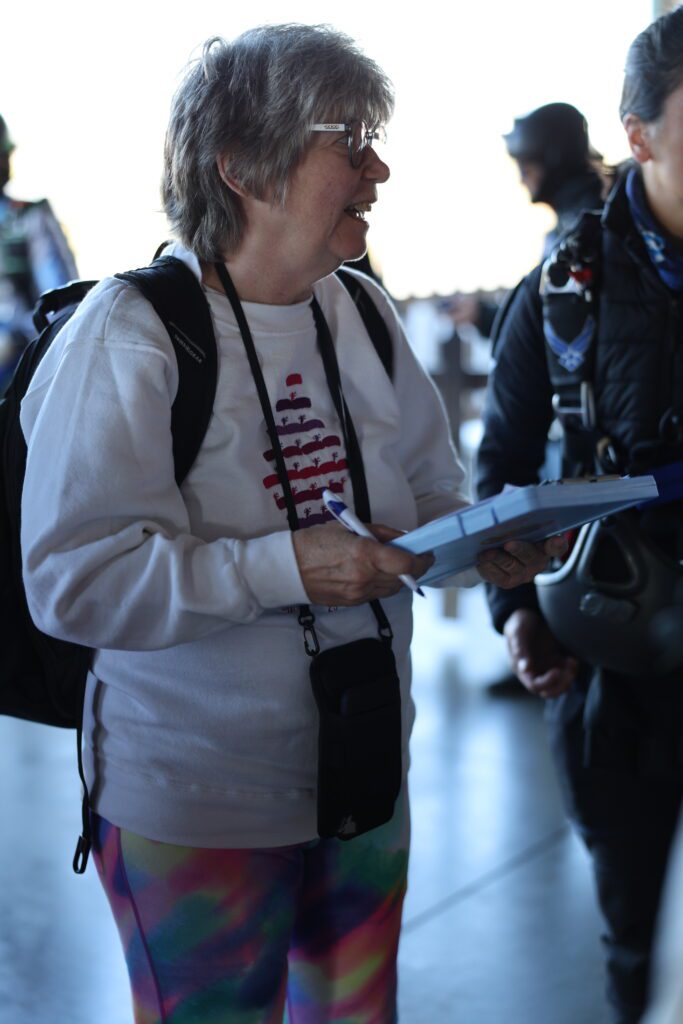
Cheryl Michaels USA
fot. Kasia Walczak

Rina Gallo Canada
fot. Internet

Natasha Higman Germany
fot. Internet
Attempts for the 107-way — tension, frustration, doubt.
First 107-way attempt. Wednesday, 19.11.25
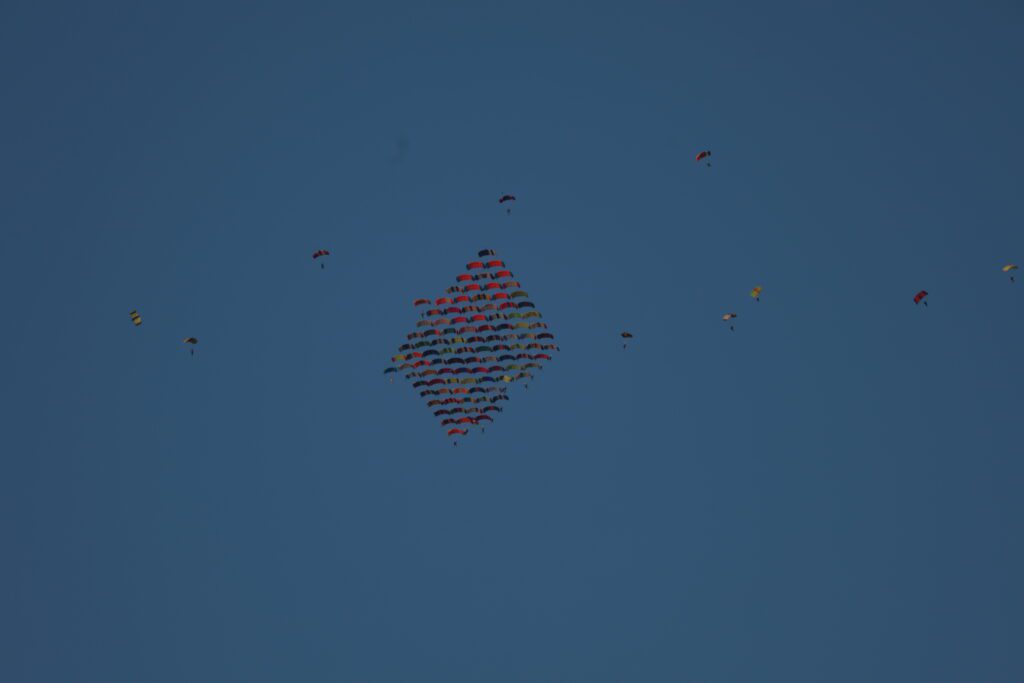
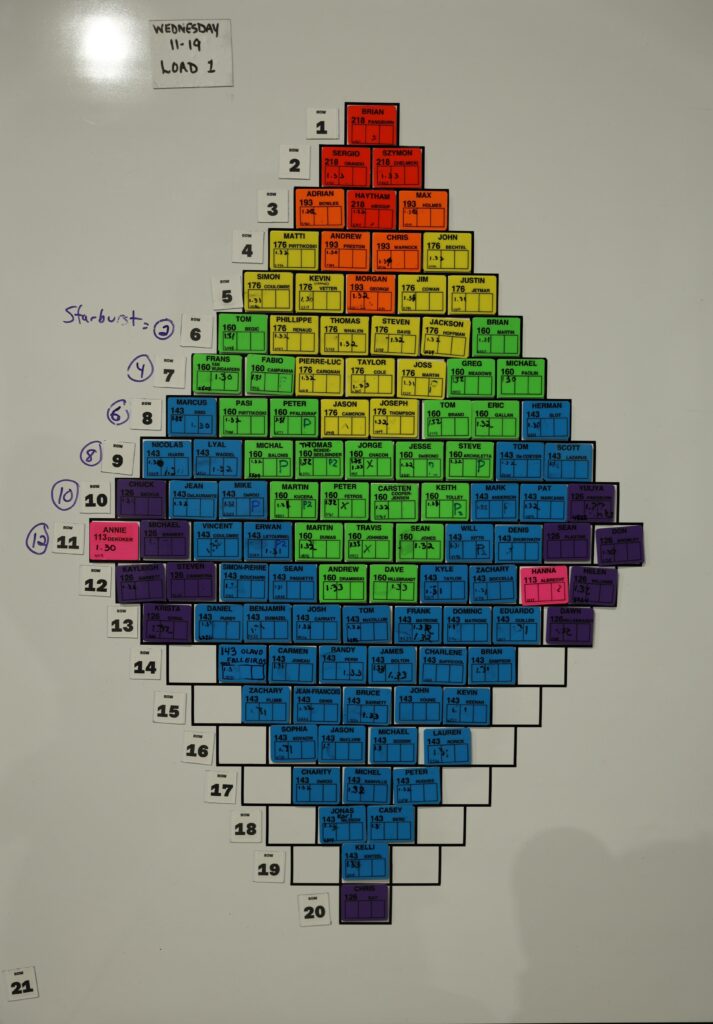
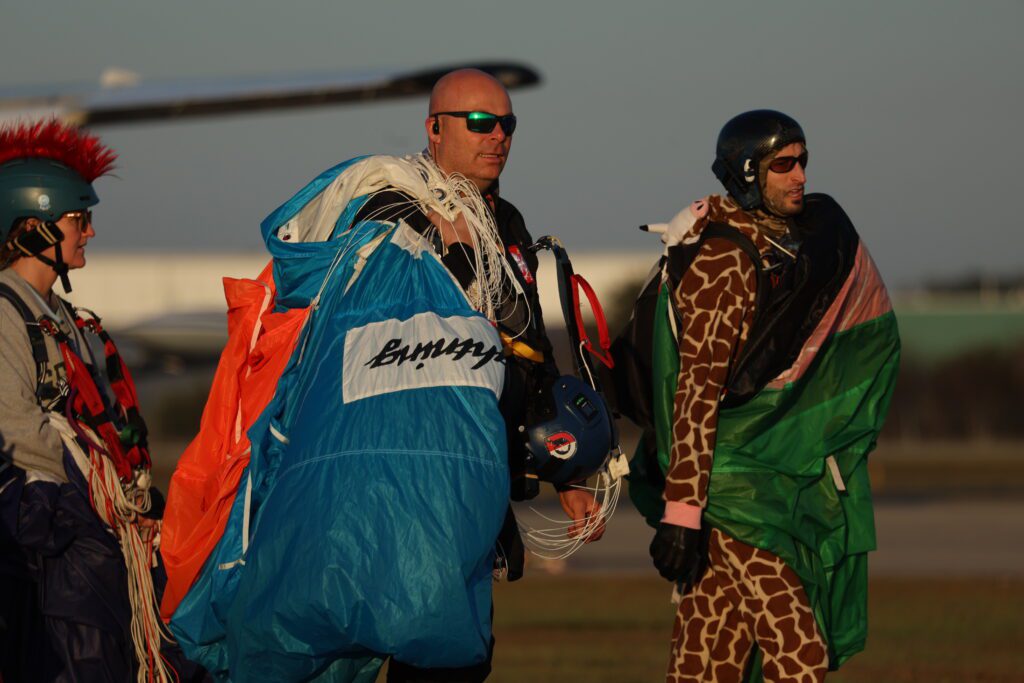
And here it needs to be said clearly: it was almost, almost there.
The formation began to build with such precision that you could already feel the first wave of euphoria on the ground. Not success yet, but very close. Everyone walked away from that jump energized — “we’re going for it.”
Two more attempts that day.
Hmmm… they washed away the euphoria, increased curiosity, and sharpened focus.
fot. Kasia Walczak
Second day — Thursday, 20.11.25.
A birthday present for the formation pilot, Brian?
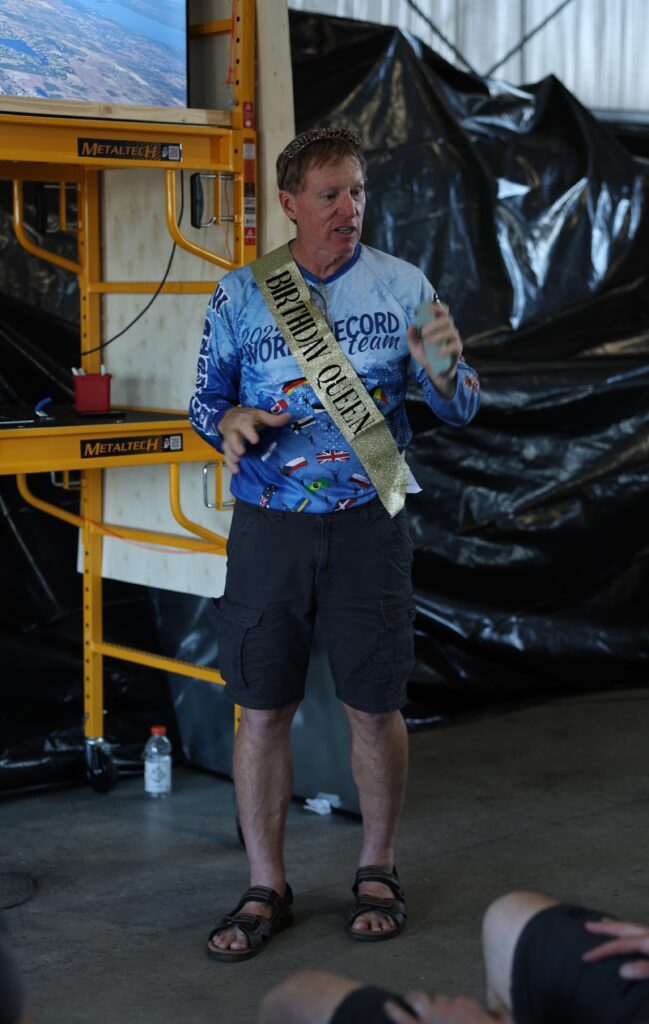
fot. Kasia Walczak
First attempt — even closer than the day before — a good sign.
So close that a few people let that dangerous “it’s already done” creep in.
And yet: it fell short by just a little.
The tension of the birthday gift hovered over the record chasers.
The next two attempts, instead of showing progress, began to drift apart.
Not disastrously, but in a way that signaled something wasn’t clicking.
The last attempt of the day… well — things got a bit tangled up.
Not because anything happened — nothing did.
But the formation shuffled itself enough that even the calmest people finally said out loud what everyone felt:
“Yep, the tension just jumped up a level.”
Organizers: angry.
Participants: frustrated.
Changes, changes, more changes.
And the 107… still not coming together.
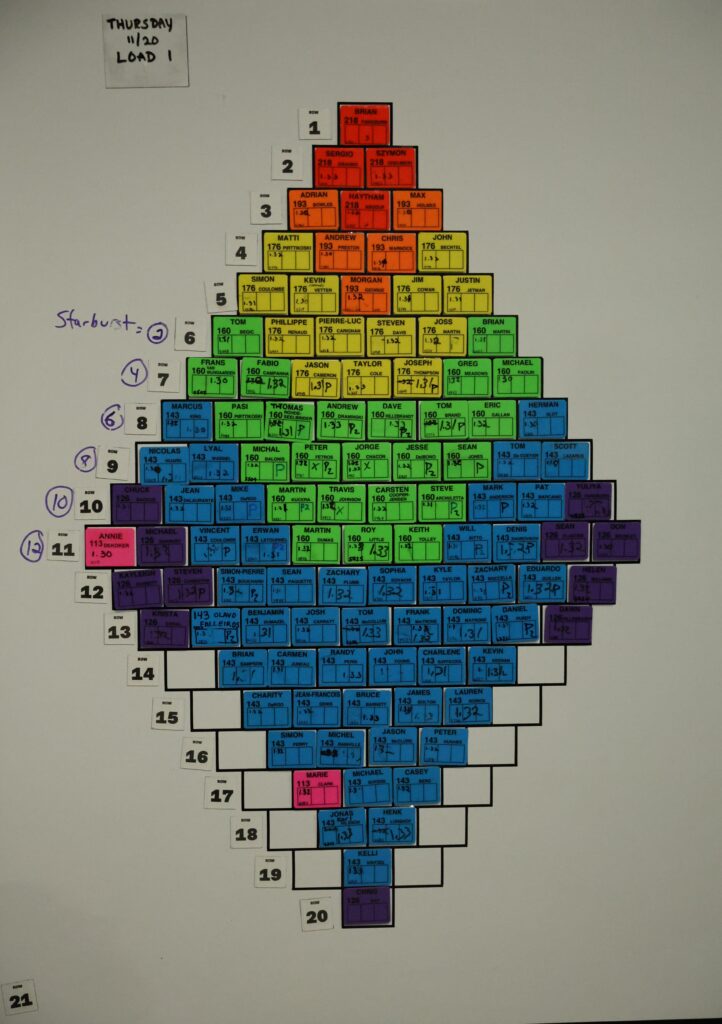

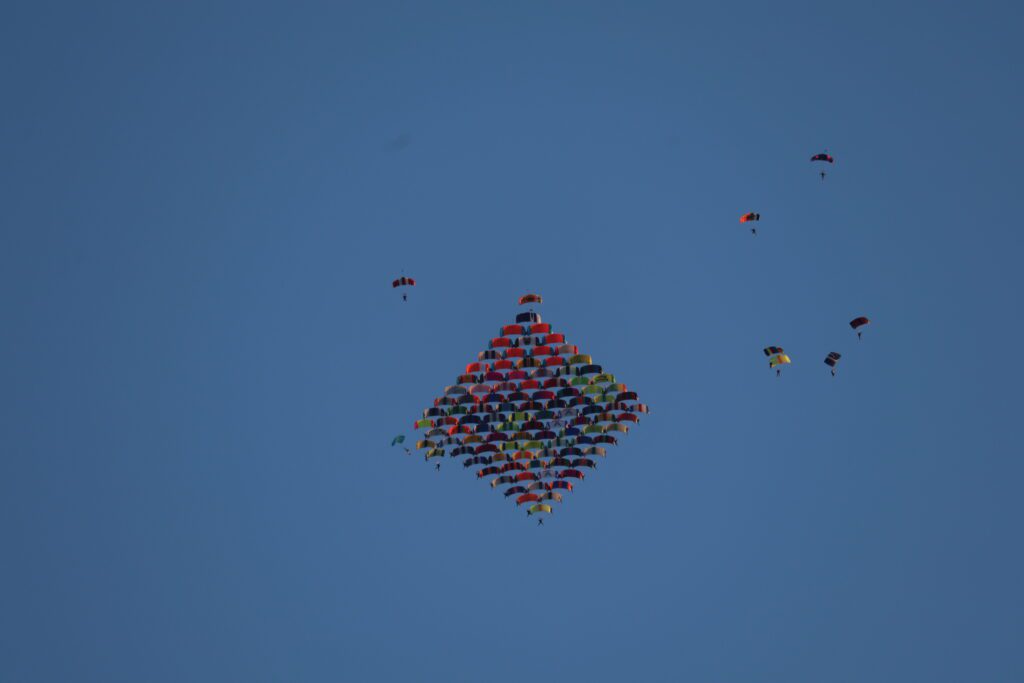
fot. Kasia Walczak
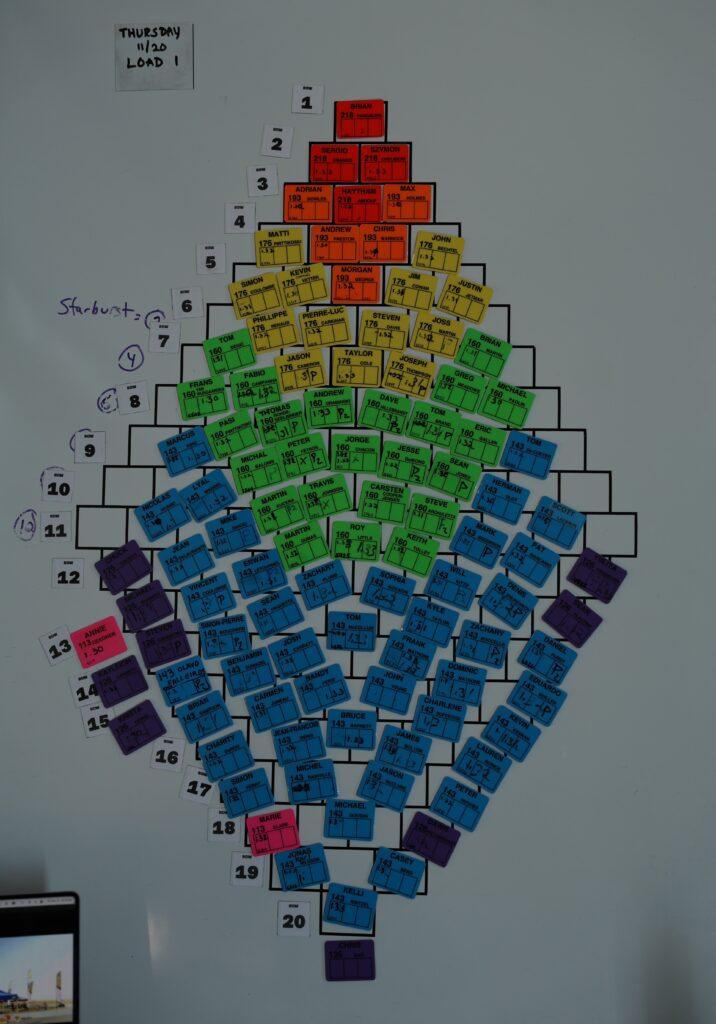
Friday, 21.11.25 — the day that was supposed to be THE day.
Friday. The sacred “let’s just bloody do it already” kind of Friday.
First load: nothing.
In the sense of nothing we wanted to see.
Second: and this is where it gets cold down your spine.
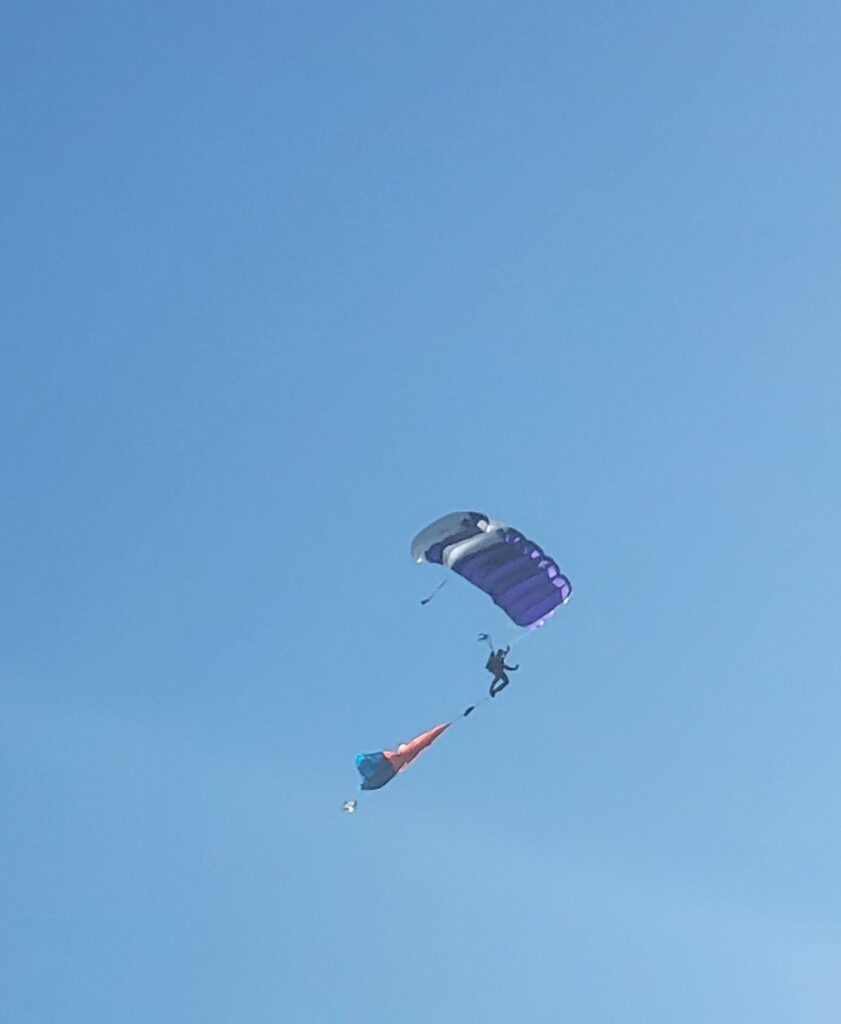
A line snapped in the base on one of the jumpers during opening.
Luckily: full control of the situation, calm tracking away, immediate halt of the exit from the remaining seven aircraft, guiding the jumper over the airport, switching to the reserve, safe landing.
But that meant one thing:
a forced break and a full gear inspection for the entire team.
Good thing it happened, because during the inspection several issues were found — simple wear from enormous strain on the equipment. But perhaps even more importantly, the pause affected the people.
fot. Kasia Walczak
A personal digression about breaks that save results. The strategy of success.
There are different philosophies of working under pressure.
One, which I personally like and prefer, says that when you’re working under massive stress, in a short time, with tons of new stimuli, and the plan calls for 5 jumps a day while weather allows for only 3… taking a break is worth it.
The body has its limits.
The equipment too.
And the mind?
Even more so.
Sometimes you need to let go, go out for dinner, sit on the beach, change the scenery, do some shopping, let the training processes settle on their own in the background.
The mind absorbs slower than the muscles. It likes silence, calm, and a fresh perspective. A breath away from the main problem.
The other method is the one many people prefer as well:
push until the muscle does what it needs to do automatically, without the mind doing anything.
There’s no single right way.
Synchronizing 107 people plus a dozen waiting for a slot so everything works perfectly at the same moment?
Exactly.
In that setup, a break can be a blessing.
Friday’s break was perfectly timed.
Forced by safety, but it gave everyone space to breathe.
Logistics and the Grand Support Team — the invisible backbone
In every big formation, the most visible are those in the air.
The colorful canopies, the dockings, the perfect lines.
The image that makes it into history.
But a world record is not born only in the sky.
It is also born on the ground — in hangars, around briefing tables, in the headsets of coordinators, in the hands of people whom few ever notice, yet without whom nothing here would happen.
The Boss of all Bosses, but above all, grand support.
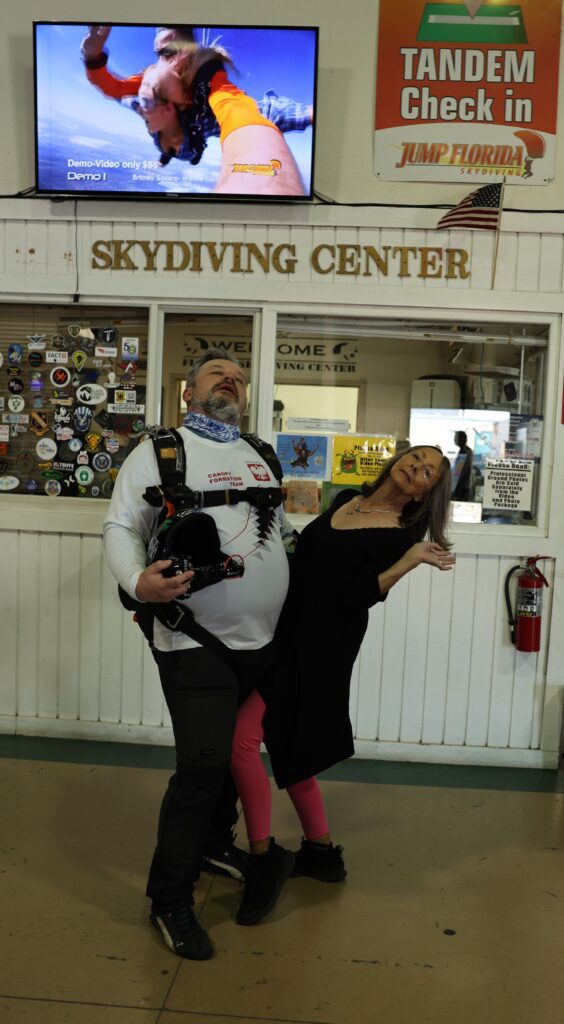
Sarah — the irreplaceable woman.The chief of Grand Support.
If Sarah calls your name across the entire hangar in a tone that brooks no opposition, know that you’re in trouble.
A warm, unassuming, smiling, fantastic woman — but when she needs something done, you do it as quickly and as well as you possibly can.
For her, nothing is impossible.
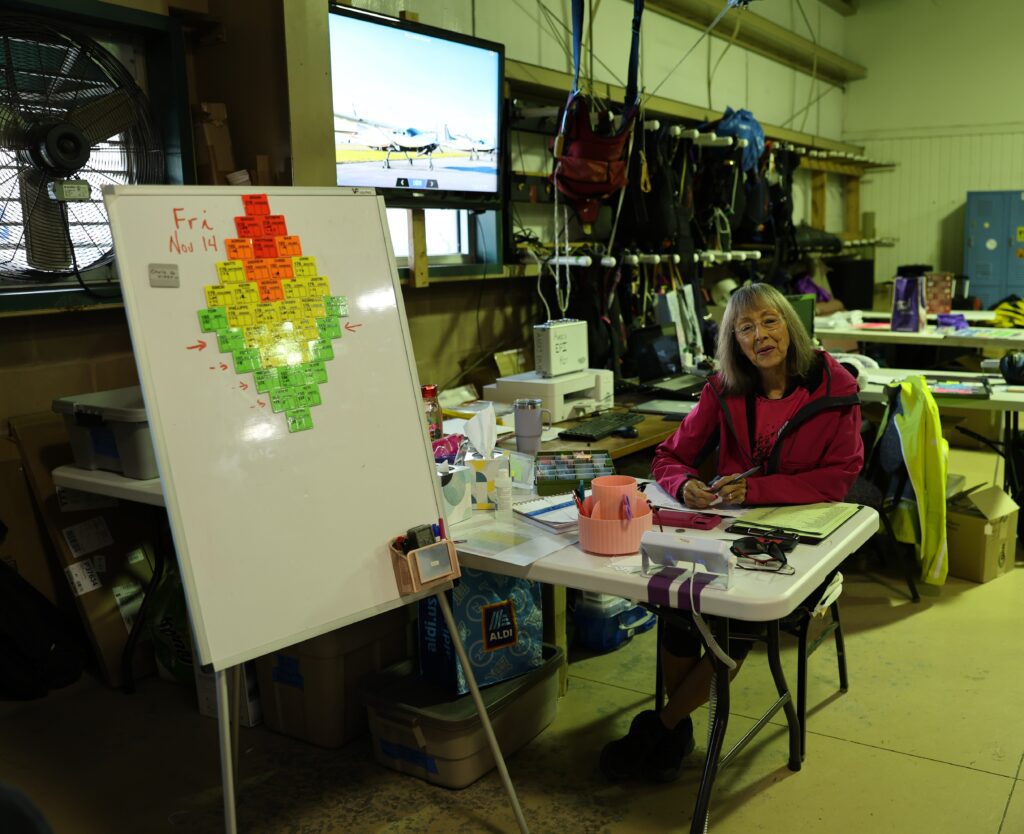
fot. Kasia Walczak
Planning that works like a space mission control center
Every jump is logistics on the level of a flight operation:
- loading plans — who boards with whom, from which aircraft, in what order, and from what altitude,
- dividing people into groups, zones, tasks — who must report to whom and confirm safe landing,
- synchronizing 8 aircraft that must enter the airspace at specific points, angles, and exact seconds,
- slot control — making sure everyone knows where their place is and what to do,
- communication across the entire dropzone, which also operates commercially and, if needed, with the city for immediate response.
This does not happen by itself.
It is an orchestra where every off-note echoes.
The ground army — packers, riggers, camera flyers, documentarians
They are the invisible backbone of this entire story.
- Packers — dozens of pairs of hands folding parachutes non-stop for many hours a day, ensuring each jump is as safe and consistent as possible.
- Riggers — the people of reserves, repairs, re-lining, patching, replacing, inspecting. When someone’s canopy “goes,” when something tangles or tears — they take it on the chest and bring the gear back to life.
- Camera flyers — without them there is no analysis, no errors to correct, no story. The footage the world later sees — that’s their work. They are officially part of the team. Their skill determines whether the record is approved or not.
- Pilots — needs no explanation. Coordination, focus, responsibility, and safe delivery of the entire load.
- Grand support — coordination, communication, safety, documentation, transporting jumpers from the landing area, organizing briefings, passing messages, synchronizing time, oxygen, installations, and if needed — even massages.
- The entire staff of Jump Florida Skydive — without them there would be neither a place nor the means to jump.
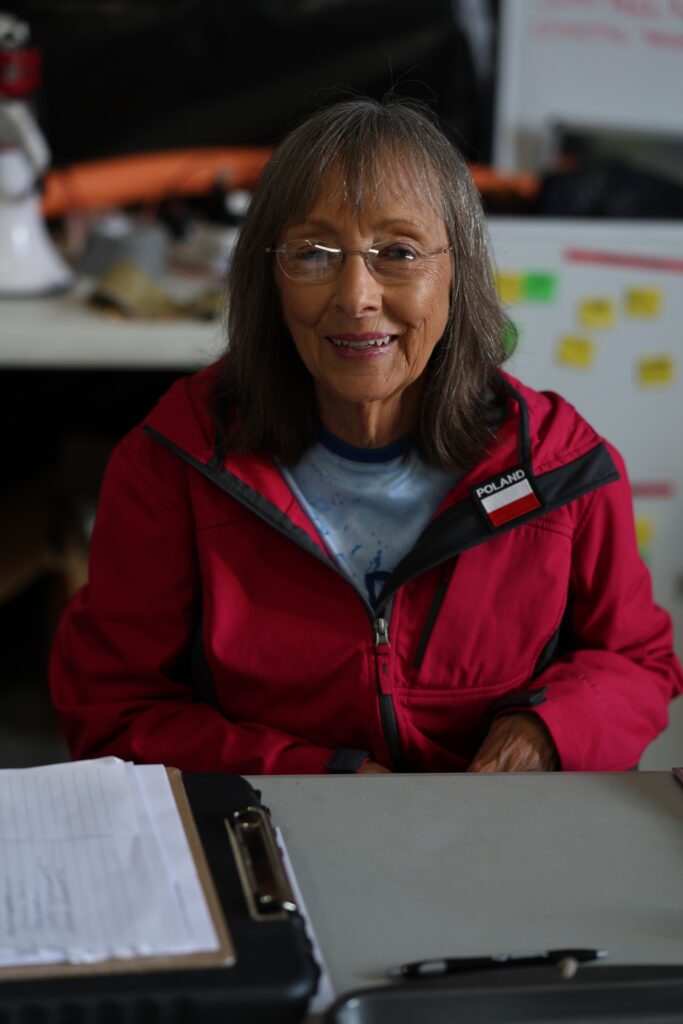
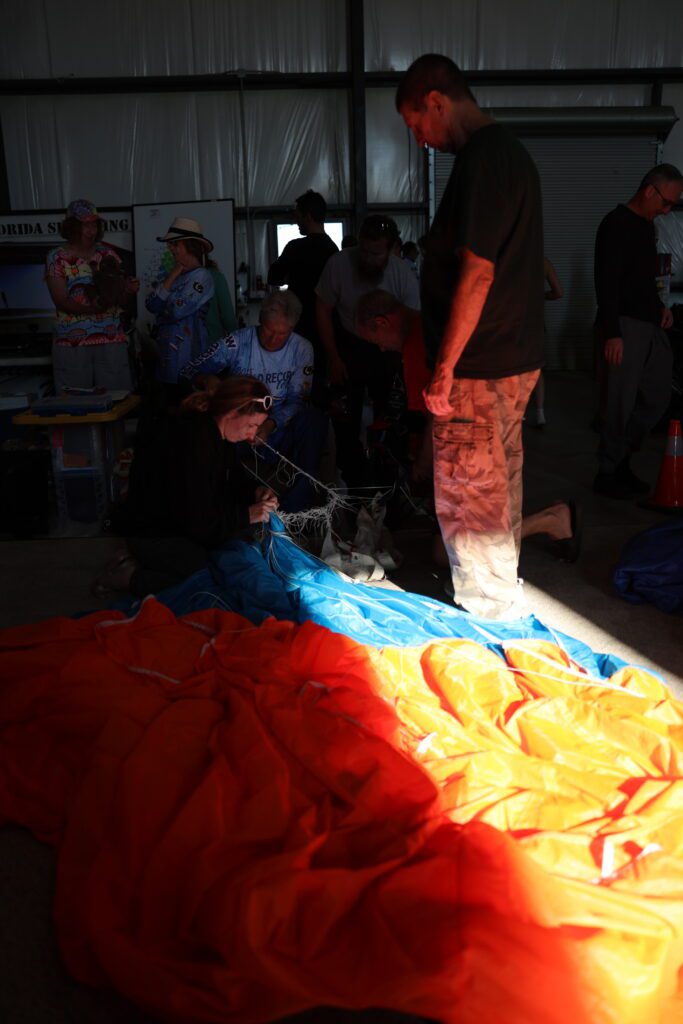
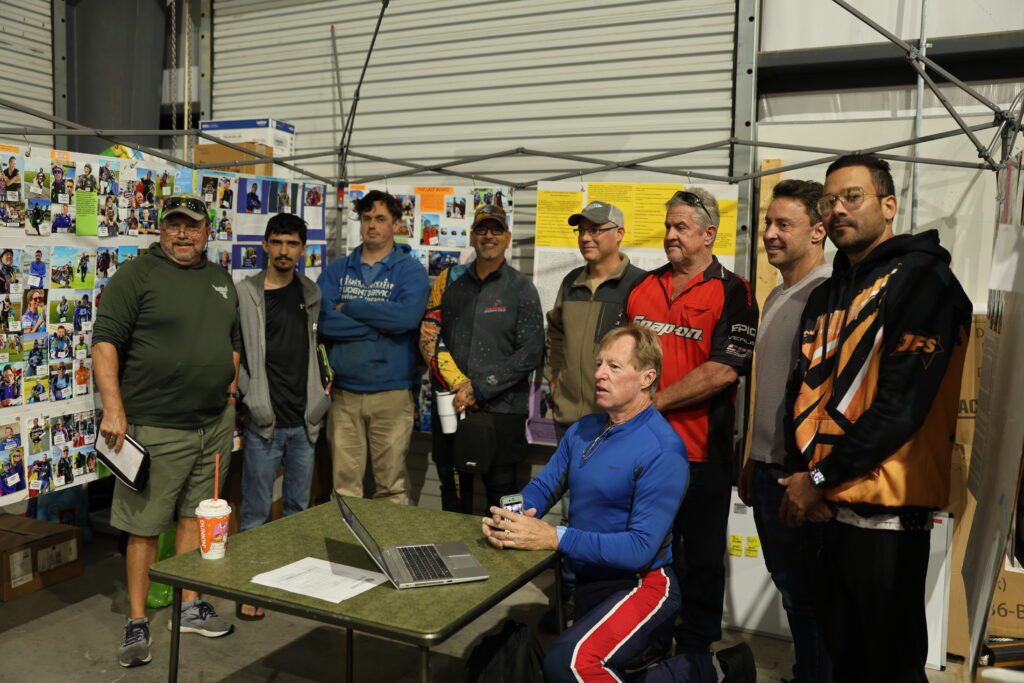
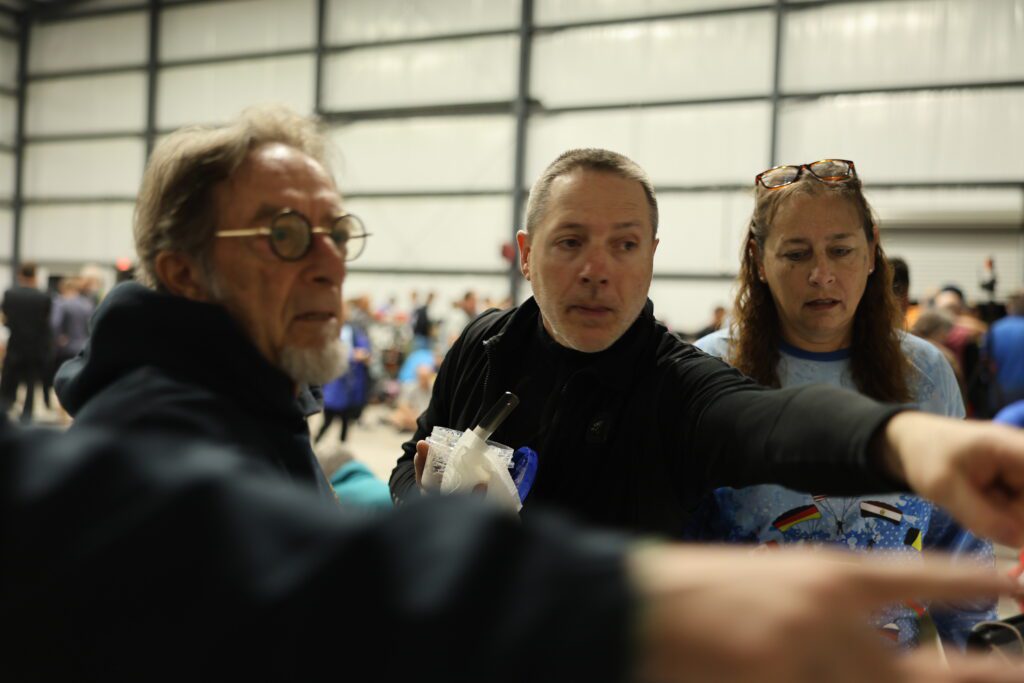
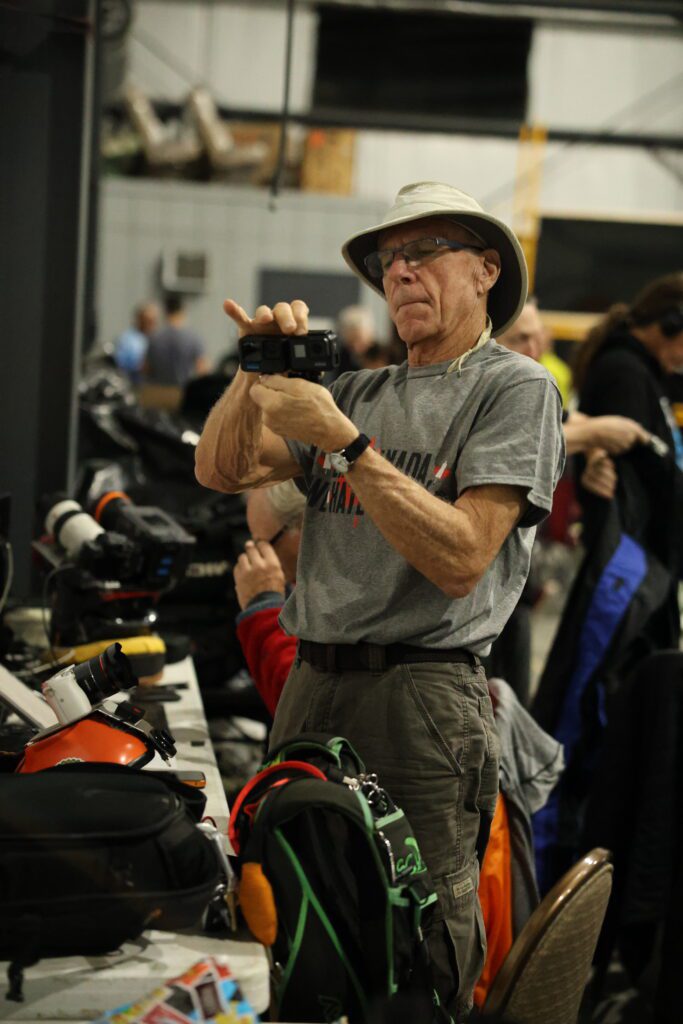
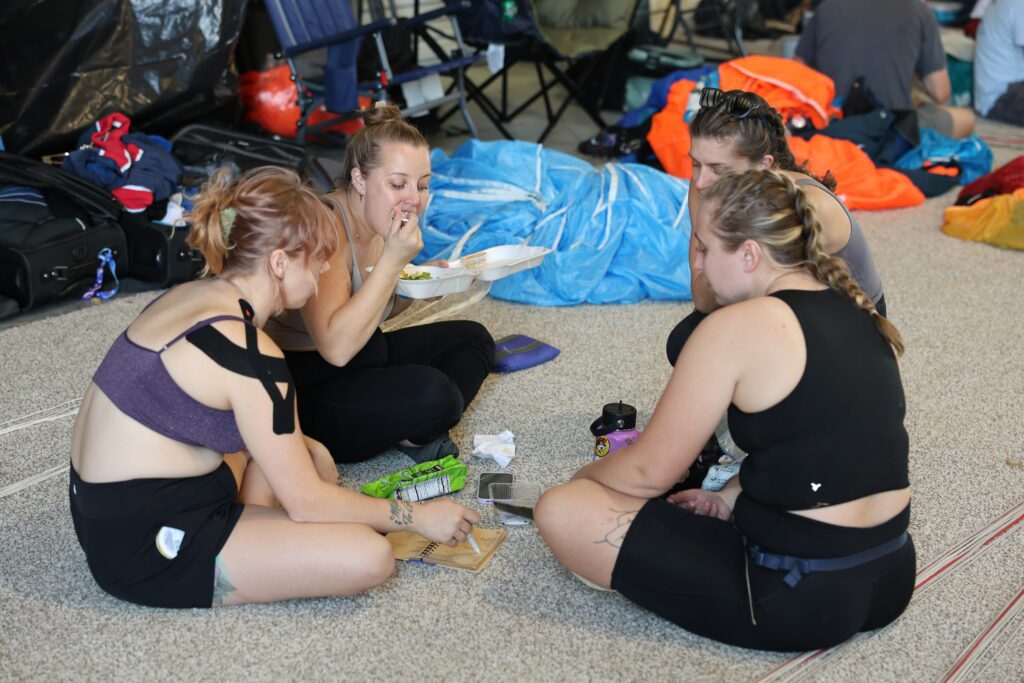

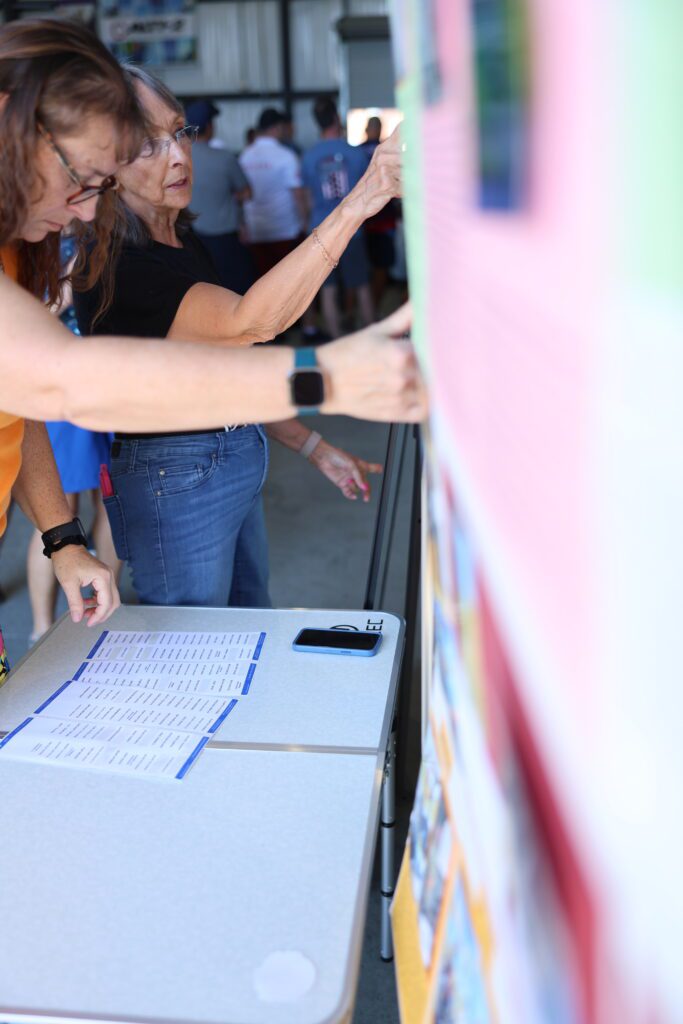
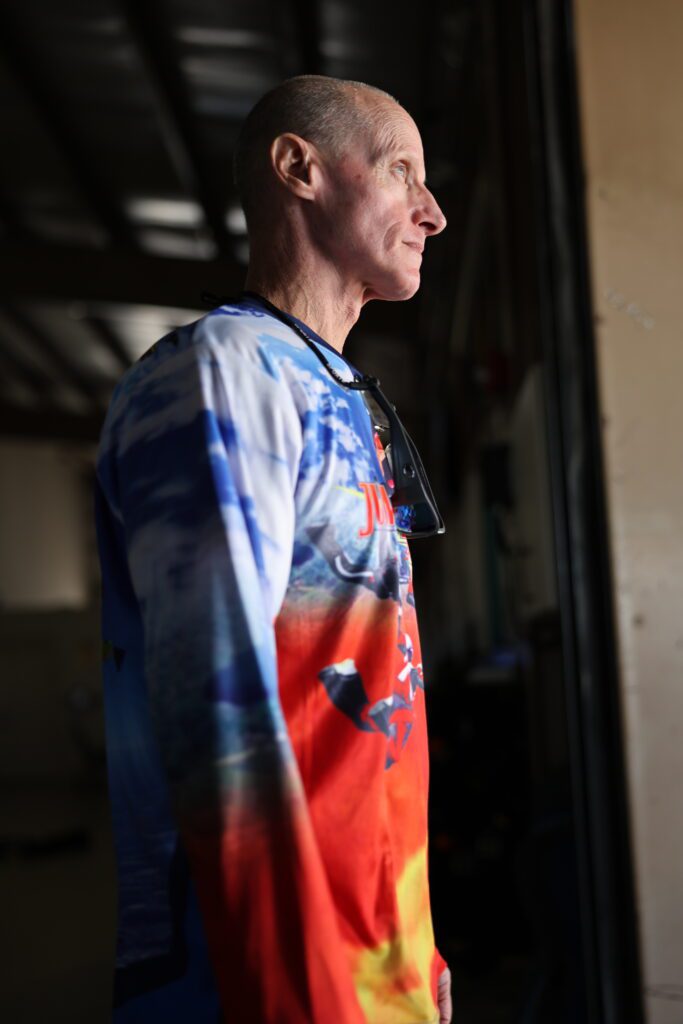
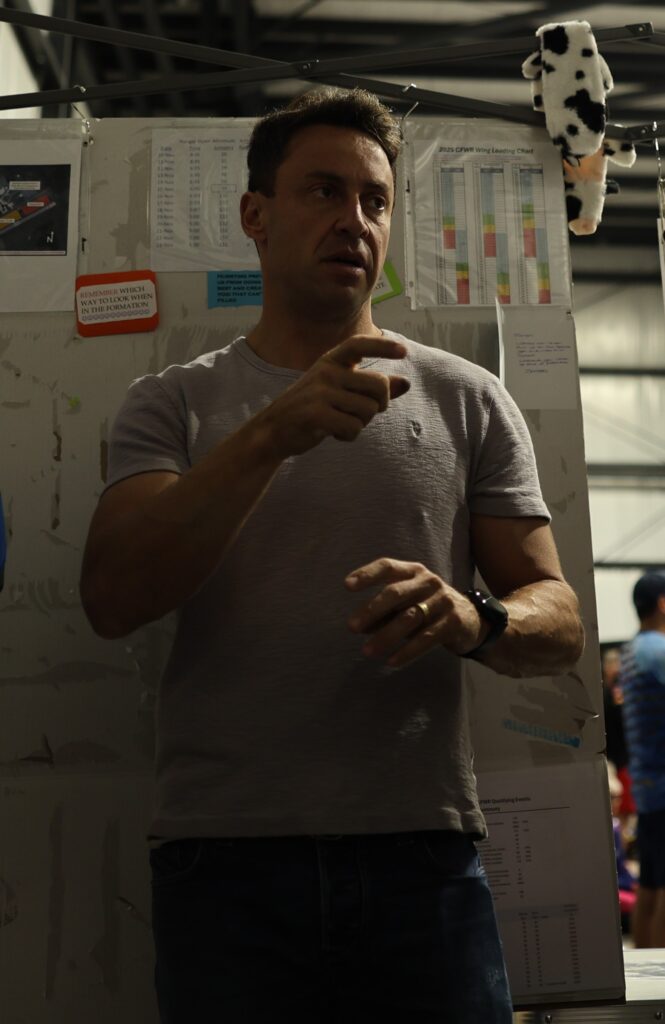
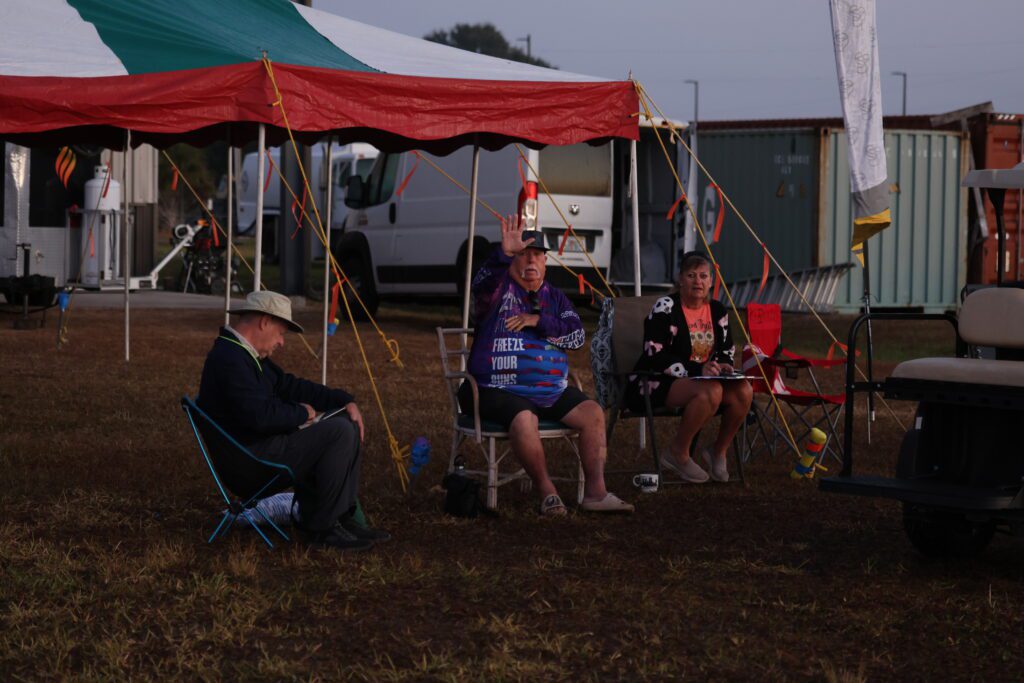
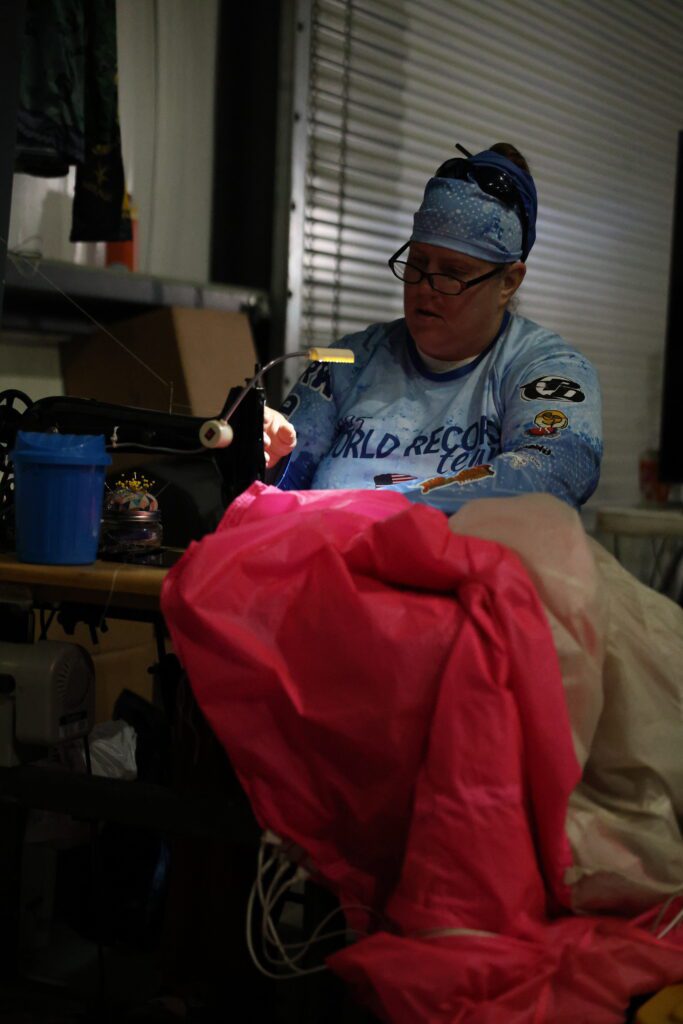
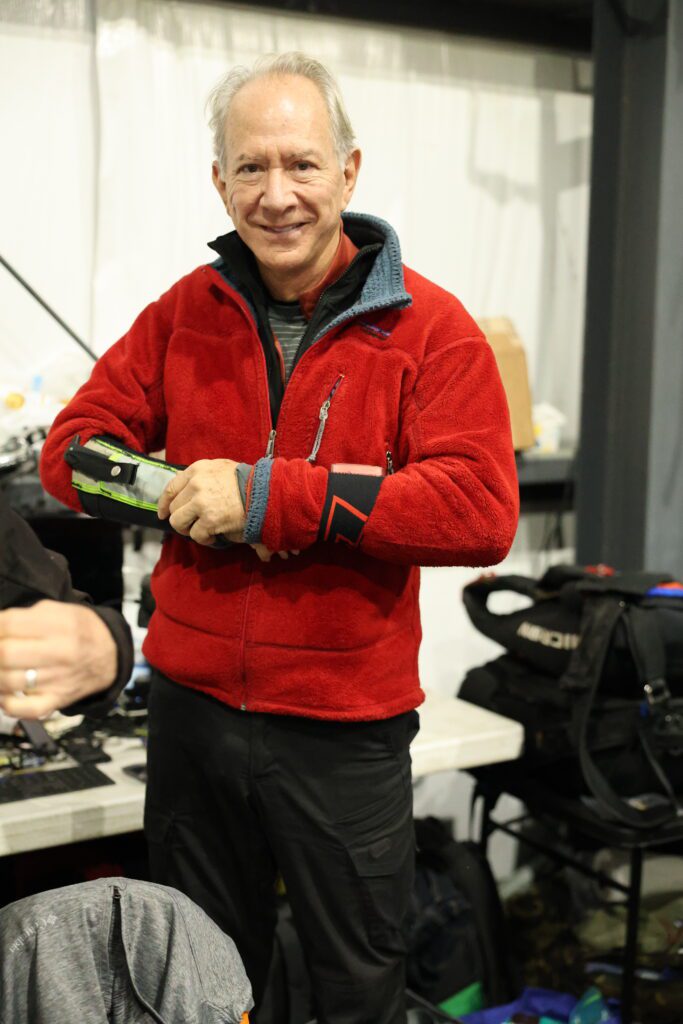
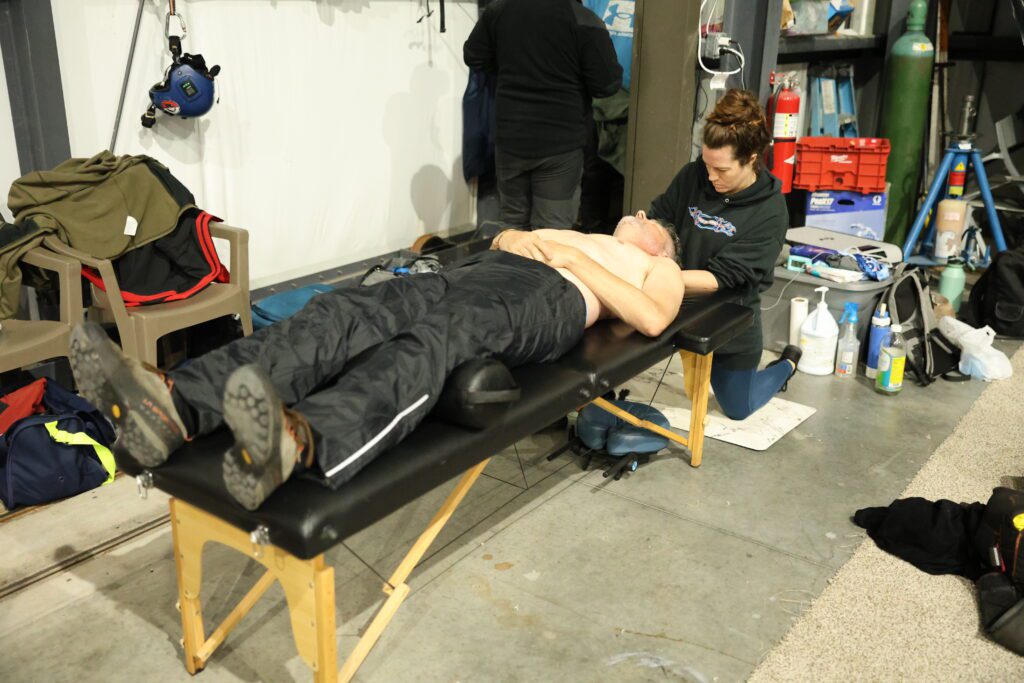
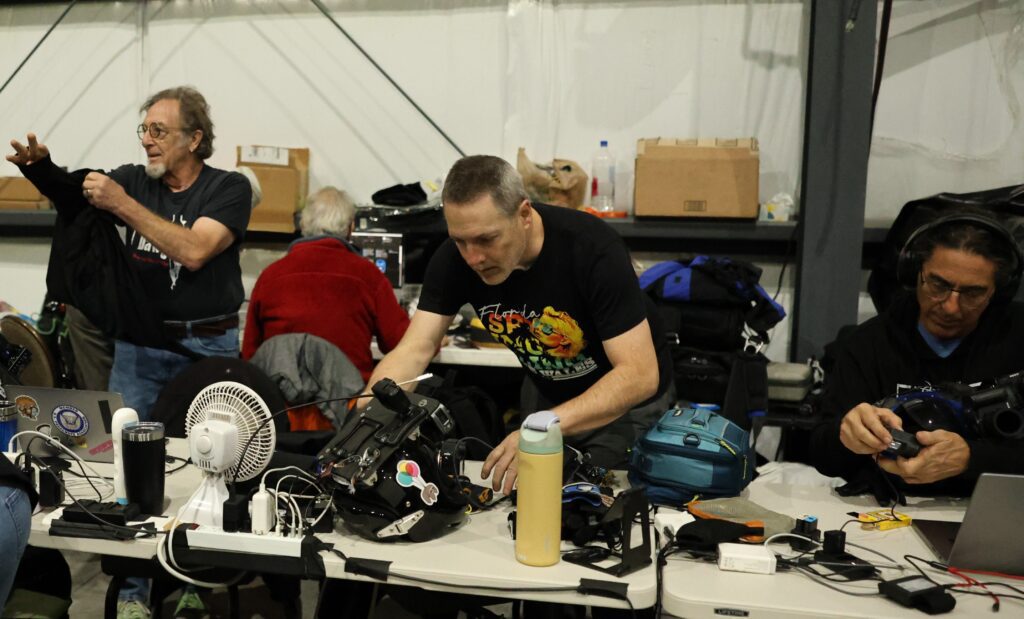
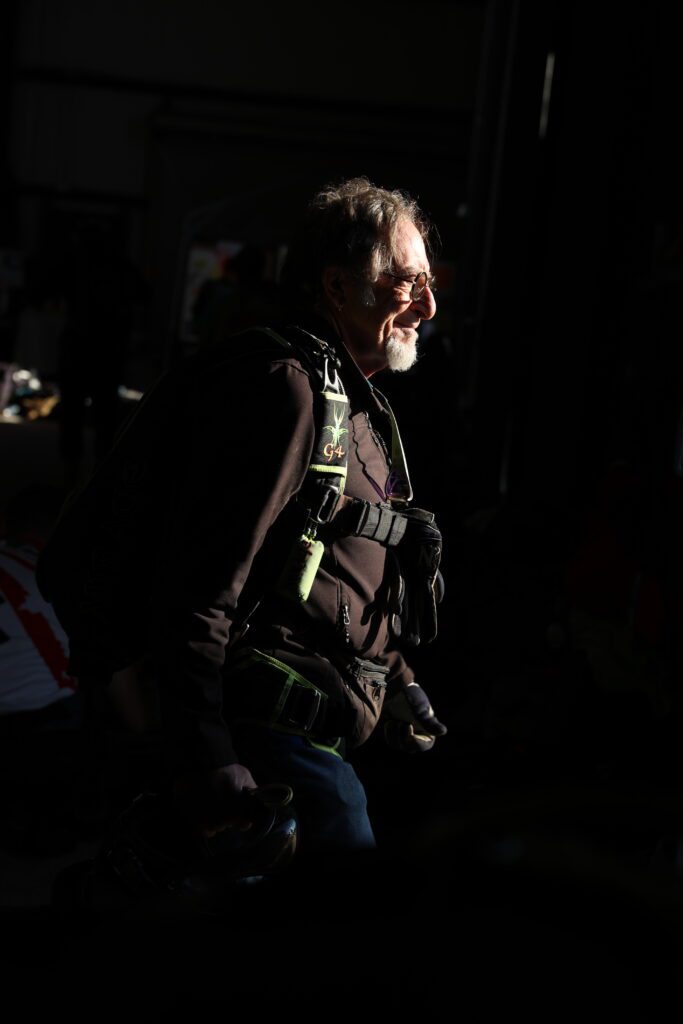
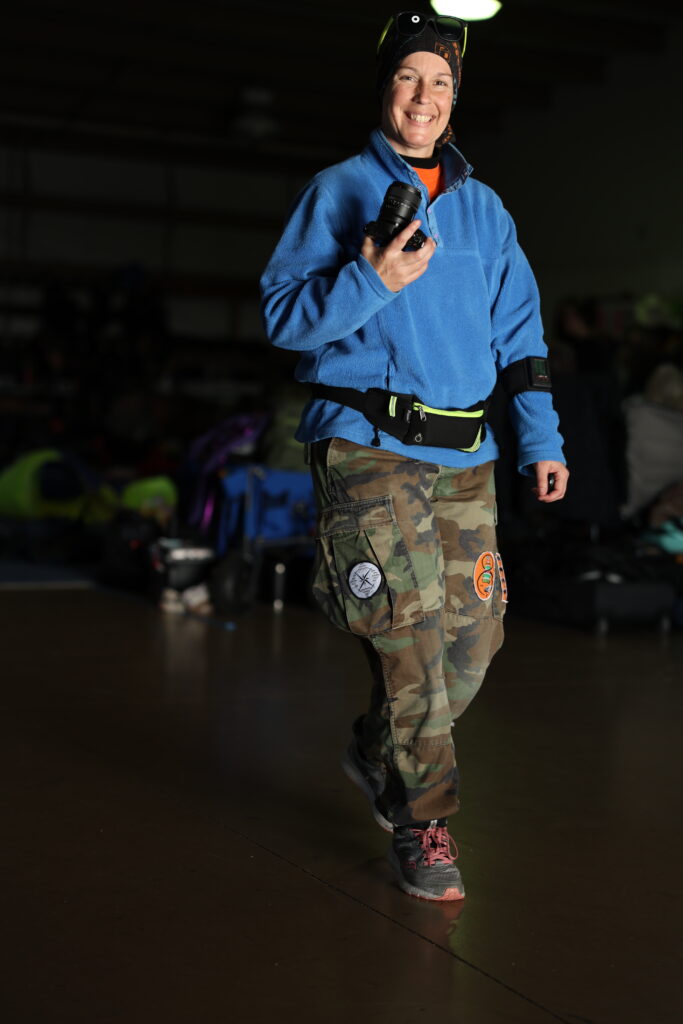
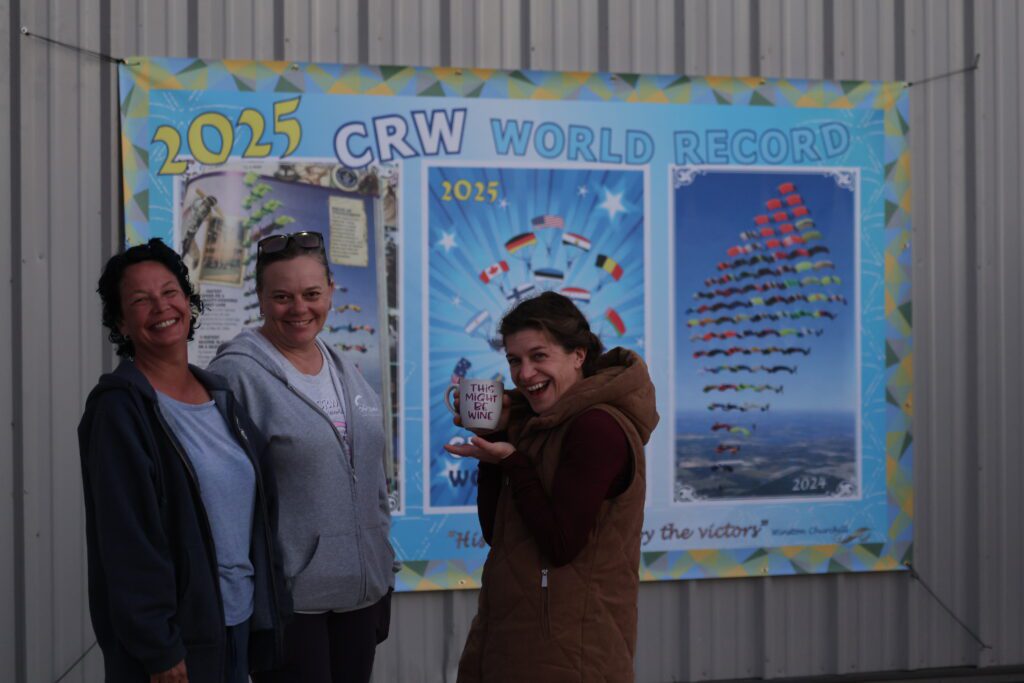
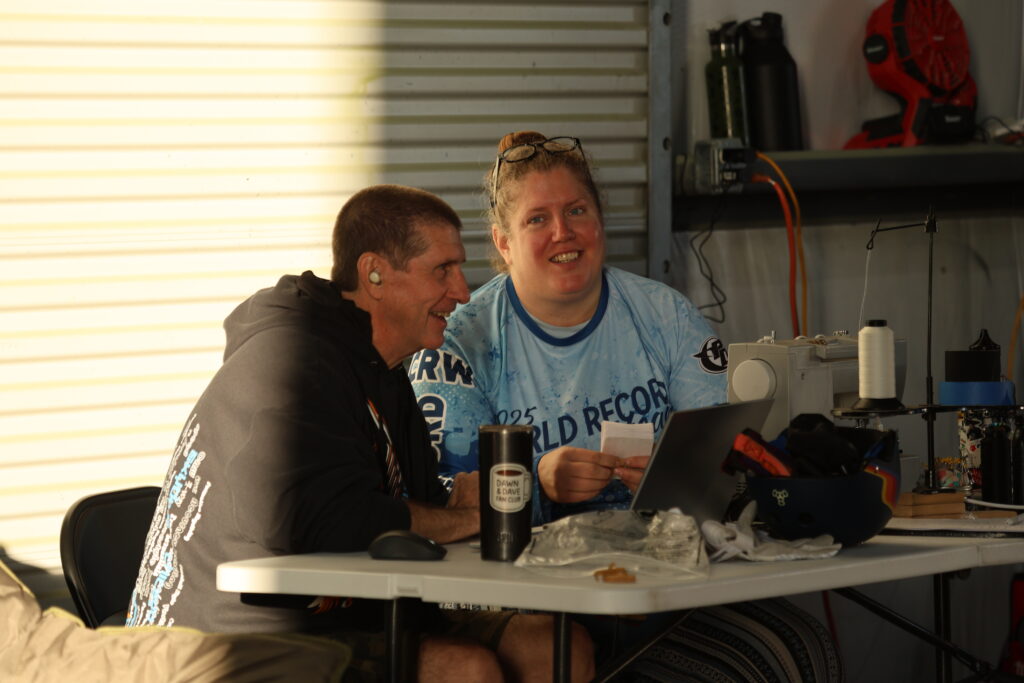
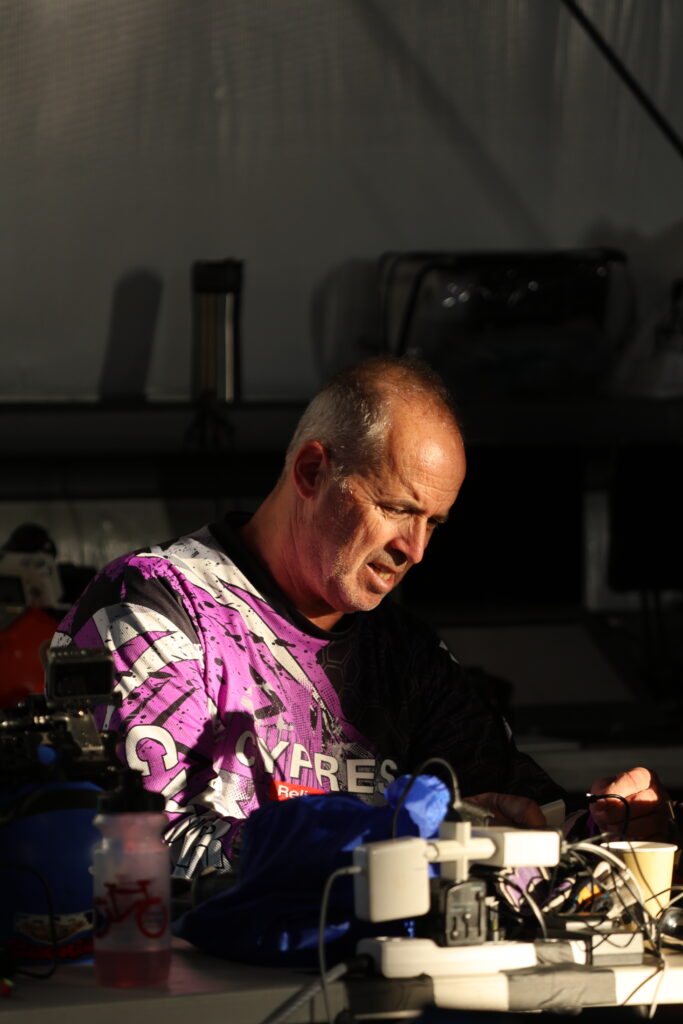
fot. Kasia Walczak
They make sure that in this enormous, precise chaos no one gets lost, and everyone knows where to be, what to do, when, how, and with whom.
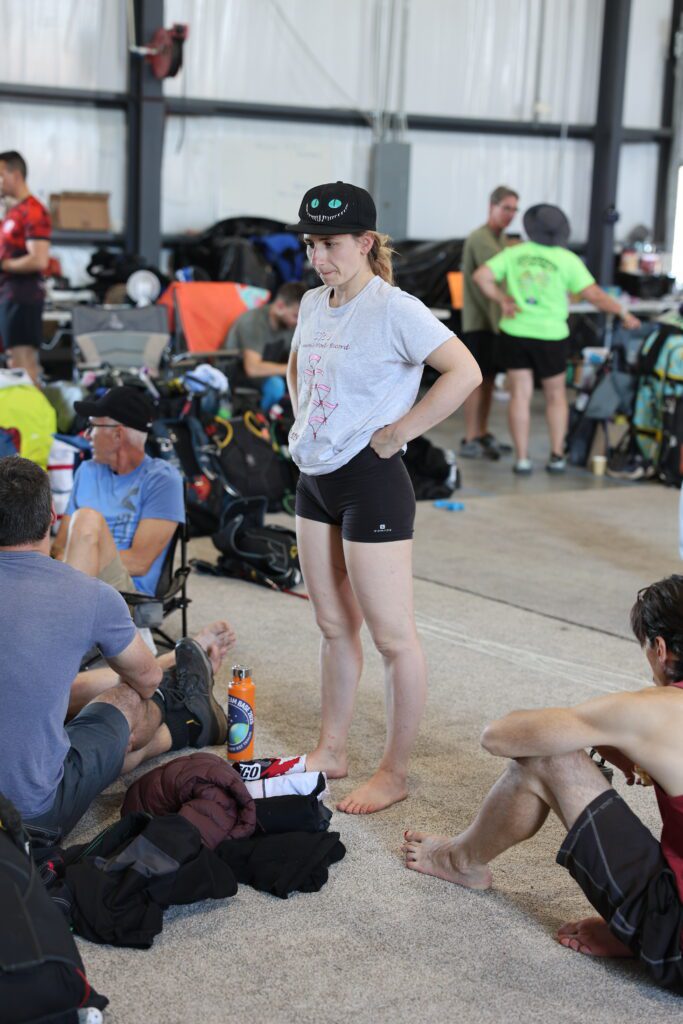
And then there are the documentarians — that’s where I am
Not jumping.
But creating images from the ground and on the ground.
They exist so that this record does not vanish in the fleetingness of the moment.
So that they can:
- describe,
- remember,
- document,
- archive,
- give meaning and continuity to what often happens in motion, in exhaustion, in emotion.
This too is a form of responsibility —
holding all the narrative threads in one hand so that from chaos, a story can emerge.
A great story of people, technique, courage, fear, joy, and a race against time.
These are the people connected to the jumpers — right now producing video and photo material — but every other ground role is familiar to them, and they can step into any essential function at a moment’s notice.
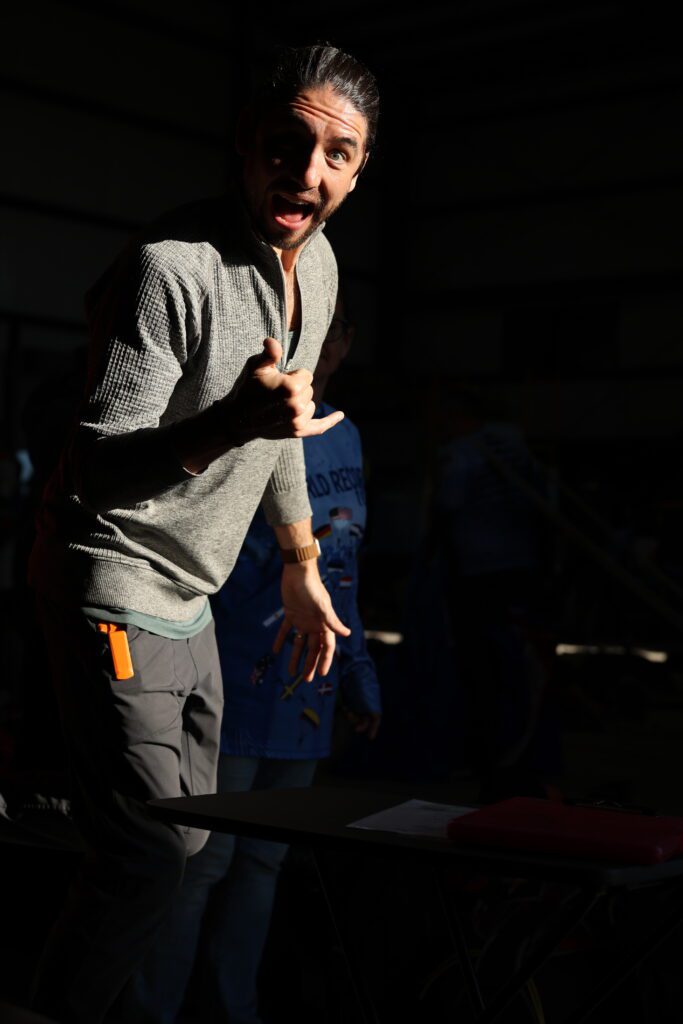
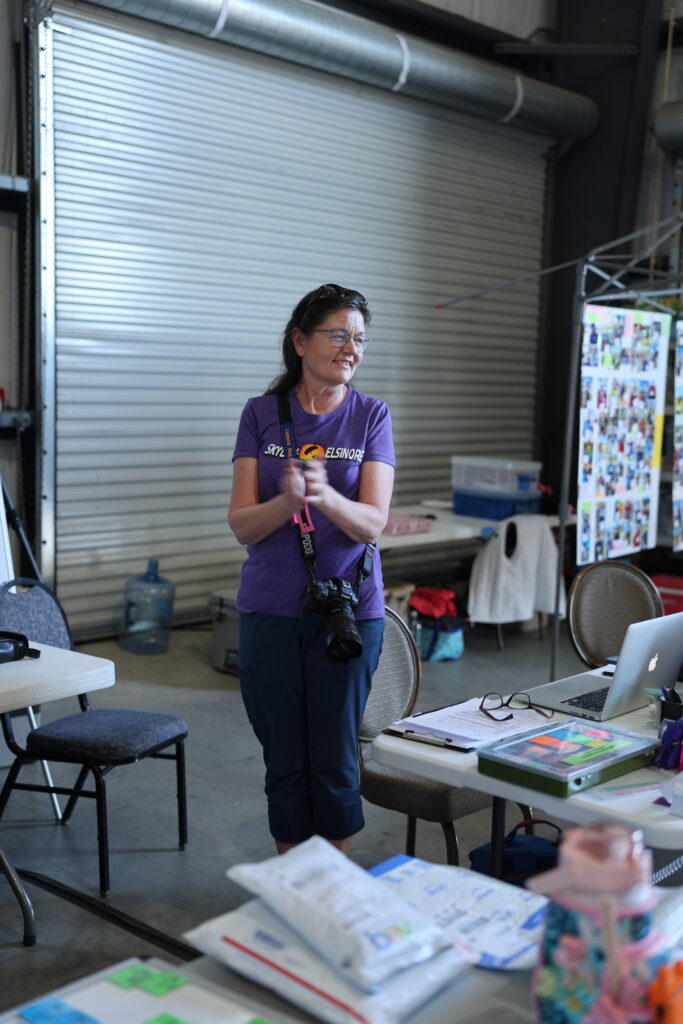
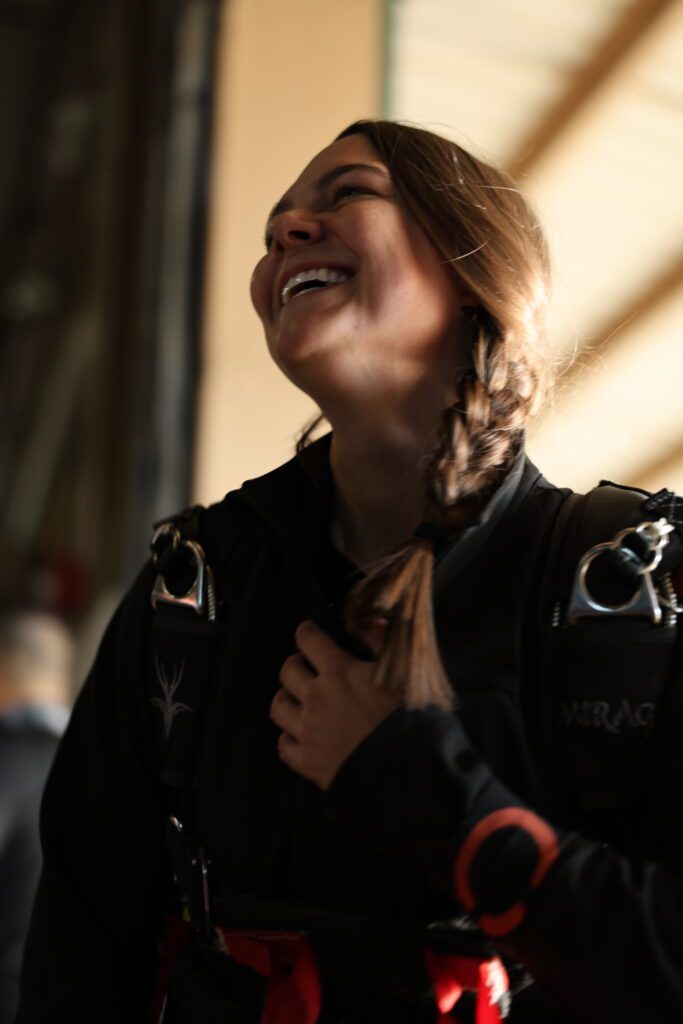
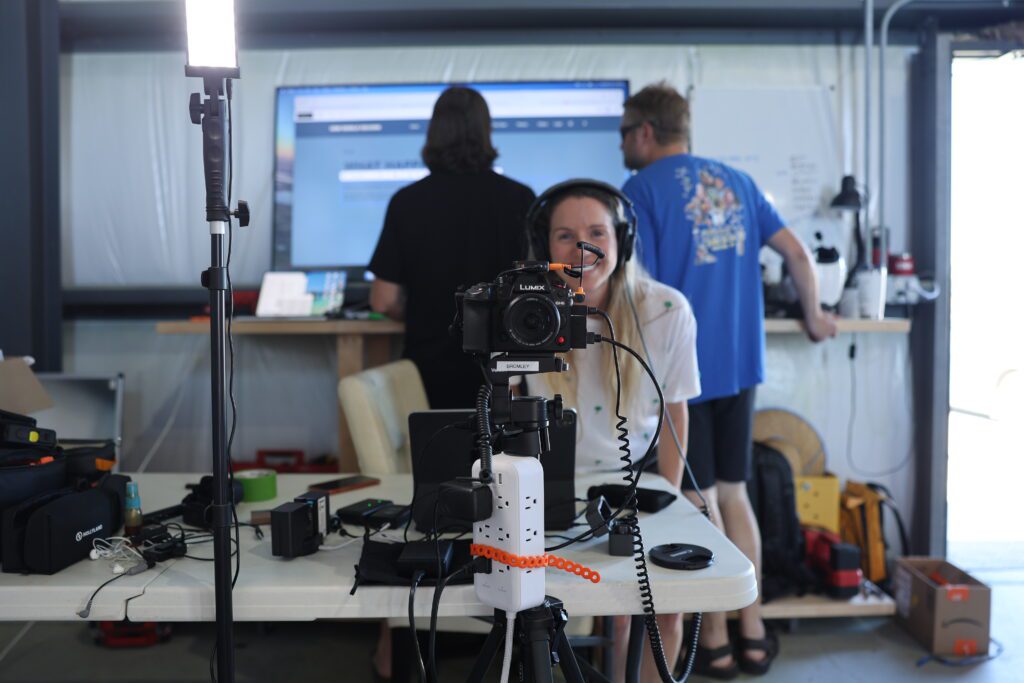
fot. Kasia Walczak
A record is never the work of only those who fly.
Behind every person in the air stand several more on the ground.
Dozens of hands, decisions, actions big and small.
Only this system — air + ground — creates one team that can say:
“We did it.”
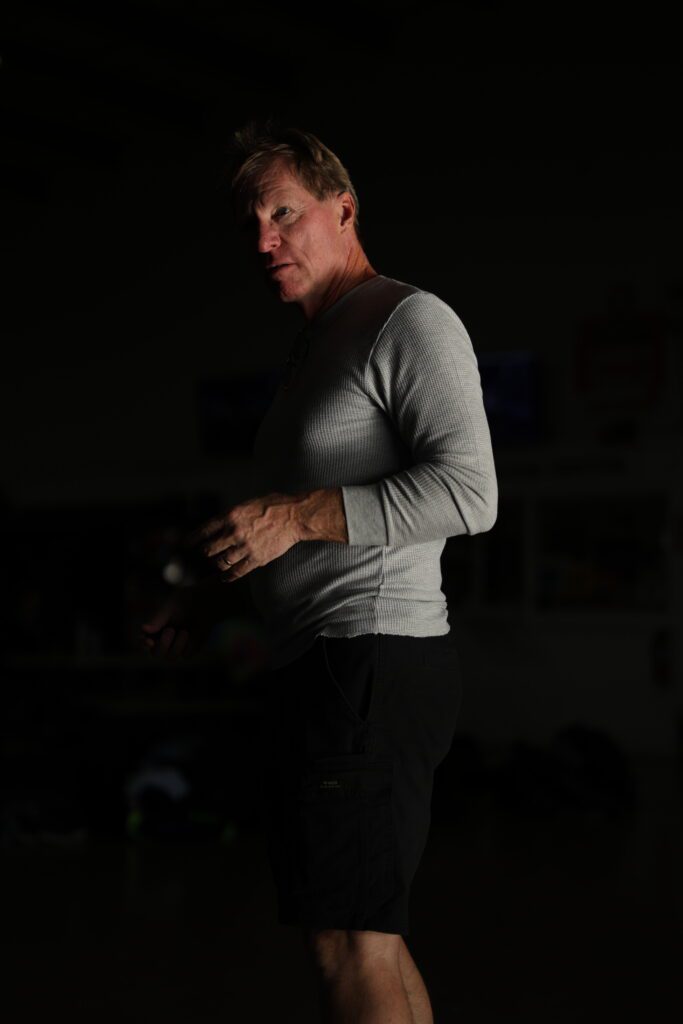
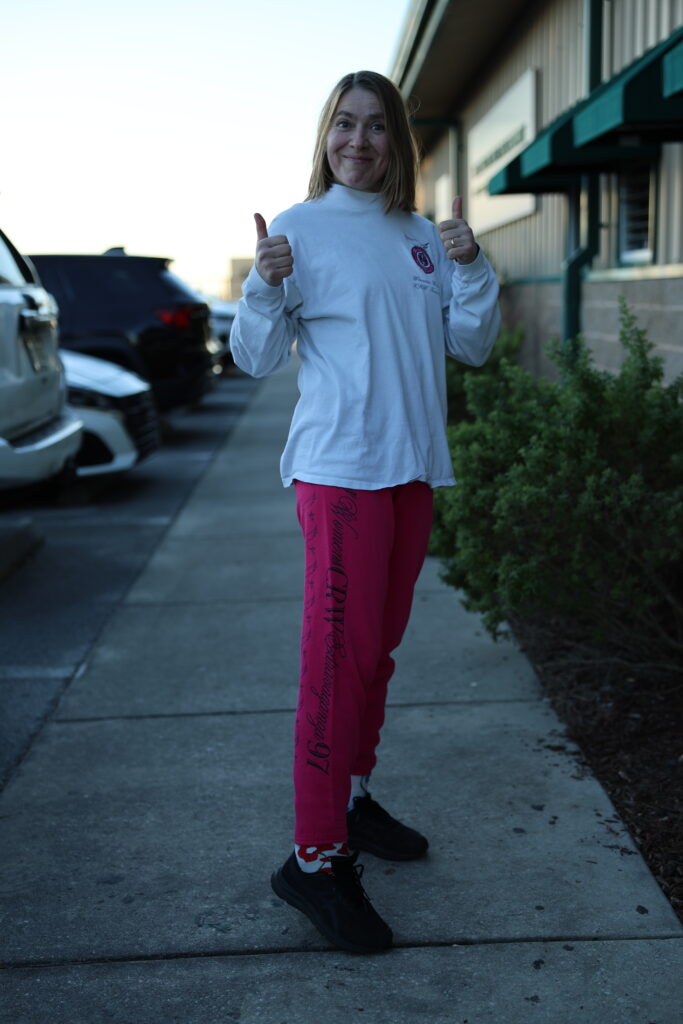
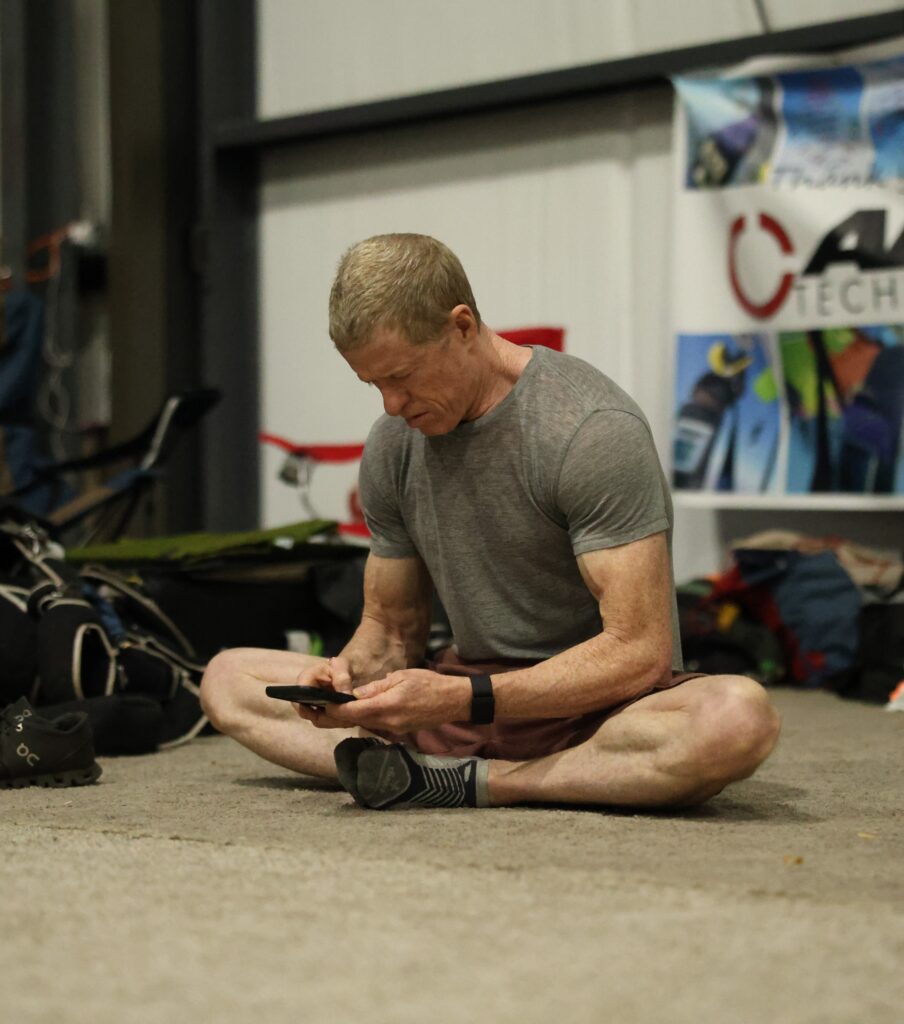
The Masterminds, Organizers, Engineers, Instructors.
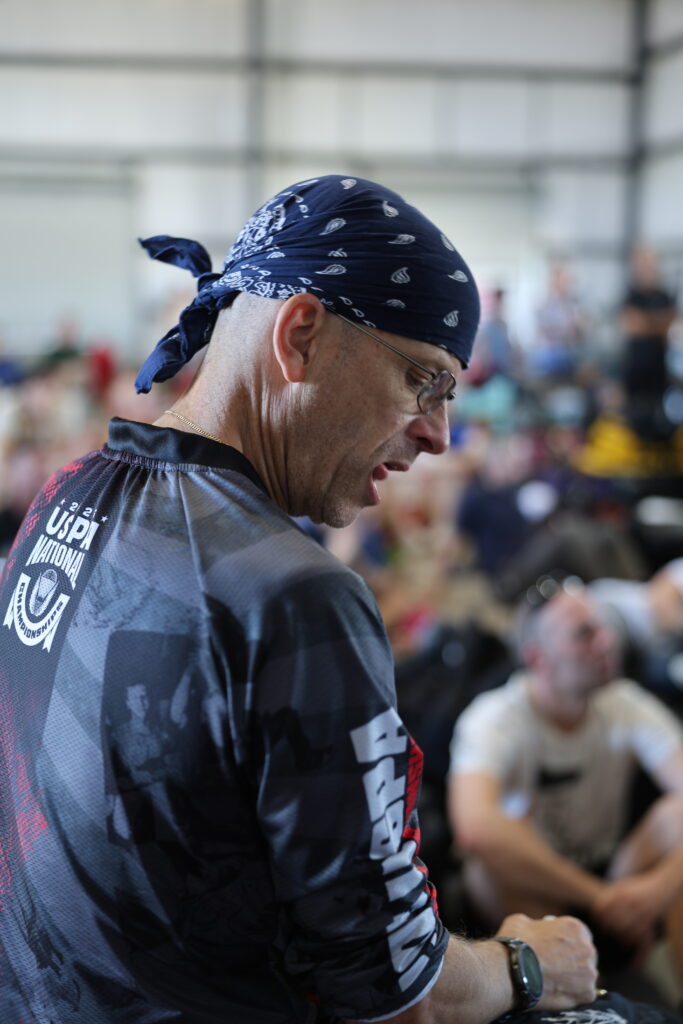
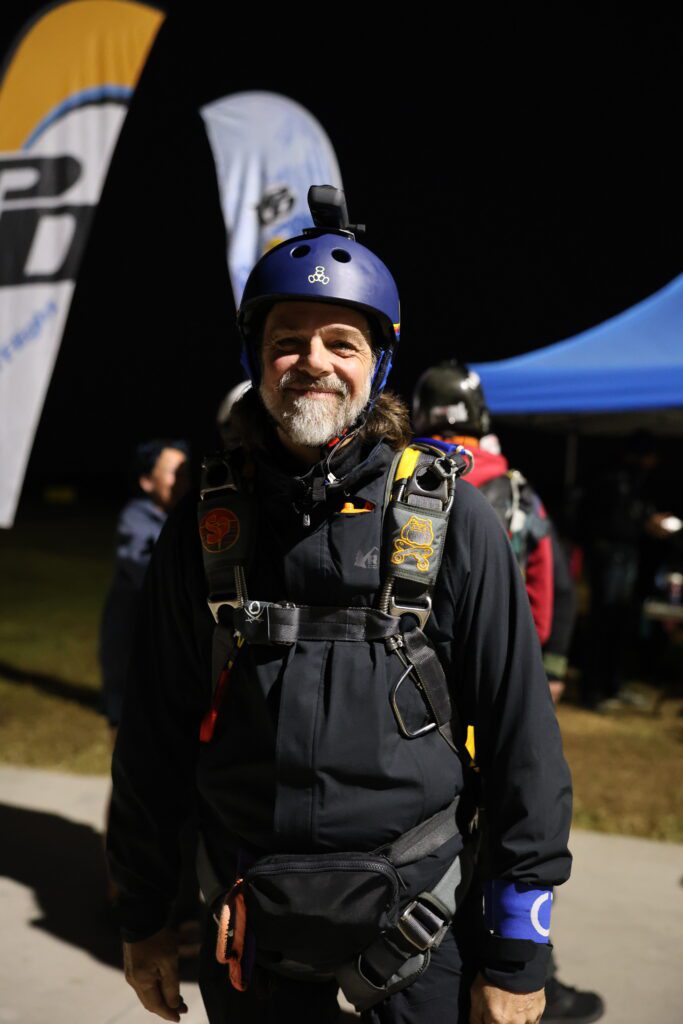
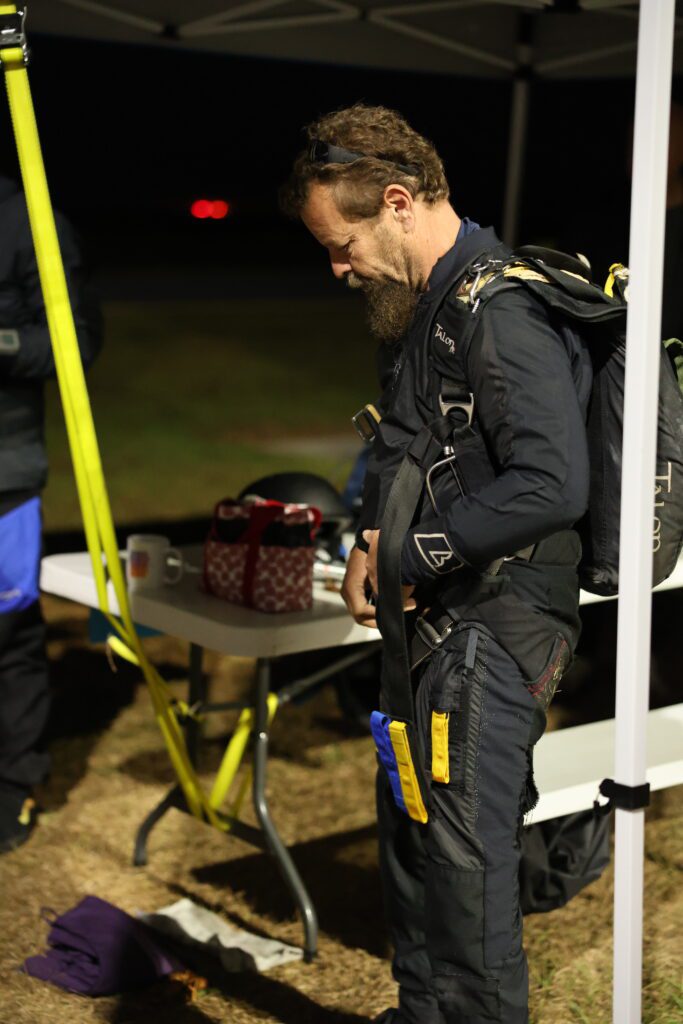
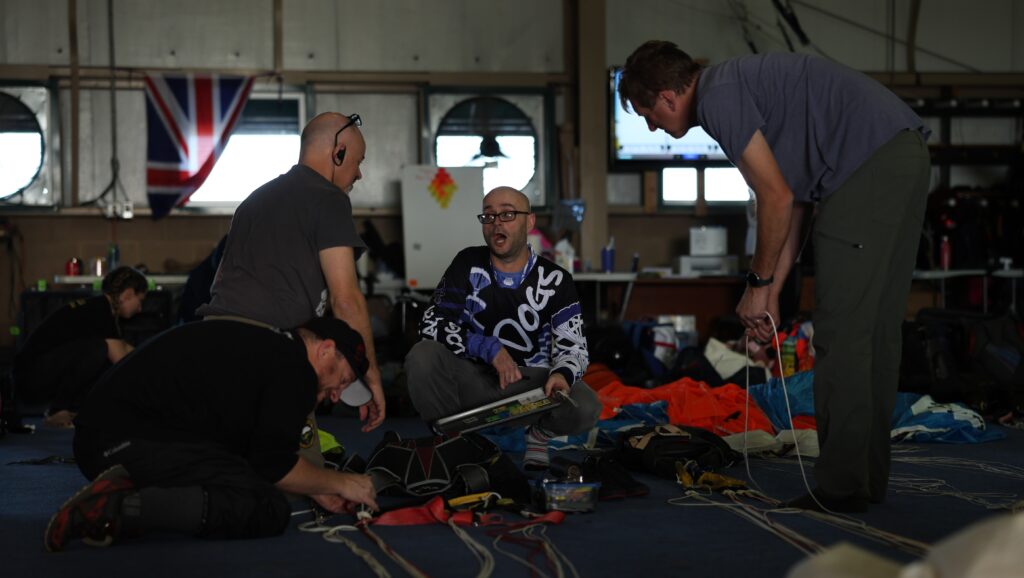
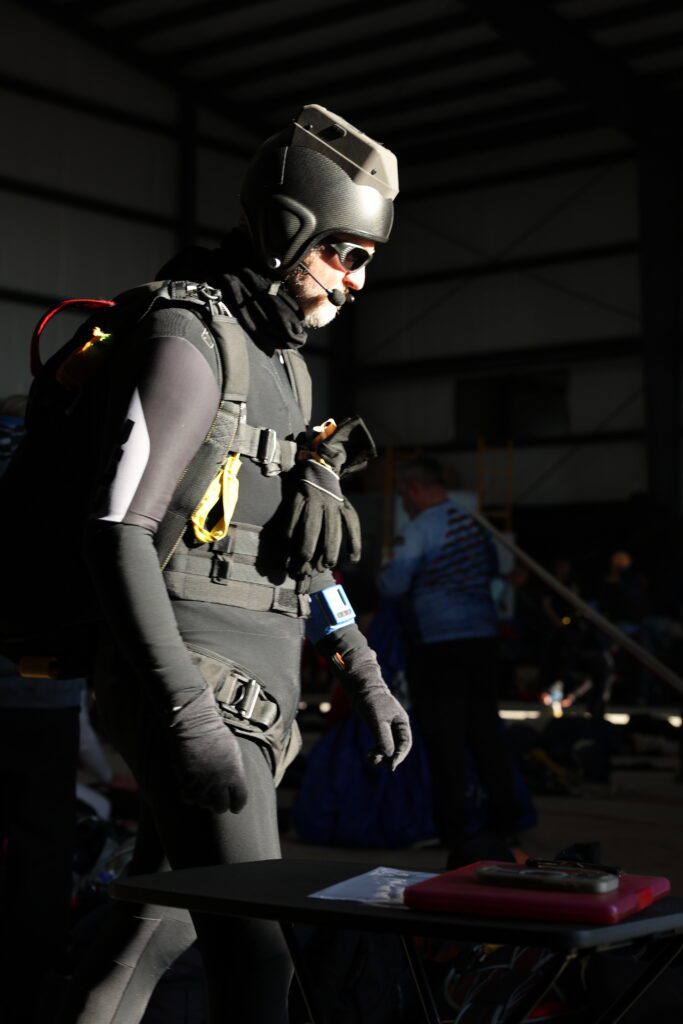
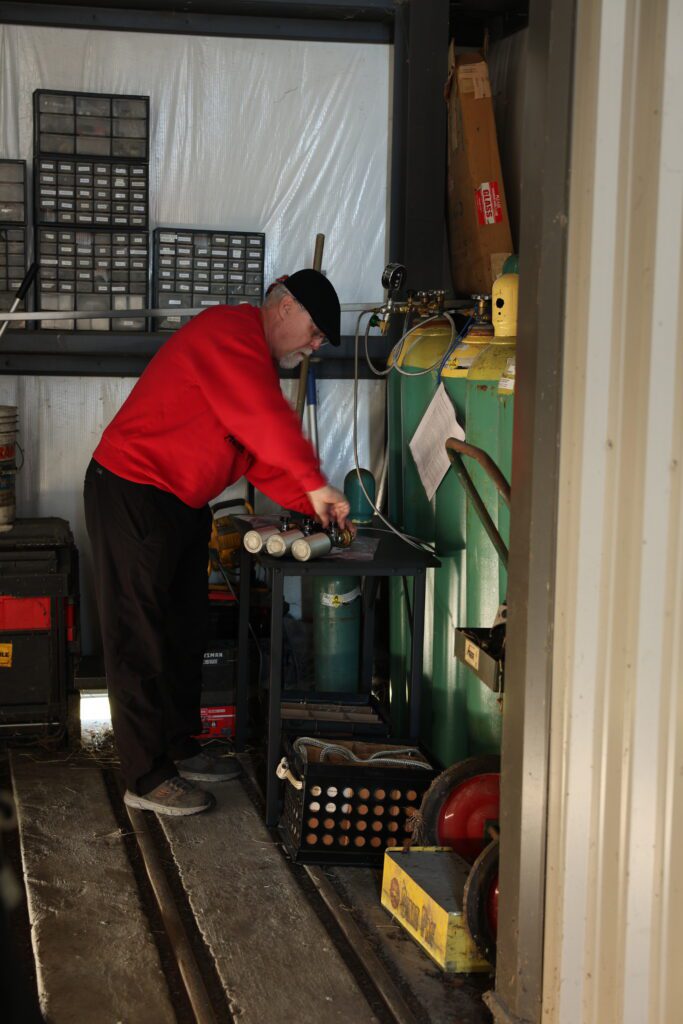
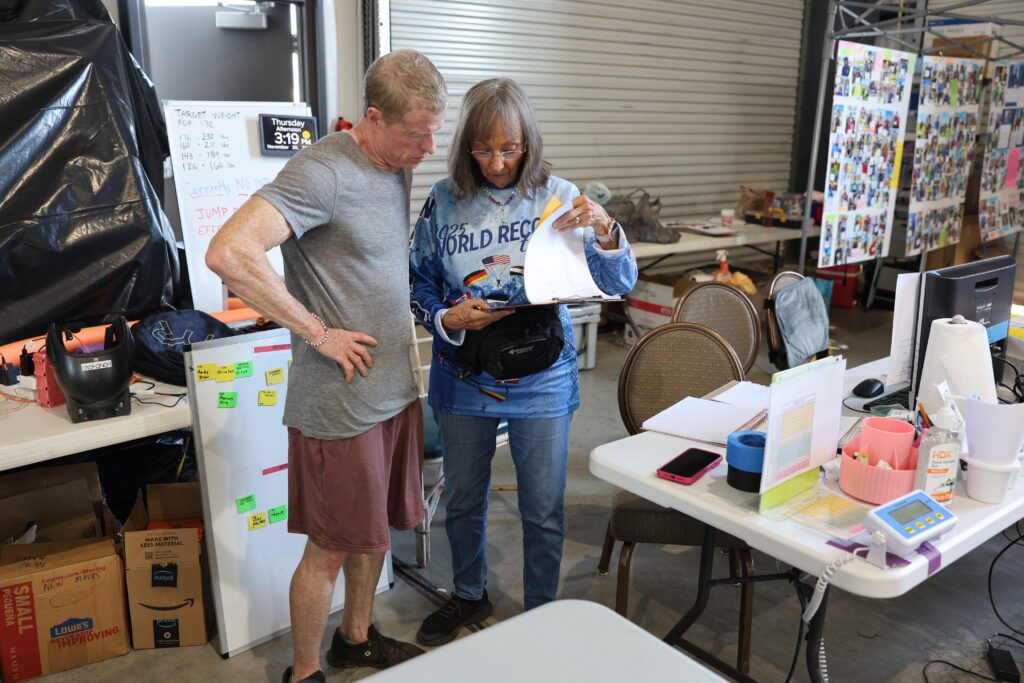
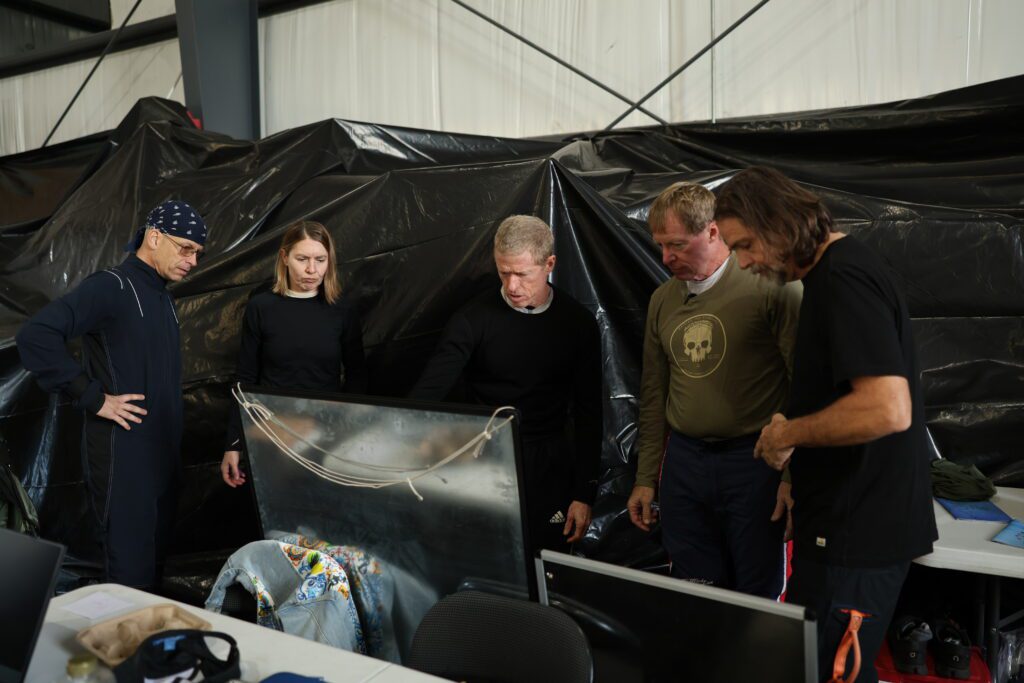
fot. Kasia Walczak
Why 104 instead of 107. The decision that saved the record.
As I mentioned earlier, for a record to be officially recognized, the rules require declaring how many people will build the formation and in which specific slots. During the attempts over those several days, a formation of over 100 people was being built — but not 107.
At some point it became clear:
107 wasn’t coming together. It didn’t “bite” the way it needed to. Something was jamming — whether on the physical level or the mental-psychological one. It didn’t matter.
Not with that lineup, not in those conditions, not with that level of human and equipment fatigue.
And it wasn’t a question of ambition.
The ambitions were enormous.
But in CRW, ambition can never outweigh physics, safety, or stability.
So, like declaring in a card game: I’ll play spades — 104.
A strategic decision: subtract, in order to build
The organizers did something difficult and brave:
they reduced the formation to 104 people.
From the outside, it may have looked like a step down, like giving ground, like choosing a “smaller record.”
In reality, it was the opposite.
It was a decision that was:
- responsible,
- technically justified,
- mathematically necessary,
- and the only one that could lead to success.
Not a resignation from the dream, but a change in flight trajectory (of people and slots) so we could actually reach the goal.
The common good above individual ambition — and above the magic of a number. And then there are the FAI rules.
The number 107 was beautiful, round, historic, emotional.
Everyone wanted to hold it in their minds as the number.
But CRW is not an ego contest — it’s a top-tier team sport.
And so, at one point, the most important sentence of the entire week was spoken:
“We’re doing 104. Because 104 is real. 104 is ours. We’ve already built it. Now we just need to confirm it.”
This wasn’t compromise.
It was wisdom, experience, and respect for risk.
It was the decision that saved the record.
That’s why 104 — not 107 — gave the world a new record.
A true one. Stable. Earned, not merely dreamed.
The final attempt — 104
Time was shrinking.
Days were disappearing faster than they began.
In our heads, there was just one thought: we still don’t have the record.
And anyone who has ever chased something big knows that this is the thought that keeps you awake.
The night before the final attempt was more a vigil than a sleep.
Everyone felt the pressure of both time and opportunity.
So close, yet still so far.
5:00 a.m. — a silent hangar
Still dark.
Only emergency lights at the airfield and the sound of solitary footsteps echoing against the concrete.
Usually, at this hour, there’s chatter: laughter, gear being dragged, nervous comments.
This time — everything slowed down.
Everyone focused on their gear. A shared awareness of the approaching end of the attempts. The first jump of the day is always the best. The best air.
Silence. Thick, serious, electric.
Everyone knew this was the attempt.
Not as a motivational slogan.
As a fact: weather window, logistics, fatigue, people going home.
This was realistically the last chance.
Briefing and mobilization. Warm, encouraging words from the Judge:
“You’ve got this. Do your thing.”
A shared shout.
No pathos.
Mobilization was absolute. Nothing overtalked.
Every move precise, automatic — as if all previous attempts existed only to bring us to this one moment.


fot. Kasia Walczak
The moment we headed toward the aircraft, the energy shifted.
As we moved toward the planes, the silence began to tighten like a coil.
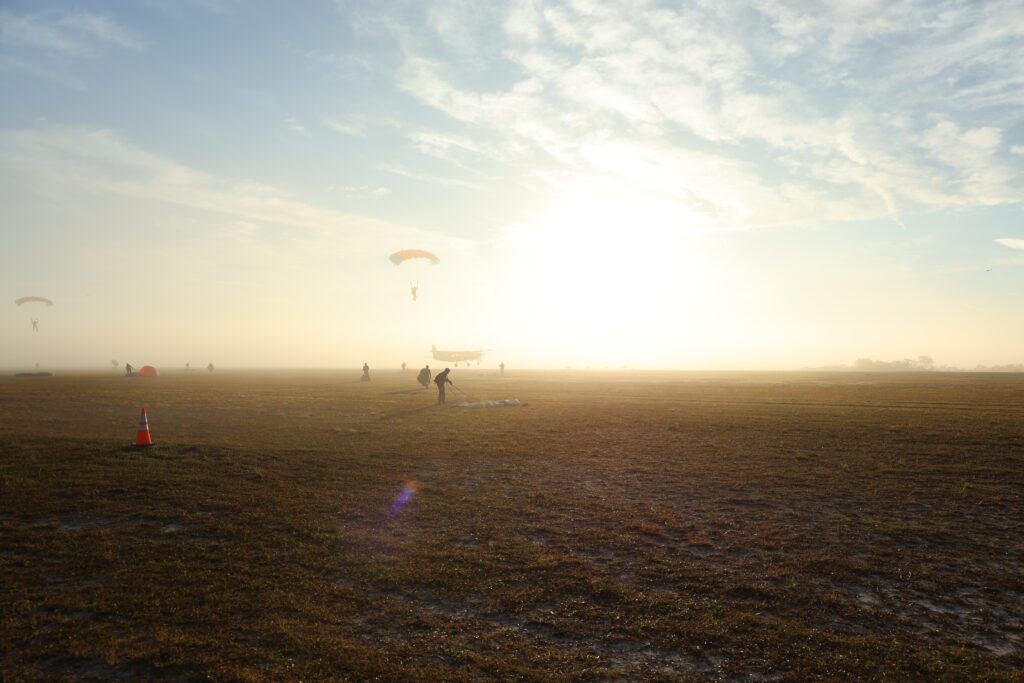
Darkness around us, wrapped in fog.
Step after step, oxygen masks put on with total focus.
The ritual checklist: helmet, altimeter, hook knife, goggles, gloves.
You could feel one shared energy.
No more nerves. No more pressure.
Only determination.
At the aircraft doors, a few quick glances said more than words ever could:
“See you in the sky. We’re locking it in. LET’S DO THIS.”
Six kilometers above the earth — the moment the entire procedure begins
When all eight planes leveled into formation, the sky was clear.
As if fate had opened space for us.
The green light flashed — time to go.
And then it happened.
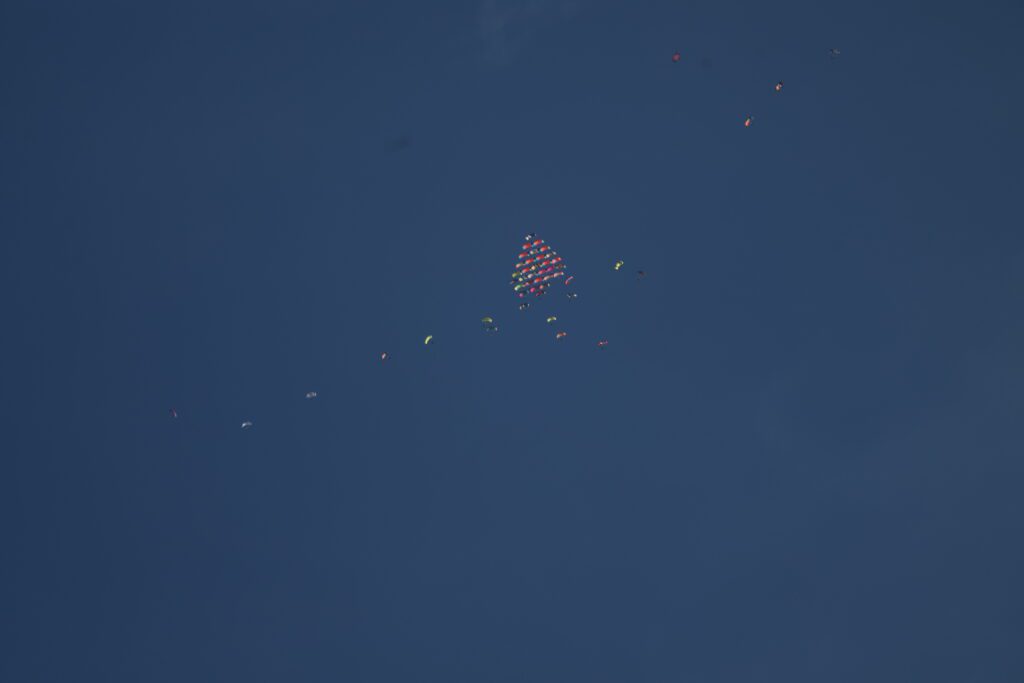
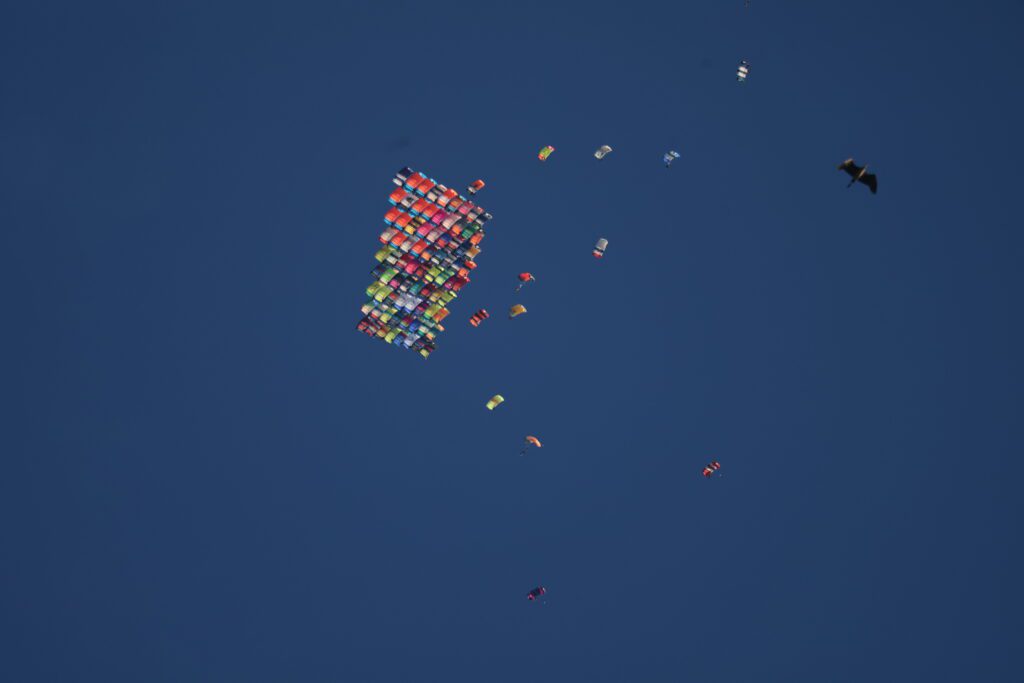
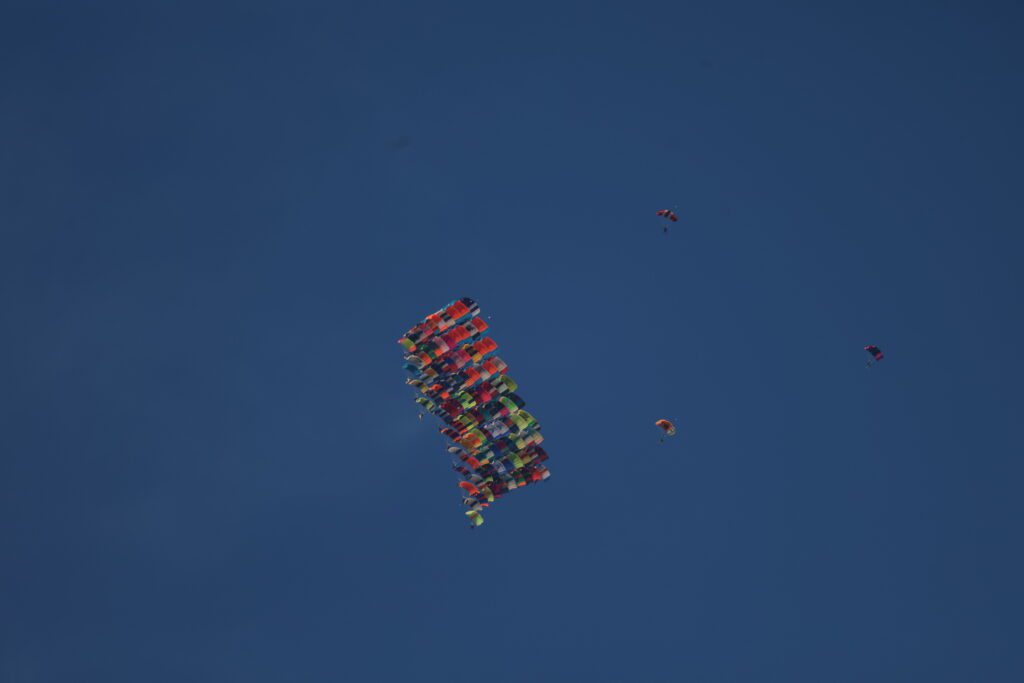
fott. Kasia Walczak
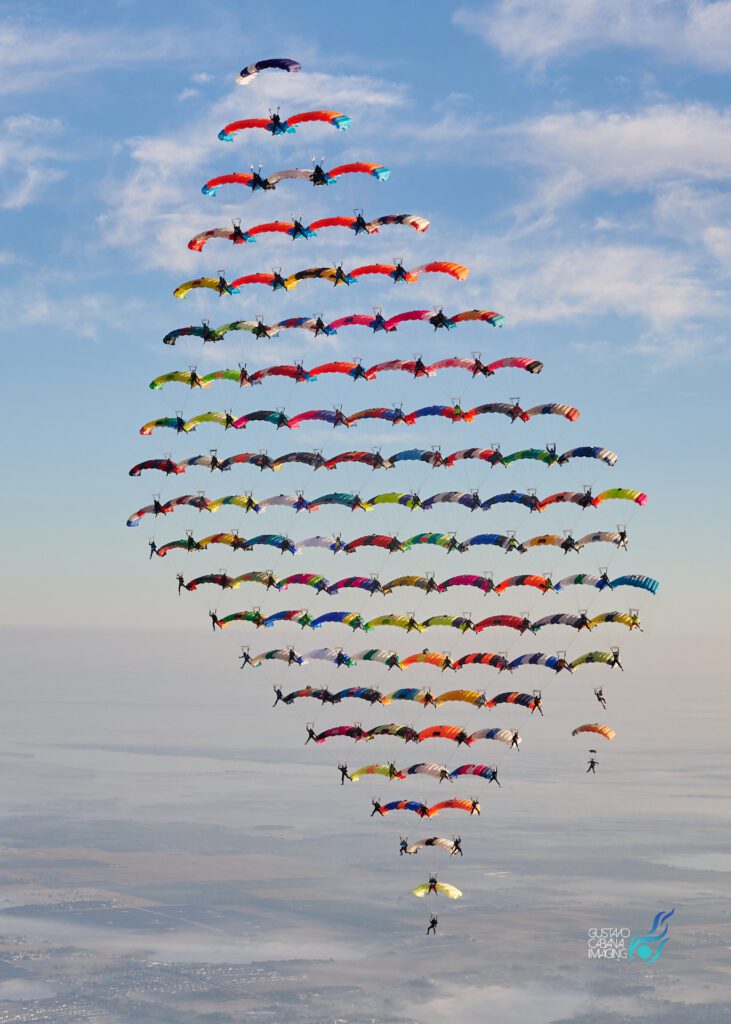
A JUMP INTO HISTORY.
Exits were like a Bolshoi choreography — sharp, firm, certain.
The air roared, and people shot out like arrows, flying exactly where they were supposed to go.
First docks — click, click, click — precise, confident.
The base stood still like a sequoia on a windless day.
As the next rows slotted into their places, the formation began to grow, pulsing into exactly the shape it was meant to be.
Calm. Steady.
Dock. Inhale. Stabilize. Slowly. We have time. Precision and calm.
104 people, 104 decisions, 104 small worlds linked into one.
Near the end of the skydive, time slowed.
Literally — the seconds stretched longer than usual.
The last docks came in with surgical precision.
And then we all heard Chris’s voice over the radio:
“Complete.”
mat. Robert Kowalski – Bertus
Final seconds of stability for the judges’ evaluation.
3…
2…
1…
YES. STABLE.
These are the three seconds that decide everything.
The three seconds where nothing can wobble.
And in those three second-minutes everyone knew:
It’s happening. This is the record.
The break-off — and an explosion of sound
The cue for the starburst.
The formation unravels into a colorful whirl of dandelion seeds.
104 canopies bloom in an explosion of color.
The silence that had hung over the drop zone all morning finally breaks.
First one shout.
Then another.
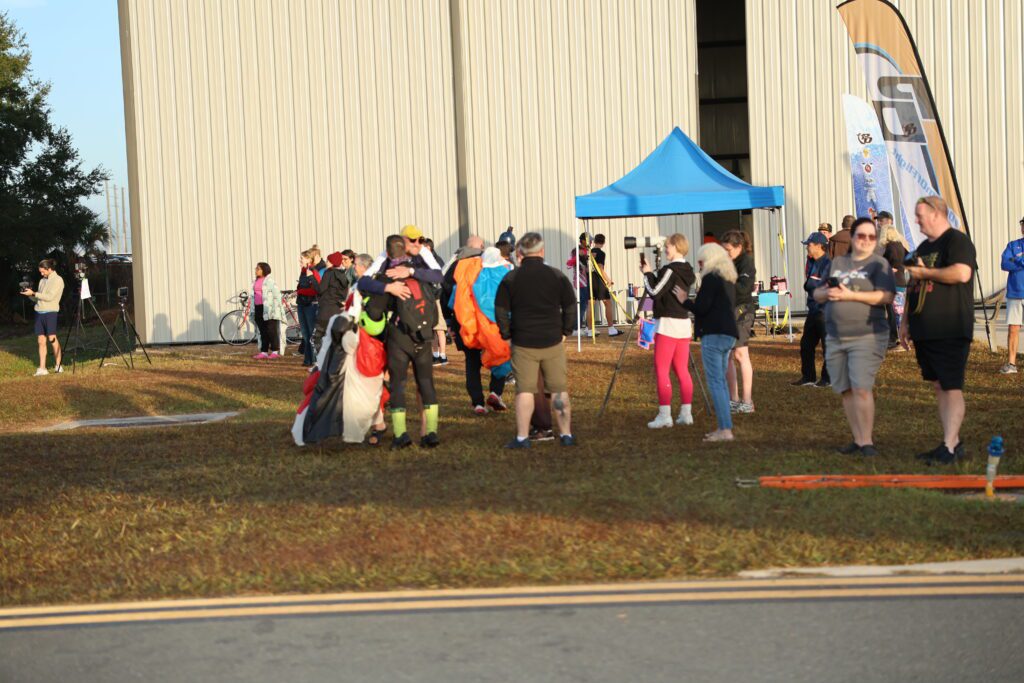
Then the entire airfield erupts.
YEEEEES!
Nothing is louder than the scream and applause of people who have just achieved something that, only a day earlier, felt out of reach.
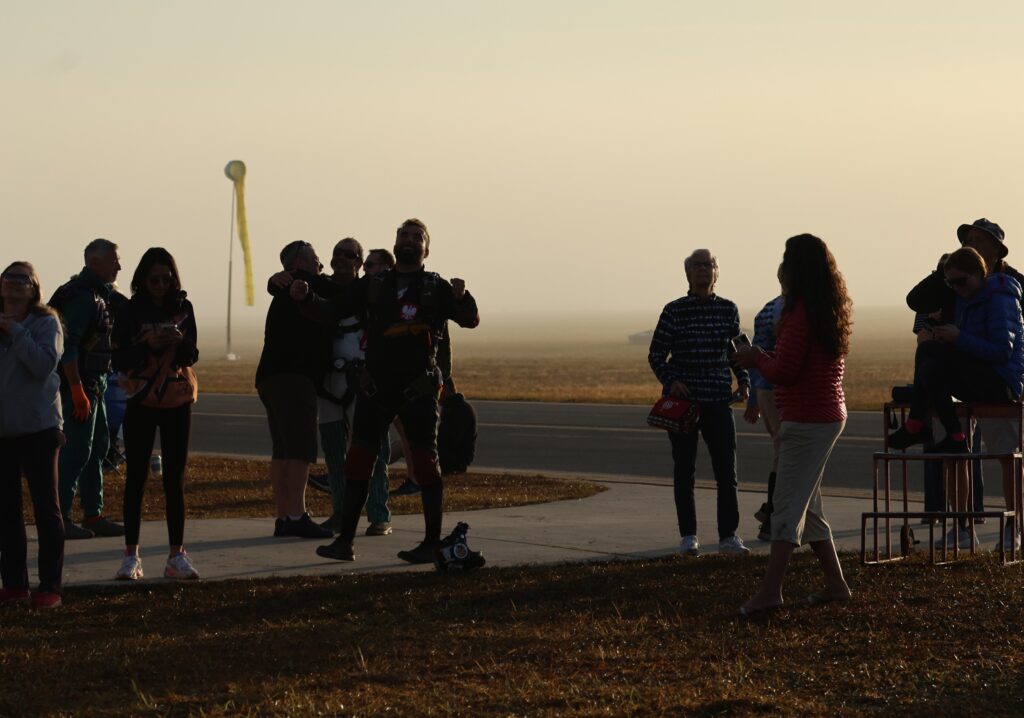
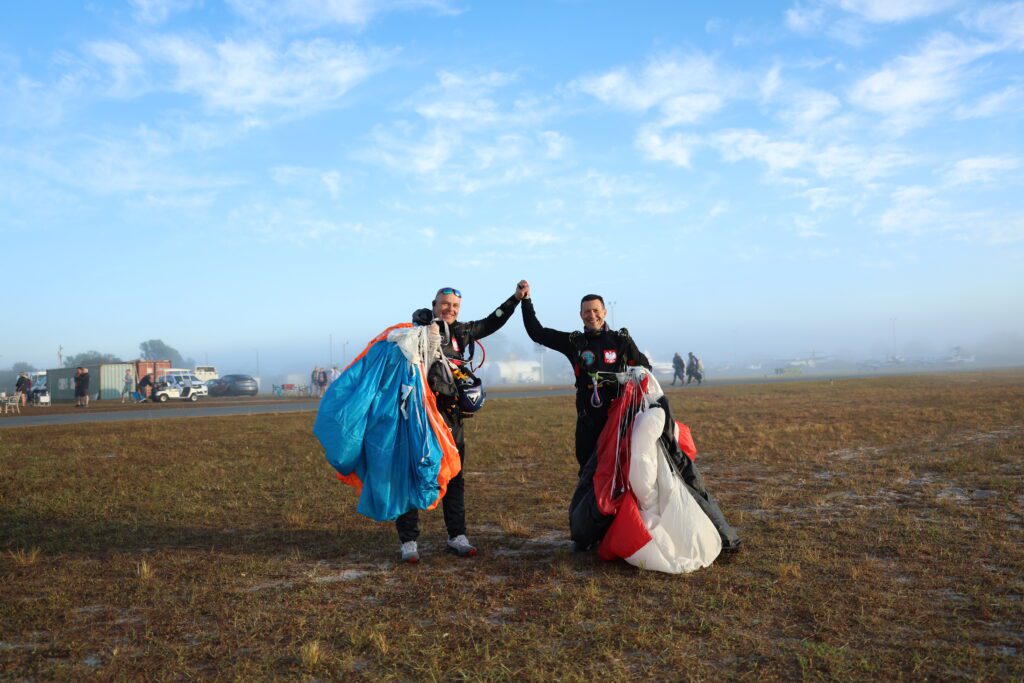
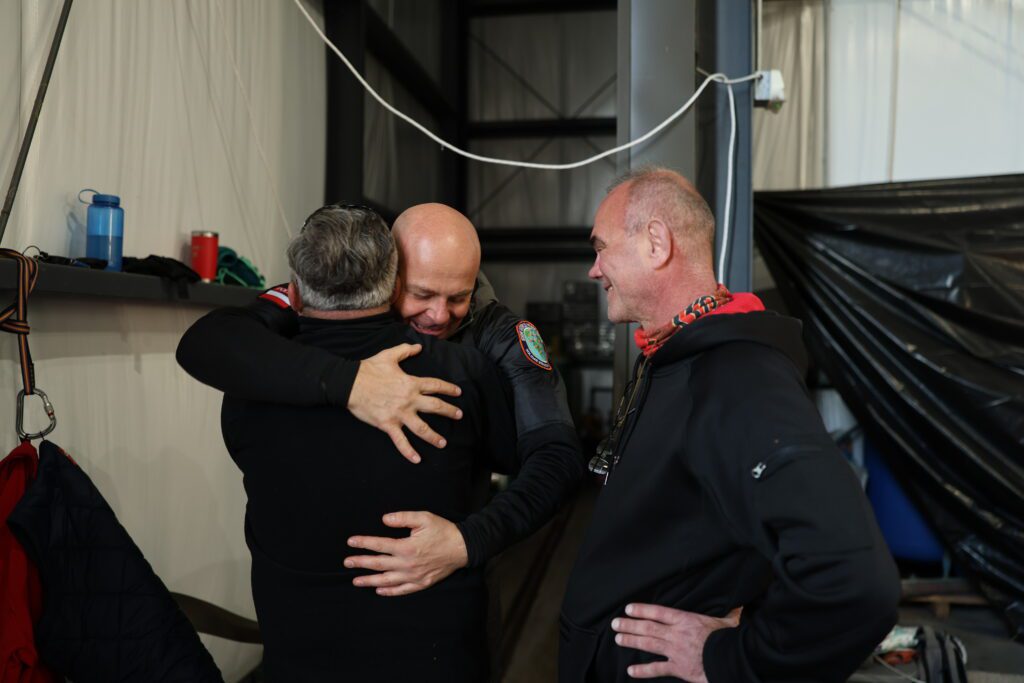
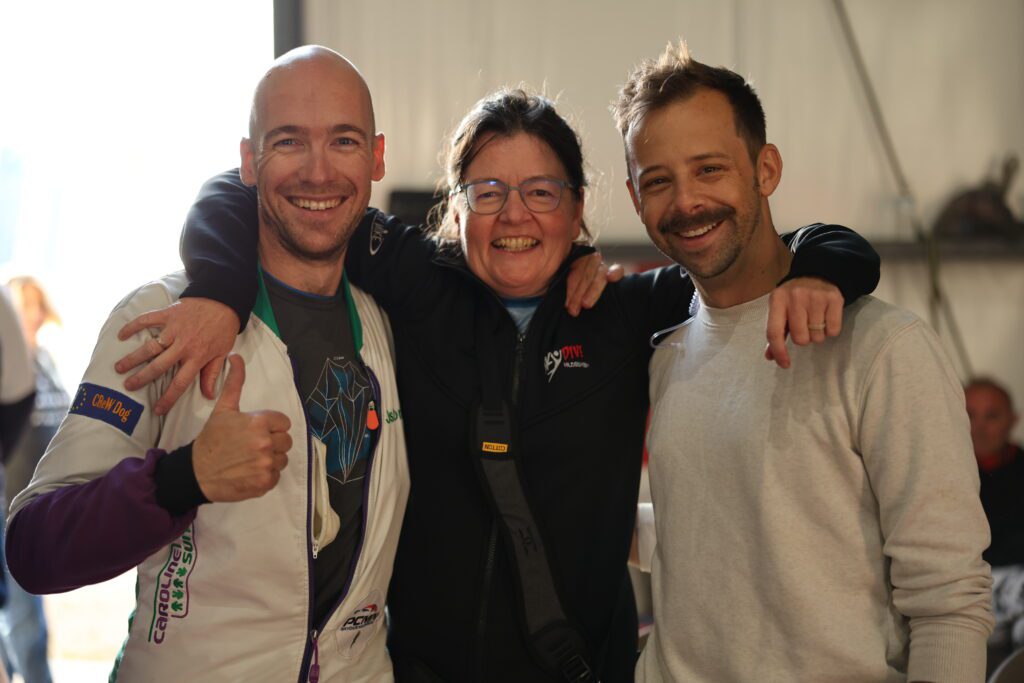
Hugs everywhere, too many to count.
Tears, laughter, disbelief.
And that one-of-a-kind thought:
“YES! They did it. 104. A new world record.”
The finale — euphoria, relief, togetherness
Tickets.
Time zones.
Sleepless nights.
Sore shoulders.
Hundreds of minutes on oxygen.
Days on standby.
Repaired canopies, rotations, grabbing last-second slots.
Suddenly, all of it made sense.
Everyone grabbed someone.
Everyone laughed and cried at the same time.
104 is not a “smaller record.”
It’s a record measured in reality, not in dreams.
In what could be done — not in what we wished we could do.
And that’s why it matters so much.
Because it’s true.
Because it’s honest.
Because it was earned — not imagined.
And now the most important part
After the successful, judge-verified 104-way sky giant, the appetite grew — and the attempt at the beautiful number 111 was made.
Why not?
Why wouldn’t we try?
That single attempt, even though it didn’t complete for a variety of reasons, planted something bigger…
A new seed for the coming years.
A hunger for the next challenge.
A desire to improve.
A desire to return.
A desire for something even greater.
Now we no longer ask if.
Now we ask only:
“When?”
And that “when” hangs in the air like a promise no one has spoken out loud yet.
fot. Kasia Walczak
fot. Internet
fot. Gustavo Cabana
About resentments that have no right to exist
This will be short, but strong. It has to be.
In big-way records, roster changes are not punishment or reward.
They’re not favoritism, not “a game of better and worse,” not a personal judgment of anyone.
They are a necessity.
That’s how regulations work, that’s how safety works, that’s how real responsibility for 100+ people flying kilometers above the earth works — as one geometric, living organism.
Having hurt feelings is human.
Everyone has an ego, everyone wants to be in the center of the action, everyone wants to finish their story.
But resentments, in the context of a world record, become simply… unfair.
Because a record is a process, not a moment.
It’s a team, years of work, calculations — not “a list of names.”
It’s a puzzle in which every single person — absolutely every one — from those in the sky to those on the ground, from camera flyers to packers, from riggers to briefers, from photographers to people running with slot cards — is part of it.
Each a gear in the great machine of success.
All of this together is what made it possible for 104 people to be in the right place, at the right time, in the right slice of sky.
Ending — a personal reflection
As I write these words, one thought keeps returning like a refrain:
A record is the sum of people, decisions, emotions, and courage.
It’s the beauty of cooperation — the kind rarely seen in such a pure form.
Here, everyone leaves their ego at the door, because inside, only the shared geometry and shared responsibility matter.
In life, we don’t always do what we want.
More often, we do what is needed.
And that’s why stories like this stay with us forever.
Because inside them there is not only achievement.
There is the human being.
fot. Kasia Walczak and Michael Chico Tomaselli